





Understanding Solar Storms
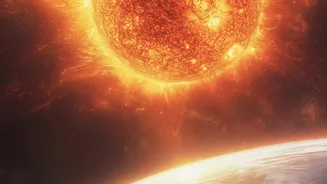
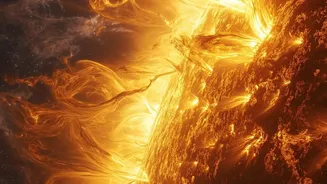
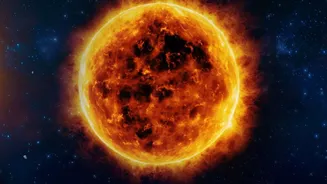
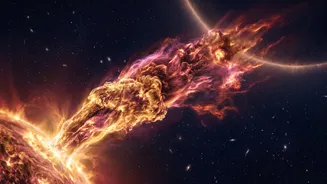
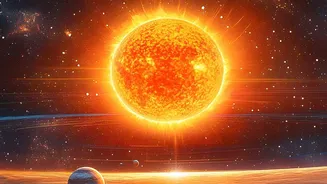
A solar storm is a disturbance on the sun that can blast energetic particles and magnetic fields out into space. The most significant of these are solar flares and Coronal Mass Ejections (CMEs). A solar flare is an intense burst of radiation, while a CME is a massive
bubble of plasma and magnetic field that erupts from the sun's outer atmosphere, the corona. While the light from a flare reaches Earth in just eight minutes, a CME cloud travels more slowly, taking one to three days to arrive. When a CME hits Earth, it interacts with our planet's magnetic shield, the magnetosphere, creating what is known as a geomagnetic storm.
The Global Watchtowers
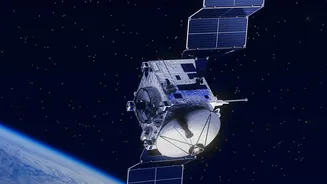
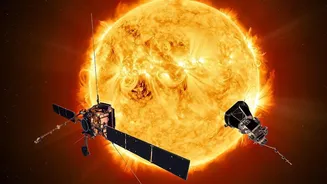
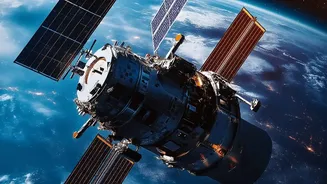
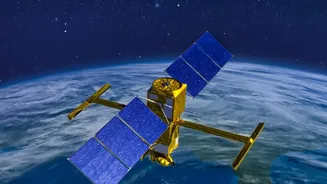
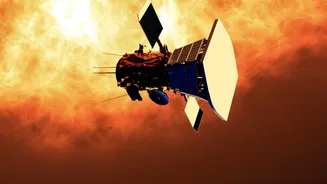
To protect against this threat, a global network of eyes constantly watches the sun. This network includes both ground-based and space-based observatories. In space, satellites like the GOES series and the Deep Space Climate Observatory (DSCOVR) provide real-time data on solar activity. DSCOVR is strategically positioned at a point 1.5 million kilometres from Earth, called Lagrange Point 1 (L1), giving it an uninterrupted view of the sun. This location allows it to detect solar wind and CMEs heading our way, providing crucial early warnings. India's own solar observatory, Aditya-L1, also operates from this vantage point, equipped with seven distinct payloads to study the sun's atmosphere and the dynamics of space weather. On the ground, a vast array of solar telescopes and magnetometers, like the SuperMAG network, monitor the sun and Earth's magnetic field for any disturbances.
From Detection to Alert
When these observatories detect a potentially hazardous event, agencies like the US National Oceanic and Atmospheric Administration’s (NOAA) Space Weather Prediction Center (SWPC) spring into action. The SWPC serves as the official source for space weather alerts for civilian sectors. Based on the data, they issue a tiered system of notifications: Watches, Warnings, and Alerts. A 'Watch' is issued hours or days in advance when the risk of an event increases. A 'Warning' follows when an event is imminent, providing minutes to hours of lead time. Finally, an 'Alert' confirms that a storm is underway and observed conditions have crossed a critical threshold. These alerts use scales, such as the G-scale for geomagnetic storms, to communicate the potential severity.
Protecting Satellites in Orbit
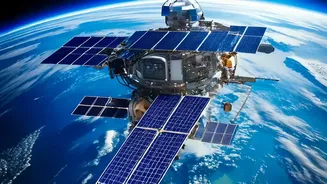
For the thousands of satellites orbiting Earth, a geomagnetic storm can be disastrous. The increased atmospheric drag can slow satellites in low-Earth orbit, causing their orbits to decay. Energetic particles can damage sensitive electronics and disrupt communications. In response to alerts, satellite operators can take protective measures. This may involve temporarily shutting down non-essential systems, reorienting the spacecraft to shield critical components, or firing thrusters to maintain their orbit. This proactive approach helps safeguard the vital infrastructure that powers everything from GPS navigation to global financial transactions and mobile phone networks.
Safeguarding the Power Grid
Down on Earth, the biggest threat is to our power grids. Geomagnetic storms can create what are known as geomagnetically induced currents (GICs) in long transmission lines. These quasi-DC currents can flow into high-voltage transformers, causing them to overheat, which can lead to damage and potentially trigger widespread blackouts. When grid operators receive a space weather alert, they can take steps to stabilize the system. This might include reducing the load on vulnerable transformers, redirecting power flows, or in extreme cases, temporarily taking parts of the grid offline to prevent catastrophic failure. Some systems are also being fitted with special neutral blocking devices that can stop these harmful currents from damaging transformers.