





What Exactly is a Dark-Sky Location?
A dark-sky park or reserve is an area officially recognized for its exceptional starry nights and protected against light pollution. This modern phenomenon, caused by excessive artificial light from cities reflecting into the atmosphere, creates a constant
haze that washes out all but the brightest celestial objects. Dark-sky locations enforce strict lighting policies, such as using shielded, warm-toned bulbs and minimising outdoor light, to maintain a naturally dark environment. This not only protects nocturnal wildlife and ecosystems but also creates perfect conditions for scientific observation and public enjoyment of the universe.
India's Celestial Crown Jewel: Hanle
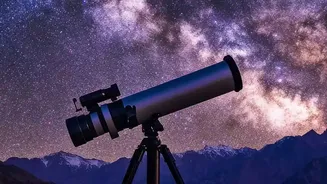
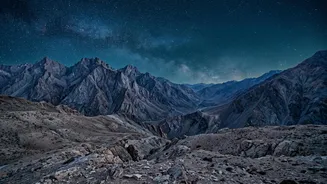
The gold standard for stargazing in India is the Hanle Dark Sky Reserve in Ladakh, designated in 2022. Located in the Changthang Wildlife Sanctuary at a staggering altitude of 4,500 metres, Hanle offers some of the darkest and clearest skies in Asia. Its high altitude means there's less atmospheric distortion, while the cold, dry desert climate ensures over 270 clear nights a year. Home to the Indian Astronomical Observatory, the entire region is committed to preserving its darkness, making it a sanctuary where the Milky Way is so vivid it appears to light up the landscape.
A Dream Canvas for Astrophotographers
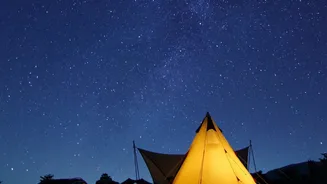
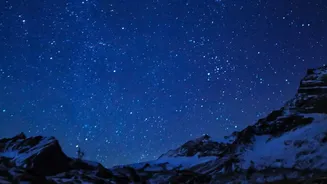
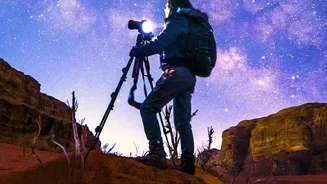
For night photographers, these parks are unparalleled. The lack of light pollution allows cameras to capture faint celestial details that are otherwise invisible. In places like Hanle or Spiti Valley, a standard long-exposure shot can reveal the magnificent dust lanes of the Milky Way, meteor showers, and distant galaxies. The high altitude and thin, dry air result in incredibly sharp images with minimal atmospheric haze. Photographers often use wide-angle lenses with open apertures (like f/2.8) and high ISO settings (3200 or more) for exposures of 15-25 seconds to capture the star-dusted sky in all its glory. Including foreground elements like ancient monasteries or serene lakes can add a dramatic sense of scale to the cosmic backdrop.
An Immersive Experience for Stargazers
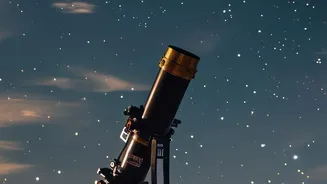
You don't need a professional camera to appreciate a dark sky. For astronomy enthusiasts, the experience is just as profound. In these reserves, thousands of stars are visible to the naked eye, a stark contrast to the dozen or so seen from a city. The Andromeda Galaxy, our closest galactic neighbour, can be spotted without a telescope. To enhance the experience, local communities in places like Hanle have become part of the astro-tourism initiative. Villagers trained as 'Astronomy Ambassadors' guide visitors, sharing knowledge and offering views of planets like Saturn and Jupiter through powerful telescopes provided to homestays.
Beyond Ladakh: Other Emerging Stargazing Hotspots
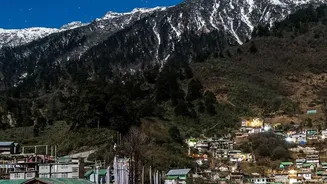
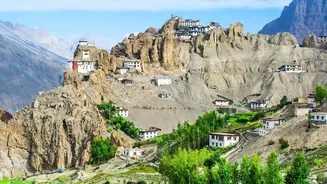
While Hanle is the pioneer, India's dark-sky movement is growing. In January 2024, Pench Tiger Reserve in Maharashtra became the country's first official Dark Sky Park, blending wildlife conservation with celestial preservation. The state has identified other potential sites for astro-tourism, including Lonar Crater Lake and parts of the Sahyadri ranges. Other popular destinations for serious stargazers include Spiti Valley in Himachal Pradesh, known for its rugged landscapes and high-altitude villages like Kibber, and the Rann of Kutch in Gujarat, where the vast white salt desert creates a surreal 360-degree view of the sky.
Planning Your Celestial Escape
A trip to a dark-sky park requires some planning. The best time to visit high-altitude locations like Ladakh and Spiti is between May and October, when the weather is milder and skies are clear. Crucially, plan your visit around the new moon phase to avoid moonlight washing out the stars. Pack warm, layered clothing, as night temperatures can drop significantly even in summer. For photographers, a sturdy tripod is essential for stable long exposures, and spare batteries are a must as the cold can drain them quickly. Most importantly, practice responsible tourism by using red-light torches to preserve night vision and respecting local light-discipline rules.