



What Exactly Is Space Weather?
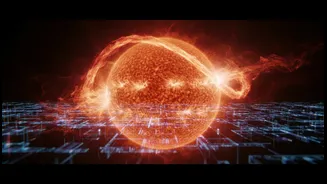
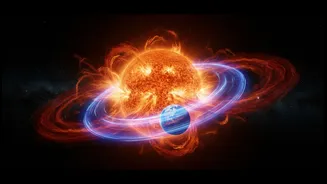
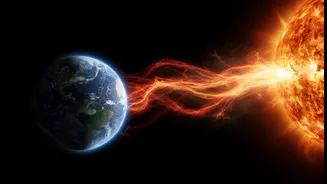
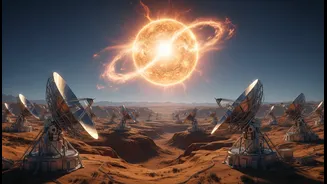
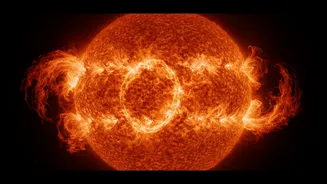
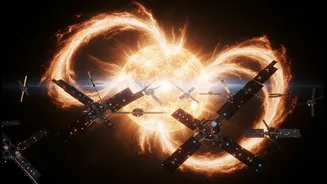
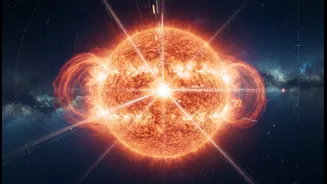
Think of space weather as the Sun’s temper tantrums. Our star is a giant ball of electrically charged gas, constantly churning with magnetic energy. Sometimes, this energy erupts violently. These eruptions can take the form of solar flares—immense bursts
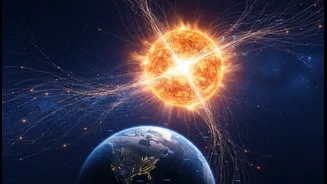
of radiation—or Coronal Mass Ejections (CMEs), which are colossal clouds of solar plasma and magnetic fields hurled into space. When these events are directed at Earth, they can cause significant disturbances in our planet’s magnetic field and upper atmosphere; this is what we call a geomagnetic storm. For centuries, we could only see the effects, like the beautiful auroras. Now, we're learning to predict the cause.
The High Stakes for India's Digital Backbone
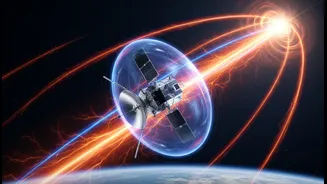
In a nation rapidly embracing a digital future, the stakes are incredibly high. A severe solar storm could have a crippling effect on India's infrastructure. It could disrupt the satellites essential for everything from GPS navigation and weather forecasting to television broadcasts and financial transactions via UPI. Power grids could experience surges, leading to widespread blackouts, while high-frequency radio communications, crucial for aviation and defence, could be knocked offline. ISRO constantly monitors its fleet of over 50 operational satellites for such risks, highlighting the tangible threat to our daily lives and economy.
India's Eye on the Sun: The Aditya-L1 Mission
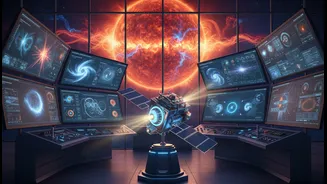
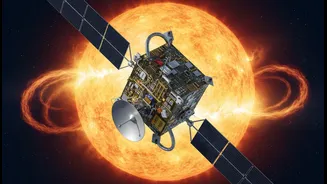
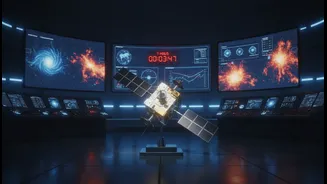
At the forefront of this new era of solar observation is India's own groundbreaking mission, Aditya-L1. Launched by ISRO, it is positioned at a unique vantage point 1.5 million kilometres from Earth, which allows it to watch the Sun continuously without any interruption. Aditya-L1 is not just passively observing; it's equipped with instruments to study the Sun’s atmosphere, track the origin of solar storms, and measure the solar wind in real-time. This mission provides crucial data that helps scientists understand the fundamental physics of the Sun, such as why its outer atmosphere, the corona, is hundreds of times hotter than its surface. This knowledge is a key piece of the puzzle in predicting its violent outbursts.
From Minutes to Hours: The Forecasting Leap
The goal of live solar monitoring is to extend our warning time. Previously, the warning for a geomagnetic storm's impact on Earth could be as short as 15-30 minutes. New methods and missions are changing that. By combining data from missions like Aditya-L1 with advanced AI models, scientists can now issue forecasts with more accuracy. Furthermore, proposed future missions from agencies like the European Space Agency (ESA) aim to provide warnings several hours in advance. This longer lead time is a game-changer. It gives power grid operators time to protect their systems, satellite companies the chance to put their spacecraft into a safe mode, and airlines the ability to reroute flights away from polar regions where radiation is higher during a storm.
A Global Effort for a Safer Future
Improving space weather forecasts is a global collaboration. Data from India's Aditya-L1 is shared with the international scientific community, contributing to a worldwide effort to build more robust prediction models. Scientists are now developing methods that can predict the general strength of the Sun's next 11-year activity cycle years in advance, offering a long-term strategic outlook. By combining long-range cycle predictions with the real-time, live data from solar observatories, we are building a multi-layered defence system. This synergy of global cooperation and cutting-edge technology is essential for safeguarding our increasingly connected and technology-dependent civilisation from the Sun's powerful and unpredictable nature.