






The Unmatched Speed of AI
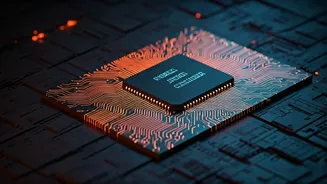
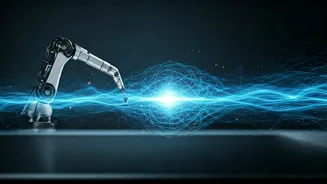
Artificial Intelligence is fundamentally reshaping business operations by performing tasks at a speed and scale that is simply beyond human capability. Its primary strength lies in processing immense volumes of data in seconds, automating repetitive and time-consuming
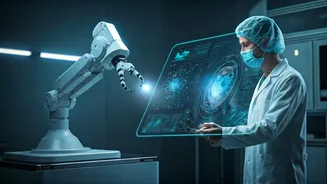
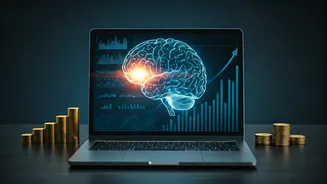
jobs like data entry, scheduling, and generating reports. In sectors like finance, AI algorithms can analyze market data in milliseconds, assisting with investment decisions. In healthcare, AI helps doctors by analyzing medical images or test results, spotting subtle patterns that might otherwise be missed. This automation of routine tasks significantly reduces the chance of human error, boosts overall efficiency, and allows businesses to operate more smoothly. By handling the monotonous and data-heavy lifting, AI frees up its human counterparts to focus on work that requires a different kind of intelligence.
The Spark of Human Originality
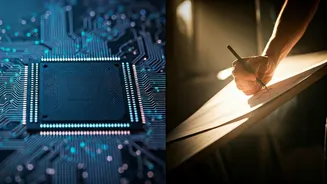
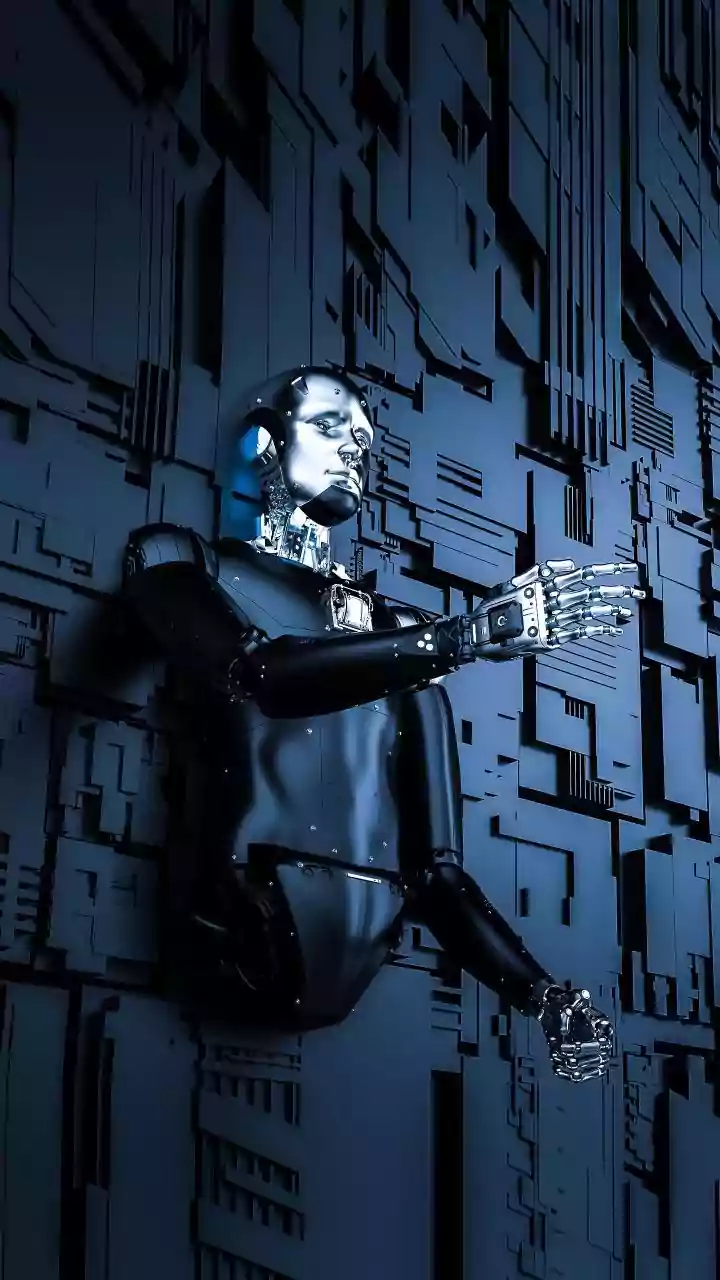
While AI excels at processing what already exists, it struggles to create something truly new. Human creativity, by contrast, is not based on algorithms but on a complex mix of experience, emotion, intuition, and contextual understanding. It's the ability to ask unconventional questions, connect seemingly unrelated ideas, and take creative leaps. Think of a designer who infuses their work with cultural meaning or a strategist who senses a market shift that data alone doesn't show. These are 'human-centric' skills—like critical thinking, emotional intelligence, and complex problem-solving—that machines cannot replicate. An AI can recite the lines of a play, but it cannot understand the emotional struggle behind the words. This capacity for genuine imagination, empathy, and judgment is what makes human thinking irreplaceable.
Beyond Competition to Collaboration
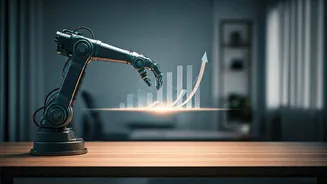
The most effective modern workplaces don't view AI and humans as competitors, but as collaborators in a symbiotic partnership. This model, often called 'augmentation,' focuses on using technology to enhance, not replace, human capabilities. For example, a customer service agent can use an AI chatbot to handle routine queries, allowing them to focus on complex, sensitive cases that require empathy and judgment. In creative fields, an artist might use an AI to generate a dozen rough concepts, then apply their unique vision to refine and perfect one. This approach combines the precision and efficiency of machines with the strategic and intuitive strengths of people. The result is a hybrid team that can solve complex problems more effectively than either humans or AI could alone. The goal is to leverage the best of both worlds, creating a whole that is greater than the sum of its parts.
Building the Hybrid Workforce
For businesses in India and around the world, thriving in the age of AI means intentionally designing this collaborative future. It requires investing in AI tools that augment employees by automating low-value tasks and providing data-driven insights. But just as importantly, it requires investing in people. Companies need to focus on upskilling and reskilling their workforce, prioritising the development of human-centric skills like adaptability, communication, and leadership. For individuals, the path forward involves embracing lifelong learning and focusing on developing the uniquely human talents that AI cannot touch. This includes honing the ability to think critically, manage complex relationships, and provide ethical oversight for the powerful tools we are now using. The future of work won't be defined by the tasks AI takes over, but by the new opportunities it creates for human ingenuity.