






A Pop of Colour with a Purpose
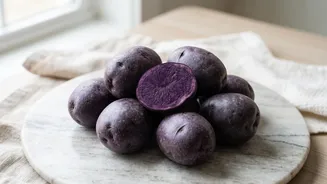
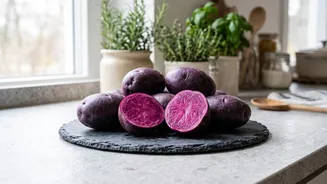
The most obvious difference is, of course, the colour. While common potatoes have pale brown skin and white or yellowish flesh, Kufri Jamunia boasts a deep, dark purple skin and equally vibrant purple flesh. This isn't just for show; the colour comes
from a high concentration of natural pigments called anthocyanins. These are the same powerful antioxidants found in foods like blueberries and jamun, giving the potato its name. Unlike some coloured varieties where the pigment is only skin-deep, Kufri Jamunia's colour runs all the way through, meaning you get the benefits even after peeling.
A Superior Nutritional Profile
This is where Kufri Jamunia truly shines. Developed by the ICAR-Central Potato Research Institute (CPRI) in Shimla, it was specifically biofortified to be a nutritional powerhouse. A 100g serving contains significantly higher levels of Vitamin C, iron, and zinc compared to its conventional counterparts. The star ingredient, anthocyanin, is a potent antioxidant known for its health-protective properties. While white potatoes are a good source of carbohydrates, potassium, and some Vitamin C, Kufri Jamunia offers these benefits plus a major antioxidant boost, positioning it as a tool to help combat 'hidden hunger' or micronutrient deficiencies.
Taste, Texture, and Culinary Uses
Flavour-wise, purple potatoes like Kufri Jamunia are often described as having a slightly earthy, nutty taste, with a denser and more 'mealy' texture than many common white varieties. This texture makes it incredibly versatile. While white potatoes are all-rounders great for frying, boiling, and mashing, Kufri Jamunia's firm texture holds up well to baking, roasting, and boiling. Researchers suggest it is ideal for traditional Indian dishes like curries and parathas, and can even be processed into nutrient-rich flour for baked goods. To retain its beautiful colour and nutrients, gentler cooking methods like steaming or baking are often recommended over vigorous boiling.
From the Farm to Your Plate
Kufri Jamunia isn't just a win for consumers; it's designed with farmers in mind too. Released in 2024, this medium-maturing variety is well-suited for the North Indian plains. It boasts a high yield potential, producing between 32 to 35 tonnes per hectare in recommended conditions. It also has good storage qualities, with a dormancy period of 6-8 weeks, which means it doesn't sprout as quickly and has a better shelf-life than some other varieties. This combination of nutritional superiority and strong agricultural performance makes it an attractive and sustainable crop for farmers.