






The New Backbone of Trade
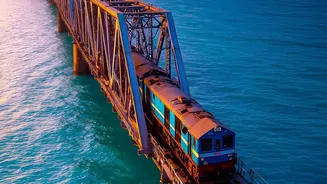
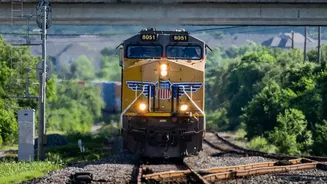
For decades, India's supply chains were hampered by freight trains sharing tracks with passenger services, leading to slow speeds and unpredictable schedules. The Western Dedicated Freight Corridor (WDFC) decisively solves this problem. This 1,506-kilometre,
high-capacity freight-only railway line runs from Dadri in Uttar Pradesh to Jawaharlal Nehru Port in Maharashtra, with a crucial 38% of its length passing through Gujarat. With the final sections inaugurated in September 2026, the entire corridor is now operational, creating a seamless connection between the industrial heartland of northern India and the state's ports. Trains on the WDFC can travel at speeds up to 100 km/h, a four-fold increase from the previous average of 25 km/h, and carry double-stacked containers, revolutionizing the volume and efficiency of goods movement. This project alone represents a fundamental upgrade to the nation's logistics infrastructure.
Connecting Gujarat's Ports to the World
Gujarat's 1,600-kilometre coastline is dotted with some of India's busiest ports, including Mundra, Pipavav, and Hazira, which collectively handle about 40% of the nation's cargo. The WDFC acts as a high-speed conveyor belt, directly linking these maritime gateways to manufacturing and consumption centres deep inland. The impact is transformative: transit time for cargo moving from Rajasthan or Haryana to Gujarat's ports has been slashed from over three days to less than 48 hours. This enhanced connectivity not only reduces logistics costs for exporters and importers but also strengthens the competitive advantage of Gujarat's ports. Discussions are ongoing to further integrate the WDFC with other ports like Maroli and develop multimodal logistics facilities, ensuring that goods can move seamlessly from ship to rail and vice-versa.
Fuelling the Delhi-Mumbai Industrial Corridor
The WDFC is not a standalone project; it is the foundational spine for the ambitious Delhi-Mumbai Industrial Corridor (DMIC). This massive undertaking aims to develop new industrial cities and investment regions within a 150-kilometre band on either side of the freight corridor. Gujarat is a major beneficiary, hosting six of the planned industrial nodes, including the Dholera Special Investment Region (SIR) and the Mandal-Becharaji SIR. By providing reliable, high-speed freight movement, the WDFC makes these regions highly attractive for setting up manufacturing units. It ensures that raw materials can be brought in and finished goods can be shipped out efficiently, creating a globally competitive manufacturing environment right in the heart of Gujarat. This synergy is designed to attract investment, boost industrial output, and create significant employment.
The Gati Shakti Master Blueprint
Tying all these monumental projects together is the PM Gati Shakti National Master Plan. This initiative provides a digital platform and a holistic planning framework to ensure that infrastructure development is synchronised and integrated. Instead of ministries working in silos, Gati Shakti enables coordinated planning for railways, roads, ports, and industrial parks. For Gujarat, this means the WDFC, new national highways, port expansions, and industrial zones are all developed as parts of a single, unified logistics ecosystem. Recent high-level meetings between the Dedicated Freight Corridor Corporation (DFCCIL) and the Gujarat government have focused on accelerating this integration, including the development of new Gati Shakti Cargo Terminals at locations like New Timba and New Pardi to perfect first- and last-mile connectivity.