






Beyond the Textbook
For years, environmental science in many Indian schools was confined to a single chapter in a science textbook. Students learned about global warming, deforestation, and pollution through diagrams and definitions, often leading to a sense of detachment
or overwhelming anxiety. The sheer scale of the climate crisis, when presented as a set of abstract facts, can feel paralysing for young minds. Educators and policymakers have recognised that this passive learning model is failing to create a generation of proactive, environmentally-conscious citizens. The National Curriculum Framework has increasingly emphasised experiential and competency-based learning, creating a fertile ground for a new approach. The goal is no longer just to inform students that a problem exists, but to equip them with the skills, confidence, and agency to address it in their own communities.
From Theory to Action
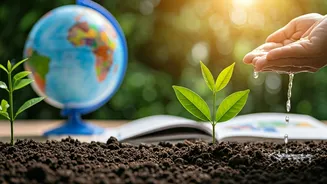
So, what does this 'practical' climate education look like? It’s about getting hands dirty. In schools across Delhi, students are running 'Eco Clubs' that manage campus-wide waste segregation programs, turning kitchen waste into compost for school gardens. In parts of Maharashtra and Karnataka, schools are implementing rainwater harvesting projects, where students not only learn the mechanics but also measure water levels and calculate savings, making maths and science lessons come alive. Some institutions have students conduct energy audits of their classrooms, identifying ways to reduce electricity consumption by switching to LED bulbs or simply being mindful of turning off fans and lights. Others are building small-scale weather stations to collect local climate data, helping them understand meteorological patterns in their own backyard rather than just reading about global averages. These are not just one-off activities but sustained, curriculum-integrated projects.
Building Skills for a Greener Tomorrow
The benefits of this hands-on approach extend far beyond environmental literacy. When students work together to manage a compost pit or design a water conservation system, they are developing crucial 21st-century skills. They learn project management, teamwork, critical thinking, and problem-solving. They see the direct results of their efforts, which fosters a powerful sense of accomplishment and ownership. This practical experience is also vital for career readiness. India’s growing green economy—from renewable energy to sustainable agriculture and waste management—will require a workforce with practical environmental skills. By engaging in these projects early, students are getting a head start, understanding concepts that could lead to future innovations and employment opportunities in sectors that are critical for the planet's health.
Challenges and the Path Forward
This transformation is promising, but it isn't without hurdles. The shift requires more than just a change in mindset; it demands resources. Many schools, particularly in rural or underfunded areas, lack the space for a garden, the funds for a rainwater harvesting system, or the technical equipment for an energy audit. Furthermore, teachers need specialised training to effectively guide these projects and integrate them into a packed syllabus. Overcoming these challenges requires a concerted effort from education boards, government bodies, and non-profit organisations to provide schools with the necessary funding, training manuals, and support systems. Standardising these practical modules and making them a core, graded part of the curriculum, rather than an optional club activity, is the next critical step to ensure every child has the opportunity to become an active steward of the environment.