


For School Students: The YUVIKA Programme
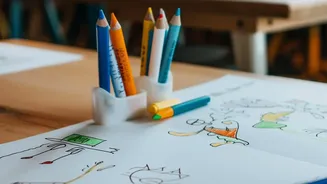
Designed to 'catch them young', the YUva VIgyani KAryakram (YUVIKA), or Young Scientist Programme, is one of ISRO's most exciting initiatives for school students. It is a two-week residential programme that gives students a foundational understanding
of space science, technology, and applications. Participants get to interact with eminent scientists, visit state-of-the-art facilities, and engage in hands-on activities. The programme is typically for students studying in Class 9, with selection based on a variety of factors including Class 8 marks, performance in an online quiz, participation in science fairs, and even membership in NCC or NSS. ISRO also gives special weightage to students from rural areas to ensure broad participation from across the country. This fully sponsored programme is a golden opportunity for young, curious minds to get a real taste of life at India's space agency.
The Direct Path: Indian Institute of Space Science and Technology (IIST)
For those serious about a career in space science, the Indian Institute of Space Science and Technology (IIST) in Thiruvananthapuram is the premier destination. Considered ISRO's own university, IIST offers undergraduate and dual-degree programmes in specialised fields like Aerospace Engineering, Avionics, and Engineering Physics. Admission is highly competitive and is based on the rank secured in the Joint Entrance Examination (JEE) Advanced. Students with an excellent academic record at IIST have a direct pathway to a career at ISRO. Based on vacancies and a minimum required CGPA, graduates can be absorbed as 'Scientist/Engineer-SC' in various ISRO centres, making it one of the most structured ways to join the organisation.
Gain Practical Experience: Internships and Project Work
For university students, internships and academic projects at various ISRO centres are an invaluable way to gain practical experience. Opportunities are available for undergraduate (B.E./B.Tech) and postgraduate (M.E./M.Tech, M.Sc) students across centres like the Vikram Sarabhai Space Centre (VSSC), U R Rao Satellite Centre (URSC), and Space Applications Centre (SAC). These positions allow students to work on real projects relevant to their curriculum in fields ranging from electronics and mechanical engineering to remote sensing and astrophysics. The application process usually requires a formal request from the student's academic institution and a strong academic record, typically a minimum of 60% or a CGPA of 6.32. While these internships are generally unpaid, the hands-on experience and exposure to ISRO's work culture are priceless.
Learn from Anywhere: ISRO's Online Courses
ISRO, through its Indian Institute of Remote Sensing (IIRS) in Dehradun, makes space science accessible to everyone via its free online courses. These courses cover a wide range of topics, including remote sensing, geographical information systems (GIS), and applications of geospatial technology in various fields. Recently, ISRO has also offered courses on cutting-edge topics like Artificial Intelligence and Machine Learning for data analytics. These programmes are open to undergraduate and postgraduate students, as well as working professionals, and often require no prior technical experience. Participants who maintain a certain attendance can receive a certificate upon completion, adding a valuable credential from India's top space agency to their profile.
Showcase Your Talent: Competitions and Challenges
ISRO regularly supports and organises challenges to engage the student community and scout for talent. One such prominent event is the ISRO Robotics Challenge (IRoC-U), organised by URSC. This competition encourages student teams to design and build robotic systems for challenges inspired by future space missions, like lunar exploration. It provides a platform for students to apply their engineering skills to solve real-world problems. ISRO also collaborates with bodies like the Atal Innovation Mission to launch challenges for school students, such as the ATL Space Challenge. Participating in these events, along with national and international science olympiads, is a great way for students to test their skills, gain recognition, and catch the eye of the scientific community.