

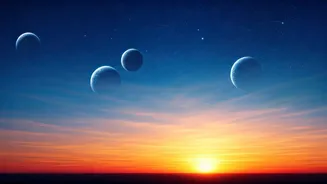
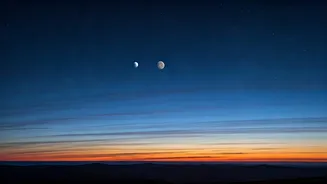
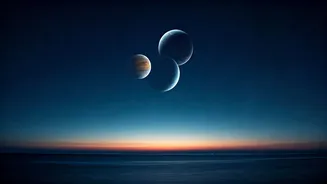


What Is a Planetary Conjunction?
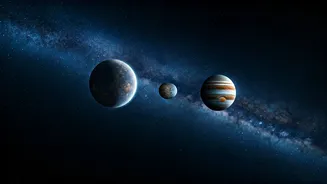
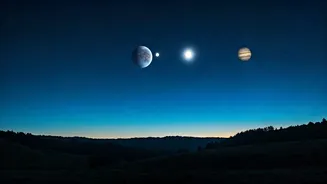
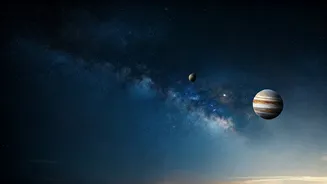
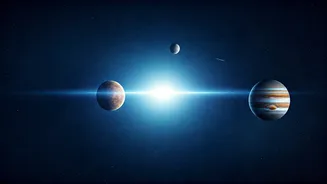
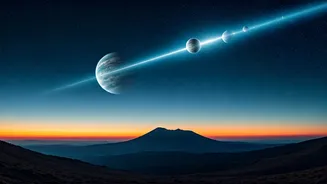
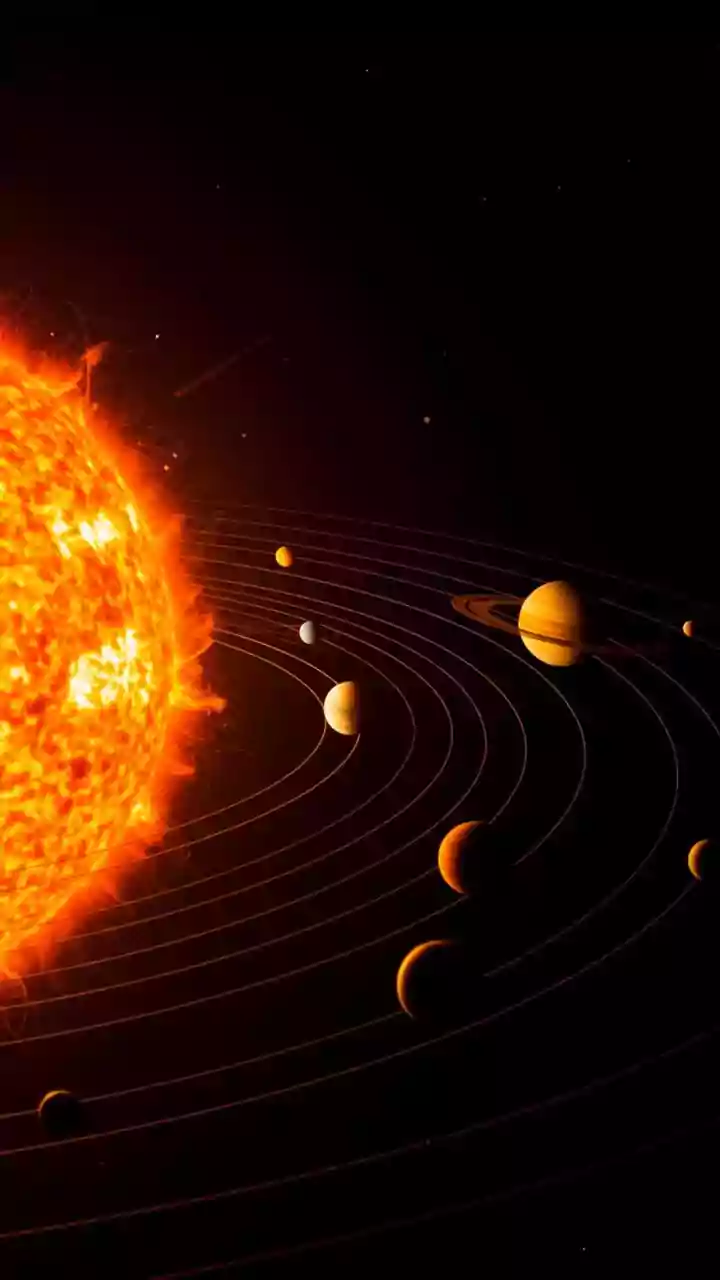
When we see planets “intersect” or form a tight group in the sky, it’s an event astronomers call a conjunction. It’s a line-of-sight phenomenon. The planets aren't actually close to each other in space—they remain millions of kilometres apart on their
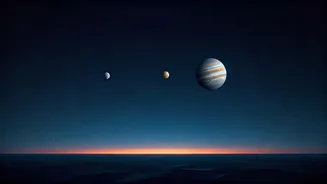
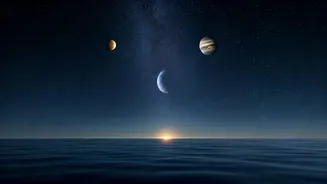
own orbits. But from our perspective on Earth, their paths appear to cross, making them look like they're huddled together. While two-planet conjunctions are relatively common, seeing a trio like Mercury, Venus, and Jupiter is a much rarer and more exciting treat. These events give us a beautiful, real-time map of our solar system's moving parts.
Meet the Celestial Trio
Each of these three planets is unique. Jupiter, the king of planets, is the largest in our solar system and often the brightest point of light in the sky after the Moon and Venus. Venus, our nearest planetary neighbour, is shrouded in thick clouds that make it brilliantly reflective, earning it the nickname “the Evening Star” or “Morning Star.” It's so bright it can sometimes be mistaken for an airplane. Mercury is the trickiest of the three to spot. As the closest planet to the Sun, it never strays far from its glare, appearing only for short windows just before sunrise or after sunset. Seeing this elusive planet alongside the two brightest ones is what makes this alignment so special.
How and When to Watch From India
The key to spotting these planets is timing and direction. Planetary conjunctions are often best viewed during twilight, either just after sunset in the western sky or just before sunrise in the eastern sky. Because Mercury is involved, the viewing window will be short—typically lasting only about 30 to 60 minutes. To find the exact timing for your city, it’s best to use a reliable sky-watching app like Stellarium, SkyView, or Star Walk. These apps use your phone’s GPS to show you exactly where to look in real-time. Simply point your phone at the sky, and the app will identify the planets for you. For the best view, find a location with an unobstructed view of the horizon, away from tall buildings and bright city lights.
Do You Need a Telescope?
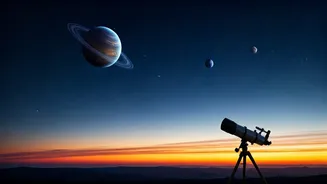
Not at all! The beauty of this event is that Venus and Jupiter are bright enough to be easily seen with the naked eye, even from urban areas with some light pollution. Mercury will be fainter but still visible without equipment if you know where to look and have a clear view. Binoculars are a fantastic tool to enhance the experience. A standard pair of 7x50 or 10x50 binoculars will make the planets appear sharper and brighter. If you look at Jupiter through binoculars, you might even be able to spot its four largest moons—Io, Europa, Ganymede, and Callisto—appearing as tiny pinpricks of light in a neat line around the planet. A telescope will, of course, provide a much more detailed view, revealing cloud bands on Jupiter or the phases of Venus, but it’s not a requirement to enjoy the show.
Tips for the Best Viewing Experience
To make the most of this celestial event, follow a few simple steps. First, check the weather forecast; clear skies are essential. Second, get to your viewing spot about 15-20 minutes early to let your eyes adapt to the darkness. Avoid looking at your bright phone screen, as it will ruin your night vision. If you need to use your phone, set it to its dimmest red-light mode. Third, be patient. It can take a moment to locate the planets, especially the faint dot of Mercury against the fading light of the Sun. Finally, bring a friend or family member. Sharing the sense of wonder as you gaze at worlds millions of kilometres away is part of the magic.