









The Promise of Instant Information
In recent years, Indian schools have widely adopted parent communication apps and integrated school management systems. The pitch was compelling: a single platform for everything from fee payments and homework assignments to real-time attendance tracking.
A core feature of these apps is the ability to send instant notifications for emergencies, such as the sudden school closures common during peak monsoon season. In theory, this technology should make life easier, replacing the frantic morning phone calls and reliance on television news with a clear, immediate message sent directly to a parent's smartphone. These systems promise to build trust through transparency and keep parents informed instantly.
When Digital Systems Meet Monsoon Reality
The problem arises when these digital systems, designed for orderly daily updates, collide with the chaotic reality of a monsoon downpour. The core of the issue is not just about receiving a notification, but what that notification demands. Some school apps require parents to log in and formally acknowledge a closure notice for attendance purposes. Others, focused on tracking absenteeism, might automatically mark a student absent if they don't physically check in at school, requiring parents to later contest the record. This creates a confusing digital chore on a day when safety should be the only priority. Furthermore, information can become fragmented. A district magistrate might announce a holiday for the region, but if the school's app remains silent, parents are left in a state of confusion. Do they trust the district-wide order or wait for the school's specific directive?
The Unnecessary Journey
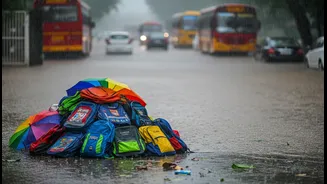
This confusion is what fuels the unnecessary commutes. Fearing their child will be marked absent, or simply seeking clarity, many parents decide to risk the journey. They might travel part-way or all the way to the school gates, navigating waterlogged streets and traffic jams, only to confirm that the school is indeed closed. Recent monsoon closures on July 9, 2026, saw authorities in states like Uttar Pradesh, Uttarakhand, and Kerala declare holidays, but often with variations by district or grade level, adding to the confusion. While major cities like Mumbai and Delhi did not issue blanket closures, individual school notifications became the primary source of information, putting the entire burden of communication on these app systems. Each parent making this verification trip adds another vehicle to already strained roads, transforming a measure meant to keep people home into a trigger for travel.
The Digital Divide in a Downpour
The reliance on app-based systems also ignores the significant digital divide. Not every parent owns a smartphone with a reliable internet connection. During heavy rains, power cuts and network congestion can render these apps useless even for those who are technologically equipped. A parent without a smartphone or data is left completely in the dark, forced to rely on neighbours or embark on a physical trip to the school for information. This creates a two-tier system of communication, where the most vulnerable families are often the last to receive critical safety information. The promise of instant mass communication fails if the channel isn't universally accessible, especially during an emergency.