

Peering into the Cosmic Dawn
First, it’s important to understand what a “deep field” image actually is. Astronomers point the telescope at a tiny, seemingly empty patch of the sky and collect light for hours or even days. This long exposure allows the telescope’s sensitive instruments
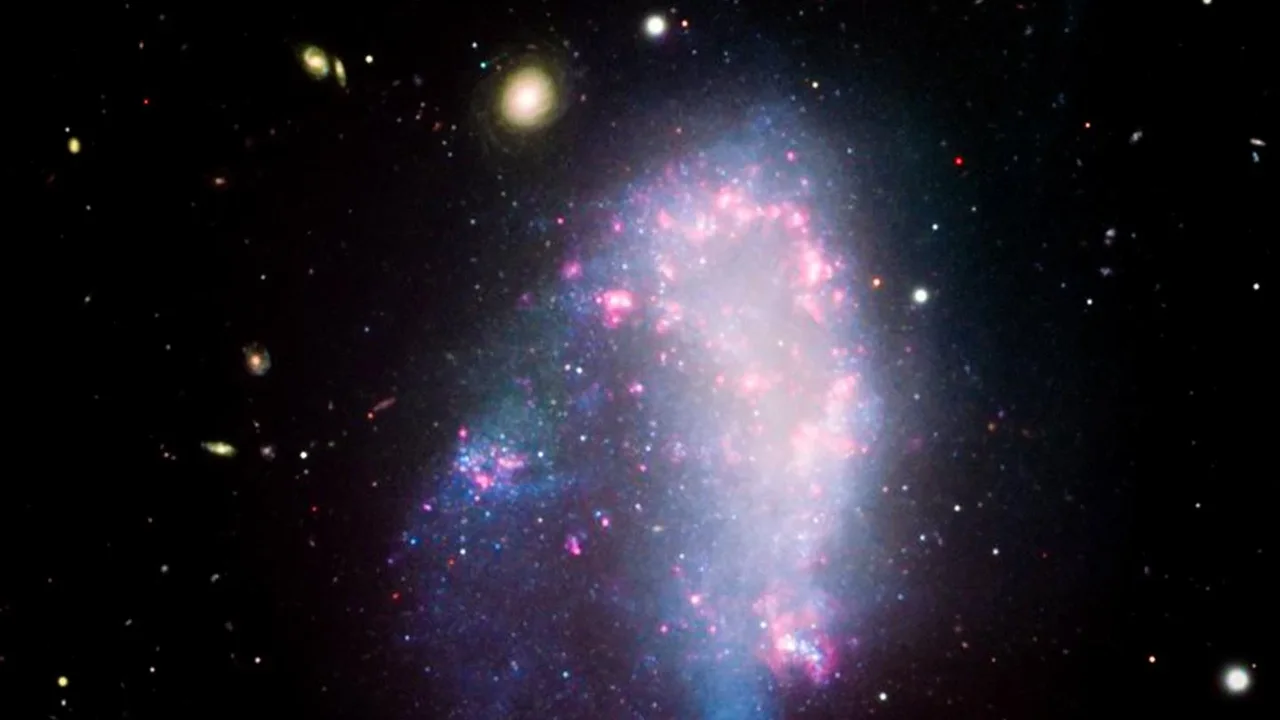
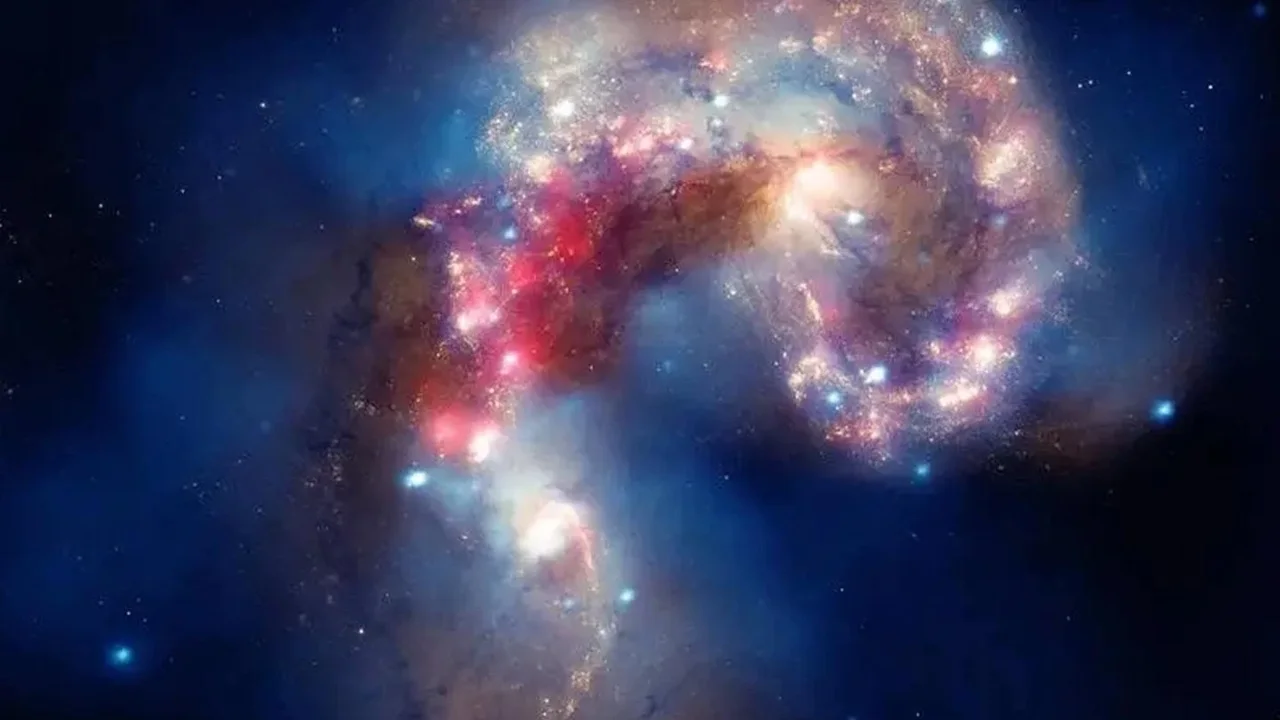
to capture the faint light from the most distant objects in the universe. Because their light has taken billions of years to reach us, we are essentially looking back in time to the universe’s infancy. The JWST’s First Deep Field, for instance, shows us galaxies as they appeared over 13 billion years ago, providing a glimpse of the cosmic dawn. These are not the grand, structured spiral galaxies we see nearby; many are smaller, clumpier, and more irregular, representing the building blocks of the modern cosmos.
Using Light as a Cosmic Scale
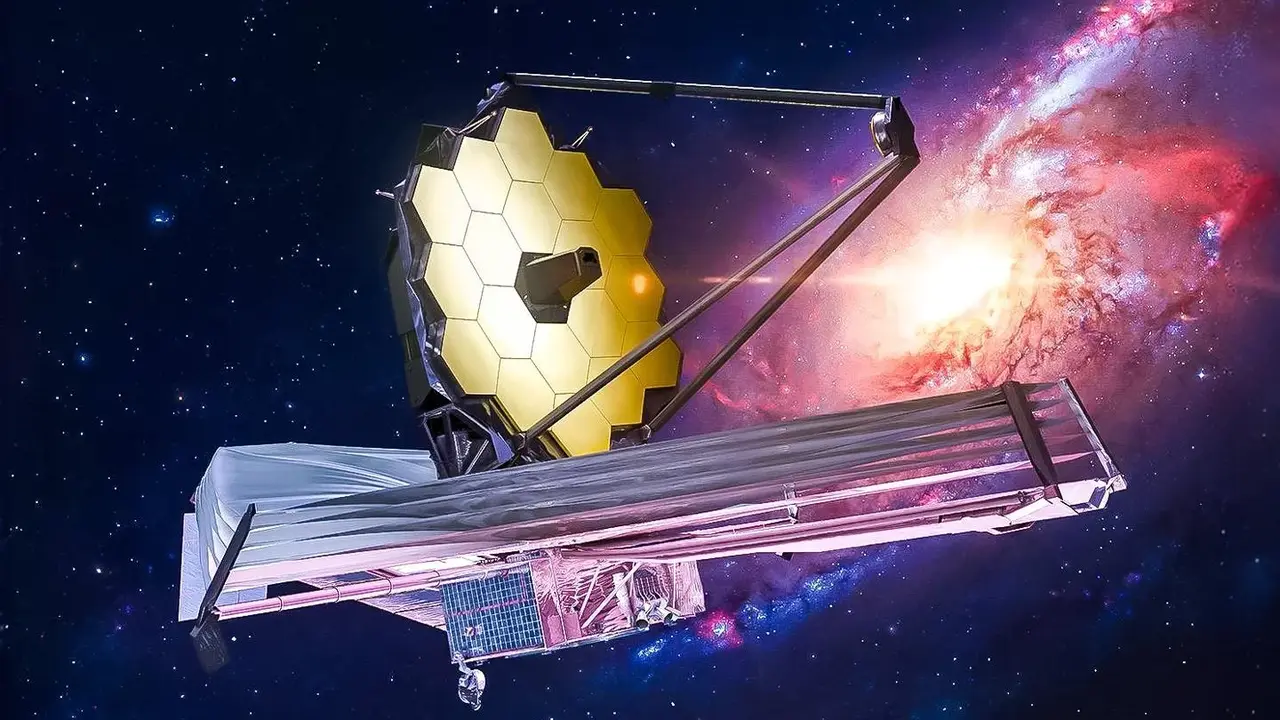
You can’t put a galaxy on a scale, so how do scientists weigh it? The answer lies in its light. Astronomers can’t measure the mass of a galaxy directly, but they can measure the light it emits across different wavelengths. This profile of brightness and color is known as a galaxy’s Spectral Energy Distribution (SED). For the most ancient galaxies, this process presents a unique challenge. As the universe expands, it stretches the light traveling through it, shifting it to longer, redder wavelengths in a phenomenon called redshift. Light that may have been emitted as visible or ultraviolet light from a young galaxy is stretched all the way into the infrared spectrum by the time it reaches us. This is precisely why the JWST, an infrared specialist, is a game-changer. It can capture this redshifted light that was invisible to previous telescopes like Hubble, giving scientists a much more complete picture of a galaxy's total energy output.
From Brightness to Billions of Suns
With a complete SED in hand, the real work begins. Scientists use a technique called population synthesis modeling. They run complex computer simulations that model how galaxies with different histories, ages, and compositions would look. These models are built on our understanding of stellar physics—how stars of different masses are born, live, and die, and how much light they produce at each stage. By comparing the observed light from a real distant galaxy to these countless simulated ones, astronomers can find the best match. The model that best fits the observed data reveals a wealth of information, including the most probable total mass of all the stars within that galaxy, known as its stellar mass. This method is far more accurate than older techniques that relied on simple assumptions, improving the certainty of these mass measurements by a factor of five to ten.
Testing the Universe's Origin Story
This might seem like a lot of effort just to get a number, but measuring the mass of the earliest galaxies is one of the most important jobs in modern cosmology. It directly tests our leading theory of cosmic evolution, known as the Lambda-Cold Dark Matter (ΛCDM) model. This model predicts that galaxies formed hierarchically, meaning small structures merged and grew into larger ones over billions of years. However, one of the biggest surprises from the JWST is the discovery of ancient galaxies that are far more massive than our models predicted should exist so early in the universe's history. These unexpectedly hefty galaxies challenge the timeline of cosmic assembly. Are our theories about how quickly stars can form wrong? Is there something we misunderstand about the role of dark matter in pulling the first galaxies together? These are the questions that keep astronomers up at night.
Refining the Cosmic Yardstick
The discovery of these massive early galaxies is a perfect example of the scientific process in action. When observations conflict with theory, scientists must re-evaluate their assumptions. One of the core assumptions in estimating stellar mass is something called the Initial Mass Function (IMF), which describes the typical ratio of large to small stars born in a given region. For decades, it was largely assumed to be universal. However, new research spurred by Webb's findings suggests that this stellar 'recipe' might change depending on the local environment of the early universe. By providing exquisitely detailed data, the JWST is allowing scientists to refine these fundamental tools, ensuring their cosmic yardstick is as accurate as possible. These adjustments could help explain why some early galaxies appear so massive, bringing observations and theories back into alignment.