




Mark Your Calendar: The Main Event
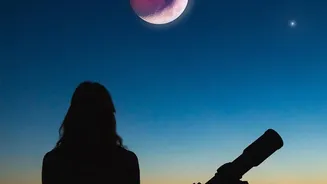
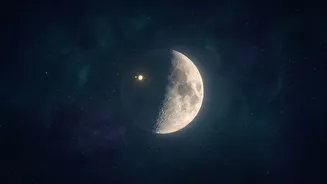
The key dates to watch for this beautiful celestial get-together, known as a conjunction, are the nights of October 24 and 25, 2026. On these evenings, the Moon and Saturn will appear very close to each other in the night sky. Saturn has been shining
brightly all month, but this pairing makes it exceptionally easy to locate. Simply find the bright, nearly full Moon after dusk, and you'll spot Saturn appearing as a steady, yellowish point of light nearby. The best viewing will be in the hours after sunset, looking towards the east-southeastern sky.
Preparing for Your Stargazing Session
Success in stargazing often comes down to preparation. First, check your local weather forecast for clear skies. Even a little cloud cover can spoil the view. Next, try to get away from the glare of city lights. Light pollution washes out fainter celestial objects, and while the Moon and Saturn are bright, a darker location will always provide a better, more immersive experience. Find a spot with an unobstructed view of the horizon, like a park, a rooftop, or a location on the outskirts of town. Finally, give your eyes about 15-20 minutes to adjust to the darkness. This will dramatically improve your ability to see fainter details in the night sky.
Using Binoculars for the Best View
While Saturn is visible to the naked eye as a bright, star-like object, binoculars will elevate the experience. Any pair will do, but standard stargazing binoculars are often in the 7x50 or 10x50 range. The first number refers to the magnification (7x or 10x), and the second is the diameter of the lenses in millimetres, which determines how much light they can gather. A key challenge with binoculars is keeping them steady. The slightest shake can make your target jump around. To avoid this, try bracing your elbows on a stable surface like a wall or the roof of a car. You can also sit in a reclining chair to provide a stable viewing platform for your body. This will give you a much clearer and more enjoyable view of the celestial duo.
What to Expect When You Look
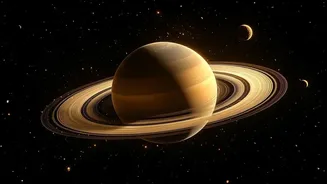
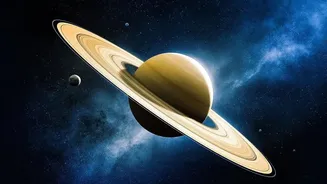
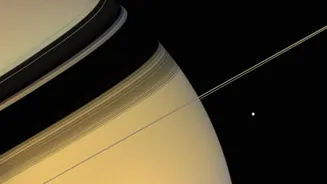
It’s important to manage expectations. Through most binoculars, Saturn will not look like the detailed pictures from the Hubble telescope. Instead of seeing a clear separation between the planet and its rings, you will likely see a bright point of light that appears slightly elongated or oval, like a tiny 'football'. This is the combined glow of the planet and its famous rings. Even discerning this shape is a thrill, as you are resolving a feature of a planet over a billion kilometres away with a handheld device. You will also get a fantastic, detailed view of the Moon itself, with its craters and 'seas' (the dark, flat plains) appearing in sharp relief, especially along the terminator—the line between the light and dark sides of the lunar surface.
Beyond the Saturn-Moon Conjunction
Once you've spotted Saturn, don't pack up your binoculars just yet. October offers other celestial sights. The bright planet Jupiter is also visible in the sky this month, appearing as a brilliant, steady light. Later in the month, on the nights of October 27 and 28, the Moon will move on to have a close encounter with the beautiful Pleiades star cluster, also known as the Seven Sisters. Rising in the eastern sky, this cluster will appear as a small, shimmering patch of bluish stars. Your binoculars will transform this fuzzy patch into a stunning collection of individual stellar gems, proving that there is always more to explore in the night sky right from your own backyard.