



From Space Rock to Shooting Star
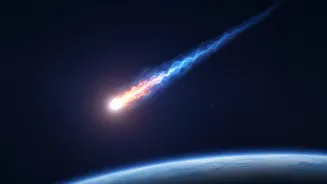
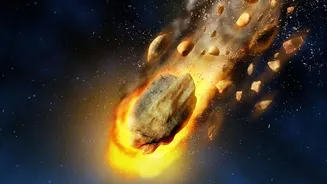
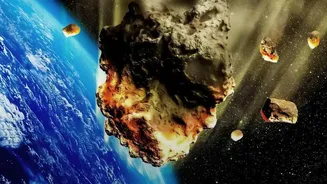
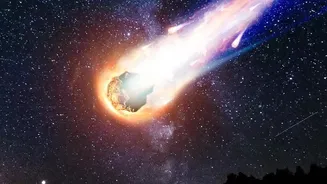
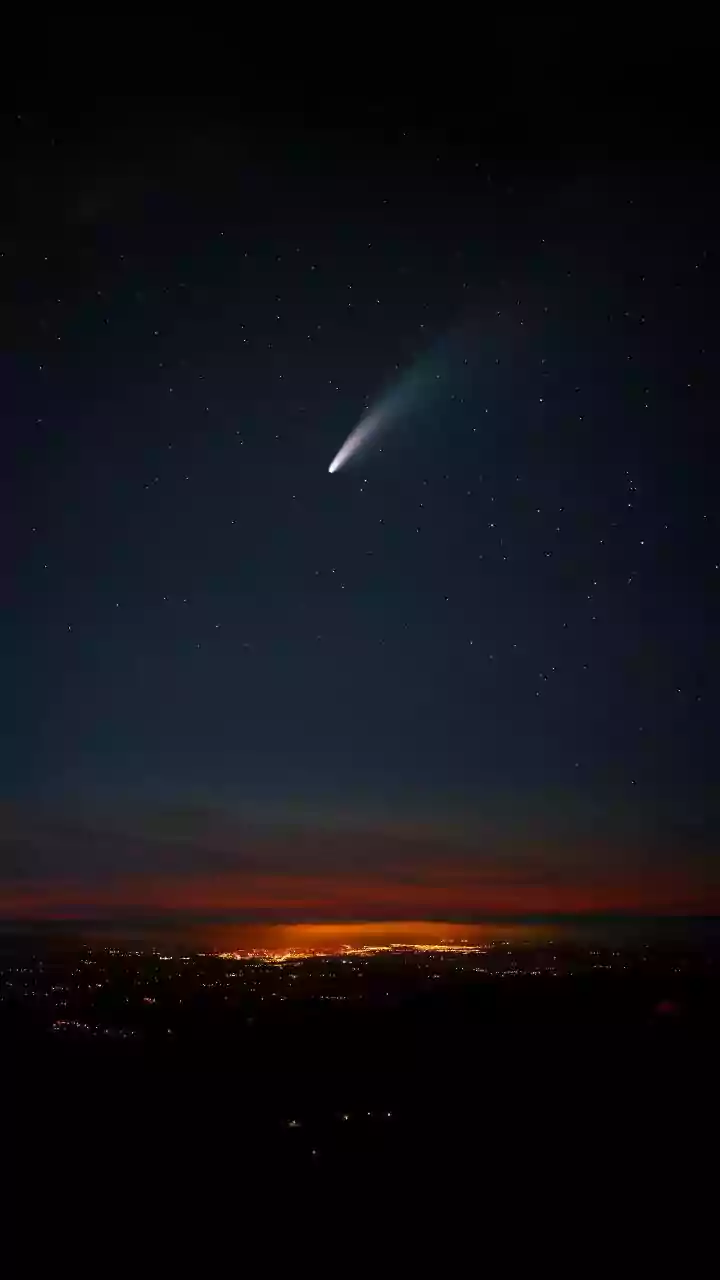
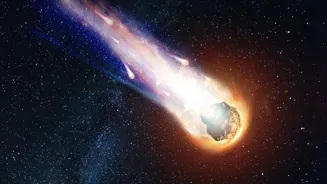
First, let's get the terms straight. Out in space, we have meteoroids—chunks of rock and metal ranging from dust grains to small asteroids. When one of these enters Earth’s atmosphere at incredible speed, friction with the air causes it to burn up, creating
the bright streak we call a meteor, or shooting star. If any part of it survives the journey and hits the ground, that surviving piece is called a meteorite. Scientists estimate that about 48.5 tons of this material falls on Earth every day, most of it burning up completely. These objects mostly come from within our own solar system, either as fragments of asteroids or dusty debris left behind by comets.
The Clues in the Trajectory
An object's path is the first major clue to its identity. By using cameras from multiple locations to triangulate a meteor's position, scientists can calculate its trajectory, speed, and deceleration as it plummets through the atmosphere. This reveals its orbit around the Sun. Meteors that belong to a specific shower, like the annual Perseids in August, travel in the same direction and appear to radiate from a single point in the sky. By tracing this path backward, astronomers can match the meteor stream to its parent body, such as Comet Swift-Tuttle in the case of the Perseids. Most meteors originating from our solar system travel at speeds between 13 and 73 kilometres per second.
Unmasking Interstellar Visitors
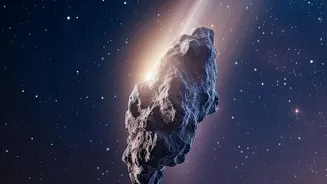
The ultimate prize is identifying an object from outside our solar system. The key giveaway is speed. To escape the Sun's gravity, an object needs to be moving extremely fast. Anything entering our solar system with a speed greater than the Sun's escape velocity at that distance is on a hyperbolic trajectory—meaning it will whip past the Sun and head back into interstellar space, never to return. In 2019, astronomers identified just such an object in data from 2014. Dubbed CNEOS 2014-01-08, this meteor entered the atmosphere at about 60 km/s, and its trajectory confirmed it was an interstellar visitor, predating the more famous object 'Oumuamua. These visitors are invaluable, as they offer a direct sample of material from other star systems.
What the Light Reveals
As a meteor burns, the intense heat causes its elements to glow, producing light at specific wavelengths. By using a technique called spectroscopy, which splits this light into its constituent colours like a prism, scientists can read its chemical signature. The resulting spectrum shows bright lines that correspond to specific elements. For instance, typical meteor spectra show the presence of common rock-forming elements like iron, magnesium, calcium, and sodium. This analysis not only tells scientists what the meteoroid was made of but can also provide clues about its parent body. Some interstellar objects have shown unusual compositions, suggesting they formed in environments very different from our own solar system.
Putting It All Together
By combining trajectory, speed, and spectral data, a comprehensive picture emerges. The path tells scientists where the object came from—the asteroid belt, a comet's trail, or even another star. The speed separates solar system residents from interstellar tourists. And the light reveals its fundamental building blocks. For example, the interstellar meteor CNEOS 2014-01-08 showed a material strength greater than any known solar system meteorite, hinting at a truly exotic origin. Each fiery streak is a high-speed experiment, delivering information from across the cosmos directly into our atmosphere and allowing us to piece together the story of a visitor we only glimpse for a few seconds.