

The Sunshine Lifeline
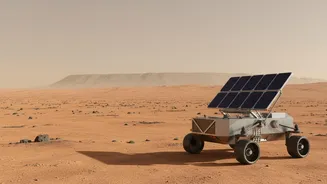
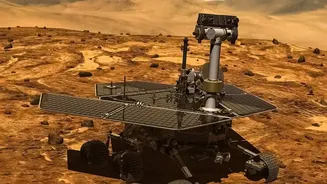
For many of NASA's robotic explorers on Mars, sunlight is everything. Missions like the historic Spirit and Opportunity rovers, and the InSight lander, were designed to run on solar power. Large solar arrays, sometimes oversized to compensate for expected
dust, convert the faint Martian sunlight into the electricity needed to move, conduct science, and, most importantly, keep their vital electronics warm against the planet's frigid temperatures. This reliance on the sun makes them incredibly vulnerable. Unlike their nuclear-powered cousins, Curiosity and Perseverance, which are largely immune to changes in sunlight, a solar-powered craft's mission can be ended by a sufficiently long period of darkness.
A Planet Covered in Dust
Martian dust is not like the dust on Earth. It is incredibly fine, almost like flour, and due to the dry atmosphere, it is electrostatically charged, causing it to cling to surfaces. This dust is constantly being lifted into the thin atmosphere by winds, creating a persistent haze. Periodically, these conditions escalate into dust storms. While some are localised, others can grow to become regional or, every few years, global events that shroud the entire planet in a dusty veil for weeks or months. A 2018 global storm, for example, blocked so much sunlight that it ultimately ended the 14-year mission of the Opportunity rover. More recently, the InSight lander's mission concluded in late 2022 after its panels became so coated in dust that it could no longer generate power.
Mars's Weather Satellites
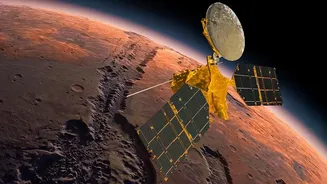
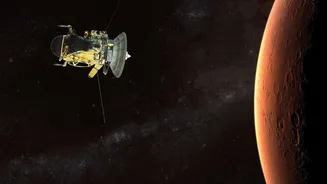
This is where the orbiters come in. Spacecraft like NASA's Mars Reconnaissance Orbiter (MRO) and Odyssey act as a critical, first line of defence. From their vantage point high above the planet, they function as an interplanetary weather service. The MRO, in particular, is equipped with powerful instruments perfect for the job. Its Mars Color Imager (MARCI) captures a daily global map, allowing scientists to spot developing storms and track their movement. Meanwhile, its Mars Climate Sounder (MCS) measures atmospheric temperatures, which helps predict how a storm might grow and spread, as rising dust warms the atmosphere and creates more wind. Together, these orbiters provide a planet-wide view that no surface mission could ever achieve on its own.
From Orbit to Rover
The data gathered by these orbiters is more than just a weather report; it's actionable intelligence that can mean the difference between life and death for a rover. When orbiters detect a major storm approaching a solar-powered asset, mission controllers on Earth spring into action. They can send commands to the lander or rover to prepare for the storm's arrival. This often involves powering down non-essential systems, including science instruments and communications, to conserve as much energy as possible. The primary goal is to ensure the craft has enough power to run its survival heaters, preventing its core electronics from freezing and failing. During a massive 2022 dust storm, the InSight lander was commanded to enter a low-power "safe mode" based on warnings from orbiters, hunkering down to survive the darkened skies.
The Unexpected Cleaning Crew
While orbiters help missions prepare for the worst, they also help them hope for the best. The same Martian winds that kick up dangerous storms can also, paradoxically, save a mission. Mission operators have documented numerous "cleaning events," where wind gusts and dust devils have blown settled dust off solar panels, leading to a sudden and welcome boost in power. The Spirit and Opportunity rovers benefited from these events for years, allowing them to far exceed their planned 90-day missions. Unfortunately, these events are unpredictable. The InSight lander detected many passing whirlwinds, but none were strong enough to clean its panels, leading to its eventual demise. Mission teams have even attempted to trigger cleanings, with the InSight team cleverly using the lander's robotic arm to trickle sand next to the panels, hoping the wind would carry the grains across the surface and take the dust with them.