






The New Calculus of Air Travel
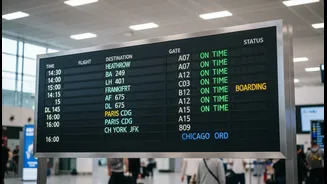
Not long ago, the primary factor for booking a flight was almost always price. Today, a new priority has taken center stage: reliability. A recent Global Rescue survey found that flight cancellations are considered the single biggest trip-ruiner for travellers,
topping bad weather and poor planning. This shift comes after a period of significant operational challenges for the aviation industry, with U.S. airlines experiencing njihov worst year for on-time arrivals in a decade in 2025. Travellers are growing weary of the uncertainty. The decision-making process for booking a trip has become more complex, with passengers increasingly weighing affordability, operational disruptions, and airline reliability all at once. This isn't just about avoiding inconvenience; it's about protecting the investment of time and money that a trip represents. For many, travel is now seen as an essential part of their lifestyle rather than a simple luxury, and they are willing to be more strategic to ensure their plans go smoothly.
Understanding an Airline's Report Card
Before you can prioritize reliability, you need to know how to measure it. The key metric is On-Time Performance (OTP), which generally tracks the percentage of flights that arrive at the gate within 15 minutes of their scheduled time. A cancellation rate is another critical data point, reflecting the percentage of scheduled flights that don't operate at all. Aviation analytics firms like Cirium and OAG publish monthly and annual reports ranking airlines globally and by region. For instance, in June 2026, Saudia was named the world's most punctual airline by Cirium, while WestJet led the rankings for North America for the entire second quarter. These rankings provide a high-level overview, but performance can vary significantly by specific route and airport. A carrier might have excellent overall OTP but struggle at a notoriously congested airport.
How to Research Reliability Before You Book
Finding this data is easier than you might think. Many airlines are required to show their on-time statistics directly on their websites, often hidden behind a 'Details' or flight number link during the booking process. For a broader view, government resources like the U.S. Department of Transportation's Air Travel Consumer Report provide monthly data on delays, cancellations, and more for major carriers. Independent sites like AirlineRatings.com offer a different perspective, assigning star ratings based on criteria like safety audits from the International Air Transport Association (IOSA) and incident history. For real-time and historical flight data, apps and websites like FlightAware and Flightradar24 are powerful tools. They can show you the performance of a specific flight number over the past week, revealing patterns of chronic delays that official monthly averages might obscure.
Beyond the Numbers: Other Signs of a Reliable Airline
A good OTP is crucial, but it's not the whole story. True reliability also encompasses how an airline handles things when they go wrong. This includes customer service responsiveness, the ease of rebooking during a disruption, and efficient baggage handling. J.D. Power's annual North America Airline Satisfaction Study, for example, measures passenger satisfaction across seven dimensions, including the on-board experience and how airlines communicate during travel days. Another factor is an airline's 'completion factor,' which is the percentage of scheduled flights that are actually flown. A high completion factor, even with some delays, means you are very likely to get to your destination without being cancelled. Look for airlines that invest in their operations, such as standardizing their fleet to reduce complexity or using AI to improve planning and resilience, as these are often signs of a commitment to dependability.