







The Main Attraction: A Moon and Star Cluster Meetup
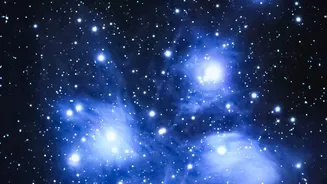
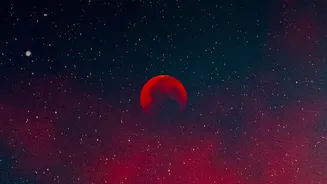
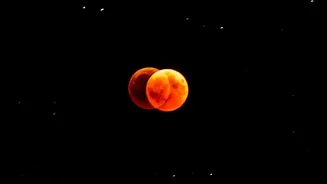
The headline event for many skywatchers this month will be the beautiful close approach of the Moon and the Pleiades star cluster. On the night of October 27th and into the morning of the 28th, you can watch the waxing gibbous Moon drift past this famous
cluster, also known as the Seven Sisters. To see it, simply look towards the eastern sky in the evening as the Moon and the cluster climb higher through the night. While the Pleiades cluster is visible to the naked eye, appearing as a small, fuzzy patch of about six or seven stars, its true beauty is unlocked with a pair of binoculars or a small telescope, which will reveal dozens more stars. This pairing offers a fantastic photo opportunity and a moment of cosmic beauty that has been observed by cultures around the world for thousands of years.
Meet the Players: Jupiter and the Seven Sisters
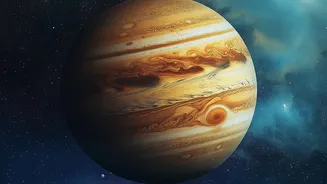
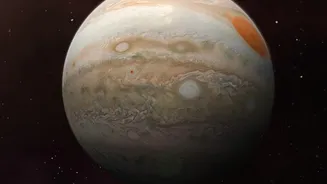
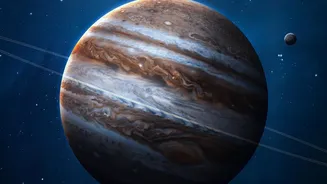
So, what are you looking at? Jupiter, the largest planet in our solar system, is a brilliant, star-like object that doesn't twinkle. Throughout October, it rises in the east-northeast after midnight. On the morning of October 6th, a lovely crescent Moon will appear near the bright planet, making for another easy-to-spot celestial pairing. The Pleiades, on the other hand, is not a planet but an open star cluster located about 440 light-years away in the constellation of Taurus. It's a group of over 1,000 young, hot, blue stars born from the same cloud of gas and dust roughly 100 million years ago. Although often called the Seven Sisters, most people can only see about six stars with the naked eye. Its distinct shape, resembling a tiny dipper, has made it a subject of myth and fascination across many ancient cultures.
Bonus Sights: Saturn at its Best and a Meteor Shower
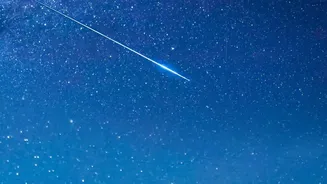
October has more to offer than just one main event. Early in the month, on October 4th, Saturn reaches opposition. This is when Earth passes directly between the Sun and Saturn, placing the ringed planet opposite the Sun in our sky. As a result, Saturn will rise around sunset, be visible all night long, and be at its brightest for the entire year. It's the best time to view the planet and its magnificent rings through a telescope. Later in the month, look out for the Orionid meteor shower, which peaks on the night of October 21st and into the pre-dawn hours of October 22nd. The Orionids are fast, bright meteors created from the dust and debris left behind by the famous Halley's Comet. While a bright Moon will interfere this year, your best bet is to watch in the few hours before dawn after the Moon has set. You might see up to 20 meteors per hour in a dark sky.
Your Guide to a Perfect Skywatching Night
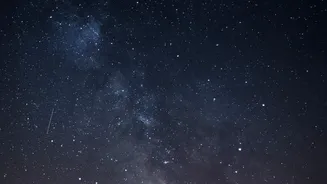
You don't need expensive equipment to enjoy these celestial wonders. Most of October's events are visible with the naked eye. For the best experience, find a location away from bright city lights. Give your eyes at least 20 minutes to fully adapt to the darkness; you'll be amazed at how many more stars become visible. While a telescope is needed to see Saturn's rings, a simple pair of binoculars will dramatically enhance your view of the Moon's craters, Jupiter's largest moons, and the sparkling stars of the Pleiades cluster. Dress warmly, as even pleasant evenings can get cool during long observation periods. Finally, be patient. Skywatching is a quiet, reflective activity. Let the vastness of the cosmos sink in and enjoy the show.