


The Promise of a New Eye on the Cosmos
For decades, finding planets outside our solar system, or exoplanets, has gone from science fiction to a booming field of astronomy. Thousands have been discovered, but the holy grail has always been to find a rocky, Earth-sized world in the “habitable
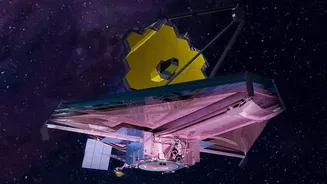
zone” of its star — an orbit where temperatures could allow liquid water to exist. The launch of the JWST was a game-changer. With its unparalleled infrared sensitivity, it can do what previous telescopes couldn't: peer into the atmospheres of these distant worlds to look for the chemical building blocks of life. Scientists hoped to find worlds with atmospheres rich in water vapor, methane, and oxygen, clues that might point to a thriving biosphere.
A Harsh Reality Check
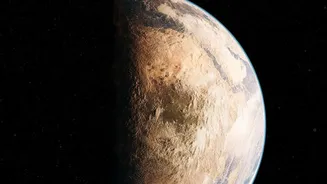
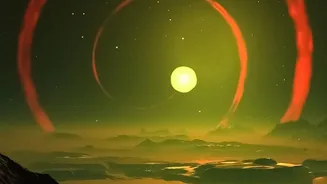
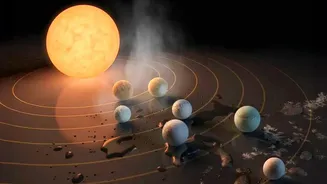
However, as the first waves of data have rolled in, the JWST has delivered a sobering reality check, particularly for planets orbiting red dwarf stars. Red dwarfs are the most common type of star in our galaxy, and they are known to host many rocky planets in their habitable zones. This made them prime targets. But these stars are also volatile, especially in their youth, prone to violent flares and powerful stellar winds — constant streams of charged particles. JWST observations have started to confirm what scientists long suspected: this stellar activity is brutal on planetary atmospheres. For many of the closest-orbiting rocky planets studied, including several in the famed TRAPPIST-1 system, the telescope has found them to be bare, airless rocks, their gaseous envelopes likely stripped away over millions of years by their angry parent star.
The Red Dwarf Dilemma
This phenomenon of atmospheric loss is a critical blow to the hopes for life around many red dwarf planets. For a planet to be warm enough for liquid water when orbiting a cool, dim red dwarf, it must huddle very close to the star. This proximity, however, puts it directly in the firing line of intense radiation and stellar wind that can erode an atmosphere over time. It’s a cosmic catch-22. Without a thick, protective atmosphere, liquid water cannot exist on the surface, and harmful radiation would sterilize the planet. JWST's findings suggest that for many planets in the traditional habitable zone of red dwarfs, the conditions are simply too hostile for an atmosphere to survive, let alone foster life.
Redefining the Search Parameters
But these discoveries are not a death knell for the search for life. Instead, they represent a crucial refinement of our strategy. The concept of the habitable zone is evolving from a simple measure of distance and temperature to a much more complex equation. Scientists now understand that habitability depends on a delicate interplay between a planet's size, its magnetic field, and the type and age of its star. A strong magnetic field, for instance, can act as a shield, deflecting the stellar wind and protecting the atmosphere from erosion. The JWST is teaching us that finding a world without an atmosphere is just as important as finding one with it. This information allows scientists to build better models of planetary evolution.
A More Focused Hunt for Life
By revealing which worlds are likely barren, the JWST is effectively narrowing the search field and helping astronomers hunt smarter, not harder. Resources and precious telescope time can now be focused on more promising candidates. This might include planets orbiting calmer, more sun-like stars, or planets around red dwarfs that have managed to retain their atmospheres against the odds. Indeed, the telescope has found intriguing hints of atmospheres on some worlds, even if they aren't Earth-like. These observations challenge and refine formation theories. This process of elimination is fundamental to science. The absence of evidence in one area guides us toward more fruitful avenues of exploration, making the eventual discovery of a truly habitable world all the more likely.