







The Runner’s Contradiction
Jogging is a champion of cardiovascular health, building endurance and strengthening your heart. However, its effect on flexibility can be counterintuitive. The very nature of running involves repetitive muscle contractions to propel you forward. While
this is great for building power, it doesn't take your muscles through their full range of motion. Over time, without a counterbalance, this repetitive shortening can lead to muscle tightness, particularly in the hamstrings, calves, and hip flexors. Your body adapts to the specific, limited range of motion it uses while jogging. So, while you're getting fitter in one respect, you might be losing suppleness in another, a phenomenon some call 'adaptive shortening'. This is why many dedicated runners find themselves feeling stiff despite being in peak physical condition.
The Science of a Good Stretch
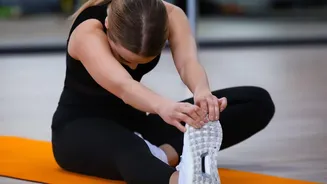
Stretching, unlike running, is an activity specifically designed to lengthen muscles and their surrounding connective tissues, like fascia. When you hold a stretch, you are gently pulling on your muscle fibers. This action signals nerve receptors in the muscles, known as muscle spindles, to relax their protective 'stretch reflex'. With consistent practice, your nervous system learns to tolerate a greater range of motion, allowing the muscle fibers to elongate. This process doesn't just make the muscle itself more pliable; it also improves the flexibility of tendons and hydrates connective tissues, leading to smoother, more efficient movements. Static stretching, where you hold a position for 30 seconds or more, is particularly effective for increasing this resting muscle length and improving your overall flexibility.
Jogging vs. Stretching: A Clear Distinction
When placed side-by-side, the two activities have fundamentally different goals and outcomes for your muscles. Jogging is a dynamic, concentric activity—it shortens muscles to generate force. Stretching is primarily an elongating activity, aiming to increase the resting length of those same muscles. While jogging increases blood flow and warms up the muscles, making them more pliable temporarily, it doesn't create lasting gains in flexibility. In fact, many experts argue that running without a complementary stretching routine can actively decrease flexibility over time. Stretching, on the other hand, is the specific tool required to improve joint range of motion and counteract the muscle tightness that can result from activities like running. For the dedicated purpose of becoming more flexible, stretching is the more direct and effective method.
A Perfect Partnership, Not a Rivalry
The takeaway isn't to trade your running shoes for a yoga mat permanently. Instead, the optimal approach is to view jogging and stretching as essential partners in a balanced fitness routine. Running provides the cardiovascular workout your body needs, while stretching provides the maintenance and recovery required to keep your body moving freely and prevent injury. Think of it this way: jogging is the work, and stretching is the recovery that ensures you can continue doing that work effectively. By neglecting stretching, runners may increase their risk of injury due to stiff muscles and limited joint mobility. A routine that includes both will not only improve your heart health and endurance but also your posture, range of motion, and overall physical resilience.
Building Your Balanced Routine
So, how do you best combine the two? The consensus among fitness experts is clear: perform dynamic stretches before you run, and save static stretches for after. Dynamic stretches, like leg swings, walking lunges, and high knees, involve movement. They warm up your muscles and increase blood flow, preparing your body for the run without relaxing the muscles too much. Static stretching before a run can actually decrease muscle power and may even increase injury risk. After your run, when your muscles are warm and pliable, is the perfect time for static holds. Focus on the major muscle groups used in running: hamstrings, quadriceps, calves, and hip flexors. Hold each stretch for at least 30 seconds to give the muscle time to relax and lengthen, helping to reduce soreness and build longterm flexibility.