




From Kerala Roots to Orbit
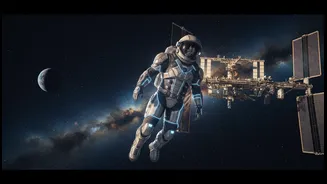
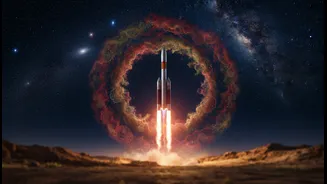
On July 14, 2026, Dr. Anil Menon, a US Space Force colonel and emergency physician, launched into orbit aboard a Soyuz spacecraft, becoming the first NASA astronaut of Malayali heritage to fly to space. Born in Minneapolis to an Indian father from Ottapalam,
Kerala, and a Ukrainian mother, Menon’s journey is a story of exceptional drive and diverse expertise. Before his selection as a NASA astronaut in 2021, he had already built a remarkable career at the intersection of medicine and exploration. He served as a frontline medic in Afghanistan, treated climbers on Mount Everest, and spent a year in India as a Rotary Scholar supporting polio vaccination efforts. His path to becoming an astronaut wasn't direct; he first served NASA as a flight surgeon, supporting ISS crews, before joining SpaceX as its first flight surgeon, where he helped launch the company’s first human missions. Now, at 49, his own mission aboard the ISS marks the culmination of a life spent pushing boundaries on Earth and beyond.
The Body in a Weightless World
Living in space for extended periods takes a significant toll on the human body. Without the constant pull of gravity, astronauts face a barrage of physiological challenges that Menon’s mission is designed to investigate. Muscles, no longer needing to support the body, begin to atrophy. Bones lose density at an accelerated rate, sometimes as much as one percent per month. The cardiovascular system also changes, as fluids shift towards the head, and the heart doesn’t have to work as hard to pump blood, leading to deconditioning. Beyond the physical, the psychological strain of isolation and confinement in a remote environment can lead to fatigue, sleep disturbances, and mood changes, while increased radiation exposure poses long-term health risks. These hurdles are the primary barrier to sending humans on multi-year voyages to Mars and other deep-space destinations.
A Doctor's Work in Microgravity
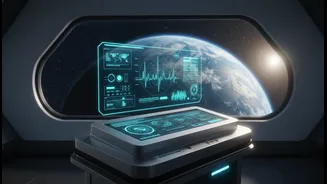
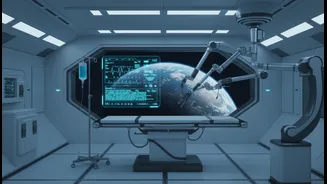
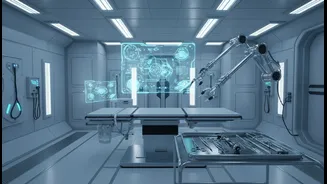
With his extensive medical background, Menon is uniquely qualified for the research he will conduct as part of Expedition 74/75. A major focus of his work is to study how microgravity affects blood flow, the structure of veins, and the composition of blood itself. He will not only oversee experiments but also serve as a test subject, providing invaluable data on how his own body adapts. One of the most critical investigations involves testing technology that can produce intravenous (IV) fluids from the station’s own potable water system. This capability could be a game-changer for deep-space missions, where carrying large amounts of medical supplies is not feasible. Menon will also help pioneer the use of ultrasound guided by augmented reality and artificial intelligence, a system designed to allow astronauts to perform complex medical diagnostics without real-time support from doctors on Earth.
Paving the Way for Future Explorers
While human health is the cornerstone of his research, Menon's mission has a broader scientific scope. He will contribute to experiments on manufacturing high-quality semiconductor crystals in microgravity, which could lead to breakthroughs in high-performance computing and AI. This work underscores the dual purpose of the ISS: to prepare humans for further exploration and to conduct research that delivers tangible benefits back on Earth. Menon's journey is also a powerful symbol for India. He shares a close friendship with Prasanth Balakrishnan Nair, one of the astronaut-designates for India’s own Gaganyaan mission, and his flight is seen as an inspiration for the next generation of Indian scientists and explorers. As the first astronaut with roots in Kerala, a state with a historic role in India's space program, his presence in orbit represents both a personal achievement and a continuation of a proud legacy.