




The Immense Challenge of Finding Exomoons
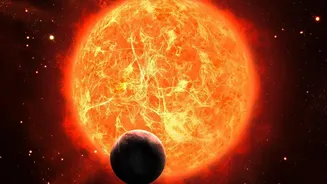
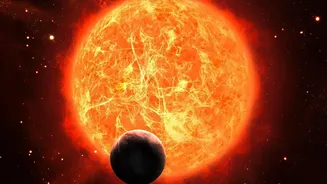
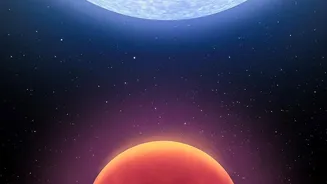
To date, astronomers have confirmed thousands of exoplanets, but not a single exomoon has been definitively confirmed. The reason is simple: scale. An exomoon is a tiny object orbiting a much larger planet, which is itself an almost imperceptibly small
dot from our perspective. The light from an exomoon is incredibly faint, and its gravitational pull on its host planet is minuscule. Spotting these 'moons of other worlds' requires looking for indirect clues—subtle effects the moon has on its parent planet as they both orbit their star. It's like trying to detect a fly buzzing around a distant lighthouse lamp from hundreds of kilometers away.
Method 1: The Planetary Wobble
The most promising techniques involve watching an exoplanet as it transits, or passes in front of, its star. A planet doesn't just sit still while its moon orbits; the two bodies actually orbit a common center of mass, or barycenter. This means the planet is constantly being tugged by its moon, causing it to wobble slightly in its own path around the star. This wobble affects the timing of its transit. If the moon is pulling the planet forward, the transit will start a little earlier than expected. If the moon is trailing behind, the transit will start a bit late. This effect is called Transit Timing Variation (TTV), and a consistent, periodic variation in the transit time can be a strong indicator of an unseen moon.
Method 2: The Duration Difference
Related to the wobble is another clever technique called Transit Duration Variation (TDV). The speed of the planet as it crosses the face of its star isn't constant if it has a moon. When the planet is moving forward in its own small orbit around the barycenter (in the same direction as its larger orbit around the star), its total velocity is slightly higher. This causes the transit to be shorter. Conversely, when it's moving backward against its orbital direction, the transit takes a little longer. By measuring these tiny changes in the transit's length over time, astronomers can build another piece of evidence for an exomoon. When TTV and TDV signals are analyzed together, they can be used to separate the moon's mass from its orbital distance, providing a much clearer picture.
Method 3: The Double Dip
The most direct, yet hardest, way to find an exomoon is to spot the dip in starlight it creates itself. If a moon is large enough and its orbit is aligned just right, it might transit the star alongside its planet, creating a small, secondary dip in the star's light curve. This is extraordinarily difficult to detect because the signal is weak and can be easily confused with stellar activity like starspots or instrumental noise. Several exomoon candidates have been identified using this method, including Kepler-1625b I and Kepler-1708b i. Both are thought to be Neptune-sized moons orbiting Jupiter-sized planets, a type of system unknown in our solar system. However, these detections are still tentative and subject to intense debate and further verification.
The Future of the Hunt
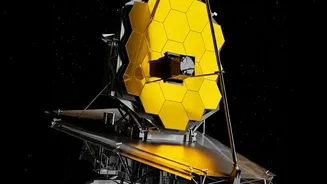
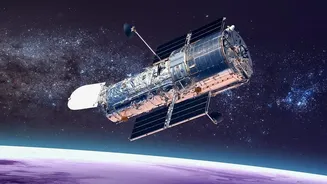
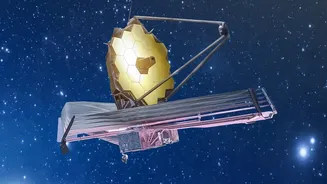
While no exomoon has been confirmed with 100% certainty, the hunt is intensifying. New algorithms and machine learning techniques are being developed to sift through massive datasets from telescopes like Kepler and TESS to find these faint signals. The next generation of technology, especially powerful instruments like the James Webb Space Telescope, will have the precision needed to follow up on the most promising candidates. Directly imaging an exomoon remains a far-off dream, but by combining these clever indirect methods, astronomers are getting closer than ever to proving that our solar system is not unique in having planets attended by faithful companions. The discovery of the first exomoon won't just be a technical milestone; it will open a new frontier in the search for habitable worlds, as some of these moons could potentially hold liquid water and the right conditions for life.