








More Than Just Megacities
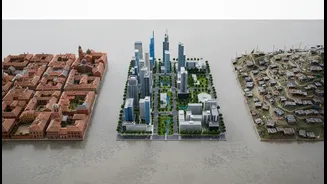
When we think of an 'Indian city,' images of Delhi, Mumbai, or Bengaluru often come to mind. Yet, these sprawling megacities are only one part of India's urban story. The nation is home to hundreds of cities, each with a unique character, from planned
Tier-2 cities like Chandigarh to ancient, densely packed ones like Varanasi. A recent study highlighted that urban health risks vary widely across cities, making a bottom-up approach to policy essential. The challenges of a coastal city like Chennai, which deals with humidity and specific vector-borne diseases, are vastly different from those in a landlocked industrial hub like Ludhiana, which grapples with industrial pollutants. Simply transposing a successful health initiative from one to the other ignores these fundamental differences in geography, economy, and population.
A Tale of Many Climates and Pollutants
Environmental factors are perhaps the most glaring difference between Indian cities. The severe winter air pollution that chokes North Indian cities makes respiratory illnesses a top public health priority there. Outdoor air pollution is a leading risk factor in urban India, but its intensity and sources differ dramatically. In contrast, a southern coastal city might prioritise managing waterborne diseases during the monsoon season. The urban heat island effect, where concrete and asphalt make cities significantly warmer than their surroundings, also presents varied health risks. A heatwave action plan developed for the dry heat of Ahmedabad will not be as effective in a city with high humidity like Kolkata, where the 'real feel' temperature poses a different kind of threat. These environmental realities demand tailored health advisories and infrastructure.
The Infrastructure and Lifestyle Divide
How people live, work, and commute shapes their health profoundly, and this varies enormously. Mumbai's lifeblood is its local train network, which contributes to both physical activity and the stress of overcrowding. In contrast, many Tier-2 and Tier-3 cities are dominated by two-wheeler traffic, leading to different patterns of accidents and pollution exposure. A study across 40 cities revealed that while urban areas overall reduced risks from things like unsafe water compared to rural areas, they introduced new risks from sedentary lifestyles and noise pollution. A walkable infrastructure project that proved successful in Chennai, for example, might be impossible to implement in a city with no existing pedestrian-friendly spaces. These lifestyle and infrastructure differences mean that a national campaign promoting a single type of physical activity could miss the mark entirely in many localities.
A Mosaic of People and Economies
Beyond the physical environment, the socio-economic fabric of Indian cities is incredibly diverse. A city with a large, transient population of migrant workers has vastly different public health needs than one with a stable, ageing population. Access to healthcare, literacy levels, and income disparities create a complex web of health vulnerabilities. The health issues of the urban poor in slums are often more severe than those in rural areas, complicated by overcrowding and poor sanitation. A health awareness campaign that works in a high-literacy city may be ineffective in another with different educational profiles. Policies must account for these deep-seated social determinants of health, which cannot be captured by a single city's data.
The Peril of a Single Policy Story
Using one city as a model for the entire country is like telling a single story about a diverse and complex nation. It leads to policy blind spots and wasted resources. The National Urban Health Mission (NUHM), launched in 2013, was a significant step in recognising the unique needs of urban populations. However, its effectiveness has been hampered by challenges in implementation and the sheer difficulty of creating strategies that work for everyone. For instance, primary healthcare infrastructure is severely lacking in many urban areas, which were historically not the focus of public health planning. Building an effective urban health system requires acknowledging that there is no single 'urban India'. The solutions for improving public health must be as diverse as the cities themselves.