








A Solution or a Huge Gamble?
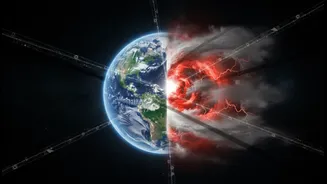
Geoengineering is the deliberate, large-scale intervention in Earth's climate systems to counteract global warming. The proposals generally fall into two main camps. The first is Carbon Dioxide Removal (CDR), which involves pulling existing carbon out
of the atmosphere through methods like direct air capture or ocean fertilization. The second, and far more controversial, is Solar Radiation Management (SRM). Inspired by the cooling effects of large volcanic eruptions, SRM aims to reflect a small fraction of sunlight back into space. The leading SRM methods are Stratospheric Aerosol Injection (SAI), which would spray reflective particles high into the atmosphere, and Marine Cloud Brightening (MCB), which uses sea salt to make clouds over the ocean more reflective. While CDR is seen as a necessary, if slow, part of the climate solution, SRM is viewed as a high-risk emergency option, and it's the focus of today's intense debate.
From Computer Models to Fraught Reality
For years, geoengineering was largely confined to computer models and theoretical papers. But as the impacts of climate change accelerate, interest from researchers, private companies, and even some governments has grown. This has pushed the conversation from 'what if' to 'how,' with a handful of small-scale outdoor experiments being proposed or attempted. A project in Alameda, California, aimed to test marine cloud brightening technology before the city council paused it amid public concern. Another high-profile experiment to release particles in the stratosphere, called SCoPEx, was cancelled after opposition from Indigenous groups and environmentalists. These controversies highlight the central tension: scientists argue they need real-world data to understand the risks and potential benefits, while critics warn that even small experiments legitimize a dangerous technology and create a slippery slope toward deployment.
The Unintended Consequences
The list of potential downsides to solar geoengineering is long and daunting. Scientists are concerned that altering the climate in one region could have disastrous, unforeseen effects elsewhere, potentially shifting rainfall patterns and causing droughts or floods. A recent study found that marine cloud brightening in the Pacific could dramatically weaken the El Niño cycle, with global weather implications. There are also fears that spraying sulfate particles could damage the ozone layer. Perhaps the most alarming risk is 'termination shock'. If a large-scale SRM program were ever started and then abruptly stopped, global temperatures could surge rapidly, causing ecological devastation far worse than gradual warming. Critically, none of these techniques would address the root cause of climate change—greenhouse gas emissions—or related problems like ocean acidification.
Who Gets to Control the Thermostat?
Beyond the scientific uncertainty lies a minefield of geopolitical and ethical questions. Who would have the authority to deploy a technology that affects the entire planet? How would decisions be made? A unilateral deployment by one country, or even a wealthy corporation, could be perceived as an act of aggression by others who believe they are being harmed. This raises the spectre of 'climate wars'. There is currently no international body or treaty specifically designed to govern geoengineering. While some existing agreements, like the Convention on Biological Diversity, have issued moratoriums on most geoengineering activities, the framework is patchy and enforcement is a major challenge. This governance vacuum is one of the biggest reality checks of all, as nations and activist groups increasingly call for a global non-use agreement, fearing the technology could never be managed fairly.