


Key Signs That Point to a Fracture
While only a medical image can confirm a broken bone, your body provides strong clues. A fracture often causes intense, sharp pain that is localized to a specific spot on the bone, unlike the more widespread ache of a sprain. This pain typically worsens
with movement or when you put pressure on the area. Other tell-tale signs include significant swelling that appears quickly, visible bruising around the injury, and difficulty moving the limb. One of the most significant indicators is an inability to bear weight; if you can't stand on your injured ankle or lift something with your arm, a fracture is a strong possibility. Sometimes, people report hearing or feeling a popping or grinding sensation at the moment of injury, which also points toward a break.
When to Go to the Emergency Room
Not all suspected fractures require a trip to the emergency room (ER), but some signs demand immediate attention. If a bone is visibly protruding through the skin (an open fracture), or if the limb is bent at an unnatural angle or severely deformed, you should go to the ER right away. These are medical emergencies. Other critical symptoms include a loss of sensation, numbness, or a cold, bluish appearance in your fingers or toes below the injury, which could signal compromised blood flow or nerve damage. Heavy, uncontrolled bleeding is another clear reason to seek emergency care. These serious injuries often require more advanced care than a standard clinic can provide.
Urgent Care vs. Your Doctor
For less severe injuries, an urgent care centre is often a faster and more cost-effective option than an ER. Most urgent care facilities are equipped with X-ray machines and can diagnose and treat straightforward fractures, such as those in the wrist, ankle, fingers, or toes. This is a good choice if your pain is manageable, the limb is not obviously deformed, and you can still bear some weight. If the injury seems minor and symptoms are mild, you could also consult your primary doctor, though they may refer you for an X-ray elsewhere. Urgent care is built for these exact scenarios, offering a middle ground between waiting for a doctor's appointment and a full-scale emergency.
What to Expect During the X-Ray
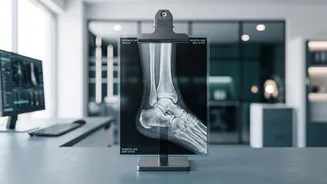
The X-ray process itself is quick, painless, and non-invasive. A technologist will position the injured part of your body between the X-ray machine and a digital detector or film. You may be asked to sit, stand, or lie down and hold several different positions to get clear images from multiple angles. It's crucial to remain completely still, and you might be asked to hold your breath for a few seconds to prevent blurring the image. You'll also need to remove any jewelry or metal objects that could interfere with the scan. The entire procedure usually takes less than 15 minutes, after which a radiologist will interpret the images and send a report to your doctor.
When an X-Ray Might Not Be Enough
X-rays are the gold standard for diagnosing most fractures, but they aren't perfect. Sometimes, small hairline cracks or stress fractures don't show up on an initial X-ray, especially in complex areas like the wrist or hip. If your doctor still suspects a fracture despite a clear X-ray, they may recommend a different type of imaging. A CT scan can provide more detailed cross-sectional images of the bone and is particularly useful for complex fractures. An MRI is excellent for spotting injuries to soft tissues like ligaments and tendons, but it can also reveal small fractures or bone bruises that an X-ray might miss. In some cases, a bone scan may be used if a fracture is suspected but not visible on other tests.