





Zinedine Zidane, 1998
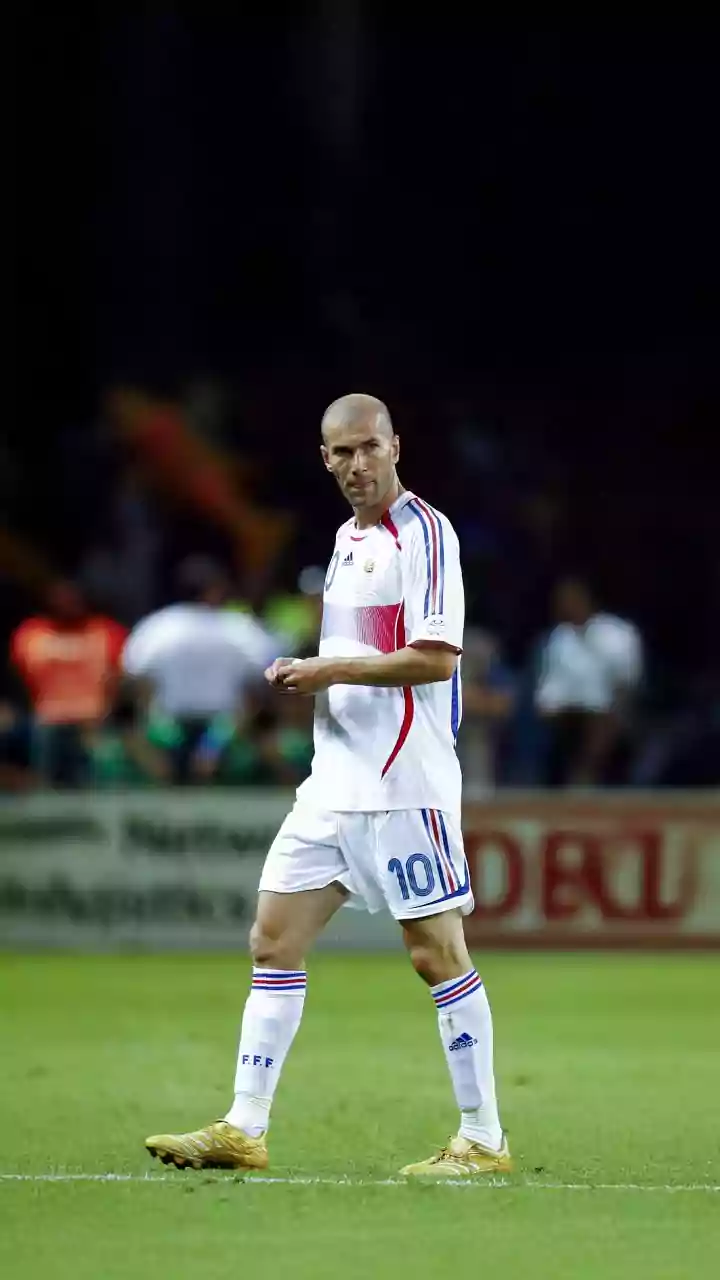
Going into the 1998 final in Paris, France were the underdogs against a formidable Brazilian team led by the superstar Ronaldo. The host nation carried the weight of expectation, and their hopes rested on the shoulders of their midfield maestro, Zinedine
Zidane. What followed was a masterclass in handling pressure. Zidane, a player not known for his heading ability, scored two magnificent headers from corners in the first half. His first goal sent the Stade de France into a frenzy, and his second just before halftime gave Les Bleus a commanding 2-0 lead. He controlled the game from midfield, nullifying Brazil's attack and cementing France's dominant 3-0 victory to claim their first-ever World Cup title on home soil.
Ronaldo Nazário, 2002
The story of Ronaldo at the 2002 World Cup is one of sport's greatest redemption tales. Four years earlier, he had suffered a mysterious convulsive fit just hours before the 1998 final and was a shadow of himself during the match. After enduring career-threatening injuries, many wondered if 'O Fenômeno' would ever return to his peak. He answered his critics emphatically. In the final against Germany, facing the tournament's best goalkeeper, Oliver Kahn, Ronaldo was unstoppable. He scored both goals in a 2-0 win for Brazil. The first came when he pounced on a rare mistake by Kahn, and the second was a brilliant first-time finish that sealed Brazil's record fifth World Cup. It was a heroic performance that brought him the Golden Boot and completed his triumphant comeback.
Andrés Iniesta, 2010
The 2010 final between Spain and the Netherlands was a brutal, physical affair. With a record number of yellow cards, the match was a tense, attritional battle with few clear chances. As the game headed towards a penalty shootout, locked at 0-0 in the dying minutes of extra time, a moment of magic was needed. It came from the quiet genius in Spain’s midfield, Andrés Iniesta. In the 116th minute, Cesc Fàbregas's pass found Iniesta in the box. With impeccable composure, he let the ball bounce before volleying it powerfully into the corner of the net, securing Spain's first-ever World Cup title. It remains the latest match-winning goal in a World Cup final, a strike that defined Spain's golden generation.
Mario Götze, 2014
In another final decided in extra time, Germany and Argentina were deadlocked at 0-0 in Rio de Janeiro's iconic Maracanã stadium. The game was a tense tactical struggle, with chances missed on both sides. German manager Joachim Löw sent on 22-year-old substitute Mario Götze late in the game. In the 113th minute, André Schürrle made a driving run down the left wing and sent a cross into the box. Götze controlled the ball perfectly on his chest and, in one fluid motion, volleyed it past the Argentine goalkeeper. It was a moment of sublime technical skill under the most intense pressure, making Götze the first substitute to score a World Cup-winning goal and delivering Germany its fourth title.
Kylian Mbappé, 2022
Though he ended up on the losing side, Kylian Mbappé's performance in the 2022 final was an incredible display of resilience and individual brilliance. With France trailing 2-0 to Argentina and looking completely defeated with just over 10 minutes to go, Mbappé single-handedly dragged his team back into the match. He scored a penalty, and then, just 97 seconds later, equalised with a stunning volley. After Lionel Messi put Argentina ahead again in extra time, Mbappé completed his hat-trick from the penalty spot in the 118th minute to force a shootout. He became only the second man in history to score a hat-trick in a World Cup final, an extraordinary feat even in defeat.