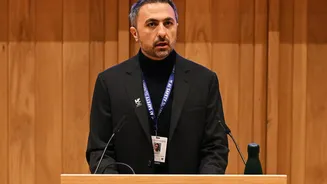




Can artificial intelligence cure cancer within a decade? That's the audacious claim from Dario Amodei, CEO of AI firm Anthropic. The remark has ignited both excitement and scepticism, raising a critical question: is this the future of medicine or just
tech hype?
The Ten-Year Timeline
During an IPO roadshow video released in early November 2026, Anthropic CEO Dario Amodei predicted that major illnesses like cancer, Alzheimer's, and heart disease could become 'relics of the past' in under a decade thanks to AI. This isn't the first time Amodei has floated such an idea. In a 2024 essay, he argued that AI could compress 50 to 100 years of medical progress into a 5-to-10-year window. His belief is that AI applied to every stage of biological research—from discovery to drug development—could create an 'age of miracles'. This vision is driven by personal experience; Amodei's father passed away from Hepatitis C just years before a cure became widely available.
How AI Is Already Fighting Cancer
The idea of AI 'curing' cancer doesn't come from nowhere. AI is already being integrated into oncology in significant ways. AI models help radiologists detect cancers earlier and more accurately on mammograms and other scans. In drug discovery, AI accelerates the identification of promising new treatment candidates. For instance, Anthropic has partnered with companies like Bristol Myers Squibb and Generate Biomedicines. In one project, AI helped redesign a part of a CAR T-cell therapy, making immune cells ten times better at killing tumour cells in lab tests. These tools are not replacing doctors but are augmenting their ability to process vast amounts of complex data, from genomic information to clinical trial results, to make better treatment decisions.
The Roadblocks to a Revolution
Despite the promise, the medical and scientific communities have met the ten-year timeline with considerable scepticism. Critics point out that cancer is not one disease but over 200 distinct, complex conditions. As of early 2026, no AI-designed drug had reached full clinical adoption after more than a decade of effort. Experts like Germany's former health minister, Karl Lauterbach, called the timeline 'impossible', while other biotech executives labelled the claims as hype for the company's IPO. The primary bottlenecks are not just computational. Drug development involves long and expensive clinical trials to ensure safety and efficacy, a process AI cannot simply bypass. Furthermore, successful AI requires massive amounts of high-quality, diverse patient data, which is often difficult to obtain and can perpetuate biases if not handled carefully.
From Code to Clinical Reality
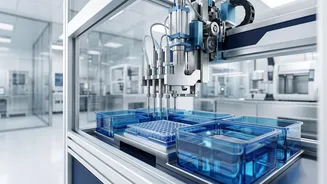
To bridge the gap between digital predictions and physical cures, Anthropic has been quietly building its own physical 'wet lab'. This move signals a shift from only creating AI software to also conducting biological experiments. The goal is to create a tight feedback loop where AI models generate hypotheses, and robotic systems test them with human oversight. The company has already used its AI, Claude, to make discoveries, including identifying new protein structures. However, this has also raised concerns among scientists about competition and access, as Anthropic has filed patents on its AI-driven discoveries and restricted access to some of its advanced biological research tools.