





The Rise of the 'Vegetable Butcher'
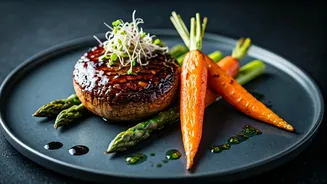
At the heart of this trend is a simple but revolutionary idea: what if we treated a cauliflower like a prime cut of steak? Or a carrot like a delicate piece of salmon? This philosophy, often dubbed ‘vegetable butchery’ or ‘vegetable-forward cooking,’
is all about applying classic, often meat-centric, techniques to humble produce. Think slow-roasting, smoking, curing, and searing, all designed to unlock deep, complex flavours and textures from vegetables themselves. Instead of trying to imitate meat with processed ingredients, this movement celebrates the vegetable in its whole form, transforming it into something spectacular. It’s about respecting the ingredient for what it is, not what it could be pretending to be.
Beyond the World of Mock Meats
For the past few years, the conversation around vegetarianism has been dominated by lab-grown burgers and hyper-realistic mock meats. While these innovations have been crucial for accessibility, they often focus on mimicking a non-vegetarian experience. This new trend is a direct and delicious counterpoint. It’s not about finding a plant-based alternative that tastes ‘just like’ chicken. It’s about proving that a beet, when roasted for hours and served with the right sauce, can be just as satisfying and complex as a piece of meat. This shift signals a growing maturity in plant-based cuisine, moving away from imitation and towards bold, confident innovation where vegetables are the heroes.
From Michelin Stars to Your Instagram Feed
Like many food trends, this one started in the kitchens of high-end restaurants. Chefs in culinary capitals around the world began dedicating entire sections of their menus to elaborate vegetable preparations. They discovered that techniques like charring, fermenting, and aging could draw out incredible umami and depth from everyday produce. But what makes this a 'viral' phenomenon is how it has trickled down to home cooks via social media. Platforms like Instagram and TikTok are filled with mesmerising videos of creators turning a humble cabbage into a stunning centrepiece or shredding mushrooms to create a 'pulled' pork effect. The visual appeal is undeniable—a whole roasted cauliflower, burnished and golden, is incredibly photogenic. This accessibility has empowered home cooks to experiment, turning a niche fine-dining concept into a global movement.
A New Twist on Indian Traditions
For a country with one of the richest and most diverse vegetarian traditions in the world, this trend feels both new and strangely familiar. Indian cuisine has always celebrated vegetables, from the complex spice blends in a sabzi to the hearty goodness of dal. This new wave doesn't seek to replace those traditions but to augment them with new techniques. Imagine a tandoori-spiced whole roasted gobi, with a smoky char on the outside and a tender heart. Or smoked baingan that takes the flavour of a bharta to a whole new level. It's an opportunity for Indian cooks to look at our local, seasonal produce—from bottle gourd to jackfruit—with fresh eyes and a new set of tools, creating dishes that are rooted in our palate but presented in an exciting, modern way.
How to Get Started at Home
The best part about this trend is its simplicity. You don't need fancy equipment, just a new perspective. Start with a ‘cauliflower steak’: cut a thick, 1.5-inch slab from the centre of a head of cauliflower, season it aggressively with salt, pepper, and your favourite spices (garam masala works wonders), and pan-sear it in a hot pan with a bit of oil until it’s deeply browned on both sides. Finish it in the oven until tender. Or try making ‘carrot lox’ by thinly slicing carrots, marinating them in a smoky-salty mixture, and gently baking them. The goal is to experiment, play with textures, and discover the incredible potential hiding in your vegetable drawer.