






August's Celestial Highlights
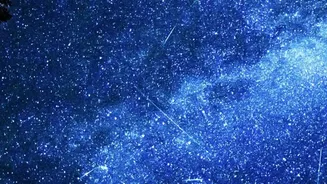
August 2026 is a special time for sky-watchers in India. While the peak of the spectacular Perseid meteor shower was around August 12-13, the shower remains active until August 24, so you can still catch some shooting stars. These fast, bright meteors
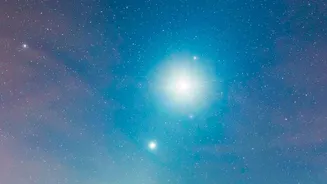
are remnants of the comet Swift-Tuttle. This month also features a remarkable planetary alignment. In the pre-dawn hours, you can spot up to six planets stretched across the sky. Jupiter, Mercury, Mars, and Saturn are visible to the naked eye, while Uranus and Neptune can be found with binoculars. Look towards the eastern horizon before sunrise to see this celestial parade. Mars will be high and reddish, Jupiter will be a brilliant point of light low in the east, and Saturn will shine with a steady, yellowish hue further along the arc.
The Only Gear You Need: Your Eyes
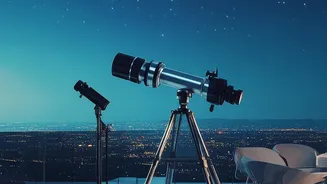
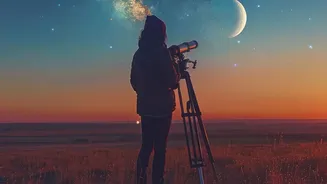
The biggest myth in astronomy is that you need an expensive telescope. The truth is, the best way to start is with nothing more than your own eyes. This allows you to learn the basic map of the sky, identifying the brightest stars and major constellations. Many seasoned astronomers suggest that beginners should spend months or even years simply observing with the naked eye and then perhaps a pair of binoculars before considering a telescope. Binoculars are a fantastic intermediate step as they are portable, affordable, and offer a wide field of view, making it easier to find objects. They are powerful enough to show you the craters on the Moon and the moons of Jupiter.
Finding Your Perfect Stargazing Spot
The greatest challenge for any urban stargazer in India is light pollution. City lights create a bright haze that washes out all but the brightest celestial objects. The key is to get as far away from city centres as possible. However, you don't always need to plan a Himalayan trek. Even a short drive out of town to a park, a rural area, or a quiet spot on the city's outskirts can make a significant difference. Another major factor in August is the monsoon. Cloudy skies can be a persistent obstacle. Your best bet is to look for breaks in the weather. For those in search of truly pristine skies, the rain-shadow regions like Ladakh and Spiti, or the Rann of Kutch, offer some of the best viewing conditions in the country.
Let Your Smartphone Be Your Guide
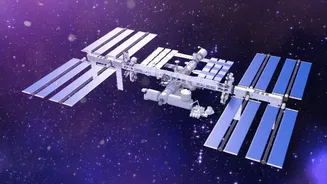
Modern technology has made navigating the night sky easier than ever. A good stargazing app can turn your phone into a powerful planetarium. Apps like Star Walk 2, Stellarium Mobile, and SkyView use your phone's location and sensors to show you a real-time map of the sky. Simply point your phone at a bright object, and the app will identify it for you, whether it's a planet, a star, or a satellite like the International Space Station. These apps are perfect for beginners, as they help you learn constellations and find specific objects without needing to decipher complex paper star charts. Many have free versions that are more than sufficient for getting started.
Your First Night Out: A Simple Plan
Ready for your first session? First, check the weather forecast and find a clear night. Use a light pollution map online to find a promising dark spot nearby. Pack a blanket or a comfortable chair, some snacks, and a red-light torch if you have one (red light preserves your night vision). Once you arrive, give your eyes at least 20-30 minutes to fully adapt to the darkness; you'll be amazed at how many more stars appear. Start by simply looking up and taking in the view. Use a stargazing app to identify the brightest objects you see. Try to spot the planets and trace the shapes of a few major constellations. Don't worry about finding everything at once. The goal is to get comfortable with the night sky and enjoy the spectacle above.