




The familiar sights and sounds of festive celebrations in India are changing. As crackers light up the sky, a growing number of neighbourhood associations are guiding the activity away from individual balconies and into designated community spaces.
A Response to Safety Concerns
The
primary driver behind this trend is safety. In densely populated urban housing societies, bursting crackers in narrow lanes, near parked cars, or close to buildings poses a significant fire hazard. Stray rockets can easily enter homes through open windows, and sparks can ignite flammable materials. Resident Welfare Associations (RWAs) are increasingly designating open grounds or parks as common bursting areas to mitigate these risks. By creating a controlled environment, often with fire extinguishers and buckets of water or sand kept handy, associations aim to prevent accidents and ensure that celebrations don't turn into emergencies. This proactive step confines the potential danger to one manageable space rather than having it scattered across an entire residential complex.
Battling a Cloud of Pollution
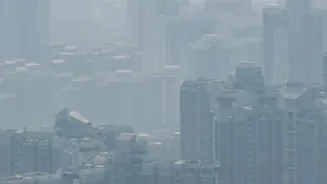
Beyond fire safety, environmental and health concerns are a major factor. Festivals like Diwali often see a dramatic spike in air and noise pollution, with the concentration of harmful particulate matter (PM2.5) soaring in major cities. This toxic smog aggravates respiratory conditions like asthma and poses health risks to everyone, especially children and the elderly. By creating a single zone for firecrackers, communities hope to centralize the pollution, making the air in the rest of the residential area more breathable. The noise, which can exceed 125 decibels, is also a serious issue for infants, senior citizens, and pets. While a designated zone doesn't eliminate pollution, it is seen as a harm-reduction strategy in line with growing public awareness and environmental consciousness.
The Push from a Legal Framework
This community-led action is not happening in a vacuum. It is strongly influenced by a series of rulings from the Supreme Court of India and the National Green Tribunal (NGT), which have imposed restrictions on firecrackers over the years. Courts have set time limits for bursting crackers (typically 8 pm to 10 pm), banned certain loud and polluting varieties, and introduced the concept of 'green crackers' that have a smaller environmental footprint. These legal mandates have put the onus on local bodies and, by extension, RWAs to ensure compliance. Failure to adhere to these rules can result in penalties. Consequently, setting up a designated area becomes a practical way for an RWA to monitor activity, ensure only approved crackers are used, and adhere to the time restrictions laid out by the courts.
Fostering Community and Confronting Challenges
This shift also changes the social fabric of celebrations. Instead of isolated family events, bursting crackers becomes a community gathering, offering a chance for neighbours to mingle and celebrate together. However, this approach is not without its challenges. Enforcement can be difficult, with some residents preferring the tradition of lighting crackers right outside their own homes and resisting what they see as restrictive rules. There can be debates over what constitutes an 'approved' cracker and who is responsible for the post-celebration cleanup. Some residents argue that such rules dilute the festive spirit, while others welcome the move towards a more organized and considerate way of celebrating. It represents an ongoing negotiation between personal freedom, tradition, and collective responsibility in modern urban India.