




More Than a Test Flight
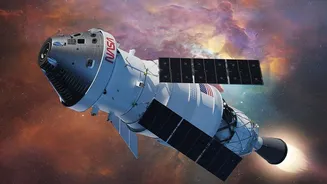
While Artemis II's primary goal was to test the Orion spacecraft and its life support systems with astronauts on board for the first time, it also carried a robust science agenda. The 10-day flight, which looped around the far side of the Moon, provided
a rare opportunity for human-led science in a deep space environment for the first time in over 50 years. The four-person crew—comprising NASA astronauts Reid Wiseman, Victor Glover, and Christina Koch, along with Canadian Space Agency astronaut Jeremy Hansen—were not just passengers; they were trained geological observers and research subjects. Their mission included documenting the lunar surface, studying the effects of deep space on the human body, and capturing data that will be vital for future landings.
The Irreplaceable Human Element
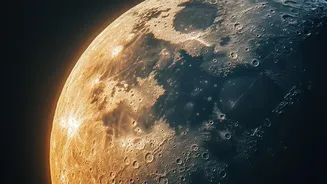
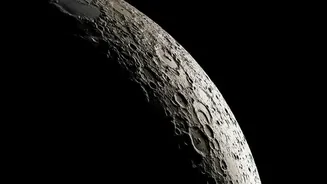
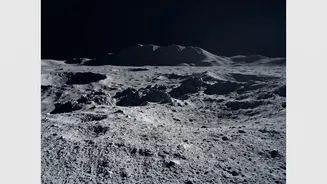
In an age of advanced robotics, what makes astronaut observation so special? It's the power of human intuition and perception. While satellites can capture high-resolution images, trained astronauts can spot subtle variations in color and texture that automated systems might miss. They can provide real-time descriptions, react to unexpected phenomena, and use their geological training to offer context that a sensor cannot. During their flyby, the Artemis II crew was tasked with describing surface features, noting color differences in volcanic terrain, and looking for evidence of dust levitating above the surface—a phenomenon reported by Apollo astronauts. This 'ground-truthing' from a human perspective is invaluable for interpreting remote sensing data and planning future missions.
From Flyby Photos to Scientific Insight
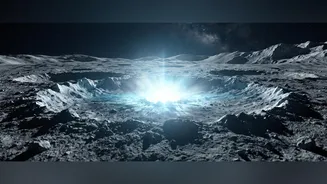
The science harvest from Artemis II is vast. In early October 2026, NASA released more than 800 gigabytes of data to the public, including over 11,000 images, hours of audio recordings detailing the crew's observations, and their own annotated notes. One of the most surprising findings came from a specific request for the crew to watch for meteoroid impacts on the lunar surface. Astonishingly, from a distance of about 46,000 miles, the crew reported seeing five faint 'pinprick' flashes of light, which scientists later confirmed were likely impacts. These observations provide crucial data on the frequency of such events, which is critical for assessing risks to future lunar habitats and explorers. The detailed photographs of the lunar south pole will also help scientists scout and refine potential landing sites for Artemis III.
A Laboratory in Deep Space
Beyond looking out the window, the crew members themselves were subjects of intense study. Traveling beyond Earth's protective magnetic field, they were exposed to the full force of deep space radiation. A suite of experiments monitored their health, tracking everything from immune system changes via saliva samples to sleep patterns and stress levels using wearable devices. One experiment, known as AVATAR, even flew 'organ chips' containing bone marrow cells grown from the astronauts' own bodies to study the effects of radiation in real-time. This research is fundamental to developing countermeasures that will protect astronauts on long-duration missions to the Moon and, eventually, Mars.