More Than Just a Dessert
In Bengal, sweets, or 'mishti', are not merely a course to end a meal; they are a language of love, a gesture of welcome, and an essential part of every celebration. This connection between food and spirituality is especially profound during Durga Puja.
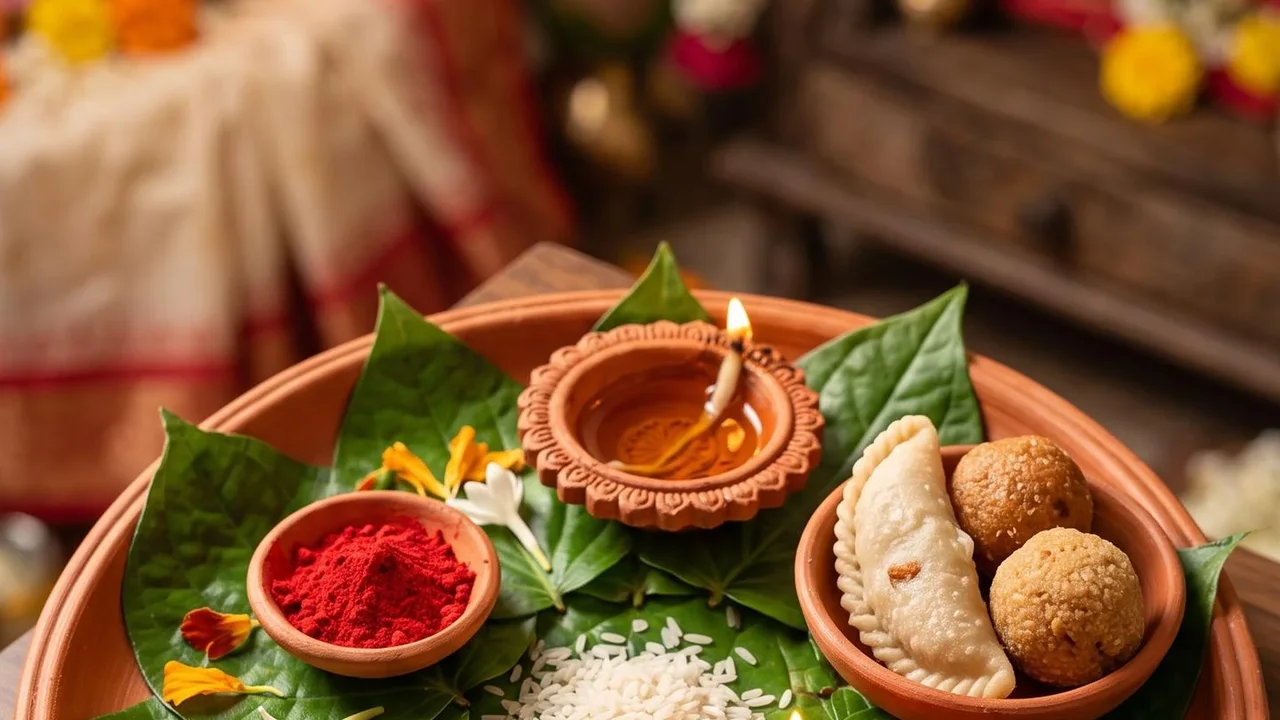
Sweets are offered to the goddess as 'bhog' (sacred offering) to show devotion and gratitude. Sharing these sweet delicacies with family, friends, and visitors is a time-honored tradition that symbolizes togetherness and the joy of the festival. It is a cultural cornerstone where a box of sweets becomes a vehicle for conveying good wishes, and offering a homemade sweet is an expression of warmth and affection.
The Reign of Sandesh
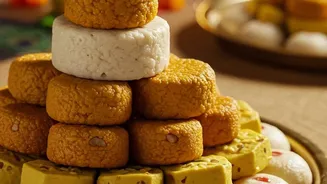
Arguably the queen of Bengali sweets, Sandesh is a delicate, fudge-like confection made from fresh 'chhena' (cottage cheese). Its beauty lies in its elegant simplicity and the canvas it provides for creativity. During Durga Puja, sweet shops and homes alike are filled with varieties of Sandesh. There's the classic, lightly sweetened version, but also the Nolen Gurer Sandesh, which uses seasonal date palm jaggery for a uniquely smoky, caramel-like flavour that is deeply associated with autumn festivities. Often shaped into beautiful forms using moulds, from simple discs to intricate fish shapes, each piece is a work of art that is as delightful to look at as it is to eat.
Syrupy Symbols of Joy
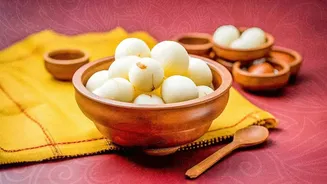
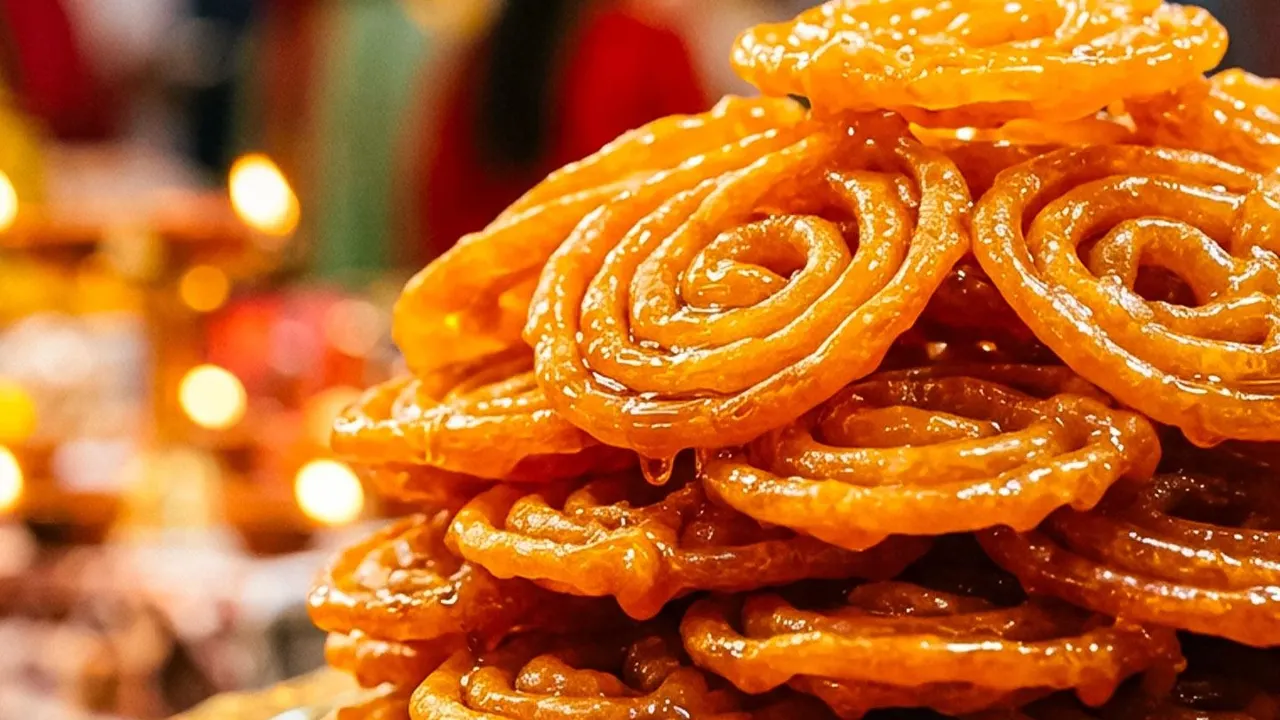
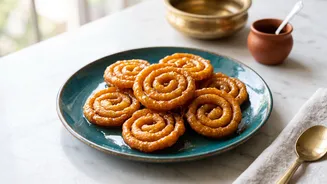
No discussion of Bengali sweets is complete without mentioning the undisputed king, the Rosogolla. These soft, spongy balls of chhena soaked in a light sugar syrup are a global icon of Bengali culinary heritage. During Puja, they are a symbol of pure, unadulterated joy. A close cousin, the Pantua, is another festive favourite. Similar to a gulab jamun, these deep-fried chhena balls are soaked in syrup, resulting in a slightly denser, richer indulgence. Sharing these syrupy delights is an integral part of 'Subho Bijoya' greetings on the final day of the festival, when friends and family visit each other's homes to exchange wishes and sweeten their relationships for the year ahead.
Homemade Treasures and Offerings
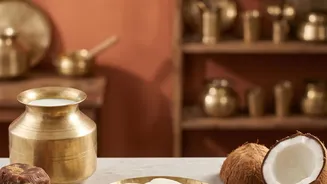
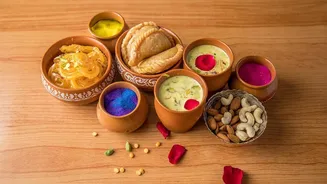
While famous sweet shops perfect the art of Sandesh and Rosogolla, many quintessential Puja sweets are born in home kitchens, their recipes passed down through generations. Narkel Naru, chewy laddoos made from grated coconut and jaggery or sugar, are a must-have. They are considered auspicious and often prepared on Saptami, representing purity and devotion. Another beloved homemade treat is Payesh, a creamy rice pudding slow-cooked in milk and sweetened with sugar or jaggery. Offered as 'paramanna' during rituals, it is a comforting dessert that symbolizes divine blessings and binds families together. Sweets like Malpua, sweet crepes, and Lobongo Lotika, a clove-sealed pastry filled with khoya, also fill the festive platter.
A Gesture of Community
Ultimately, the role of sweets during Durga Puja transcends their ingredients. They are the thread that weaves together community, devotion, and hospitality. From the 'bhog' distributed to thousands at community pandals to the single Narkel Naru offered to a guest at home, each sweet is an offering. It's an offering to the goddess, a gesture of welcome to a visitor, and a shared moment of happiness with loved ones. The act of making, gifting, and eating 'mishti' reinforces social bonds and keeps the spirit of togetherness at the forefront of the celebrations. These sweets are not just food; they are edible emblems of a culture that finds its greatest joy in sharing.