





A New Window on the Cosmos
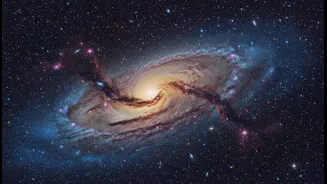
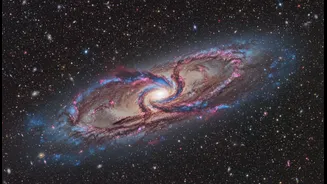
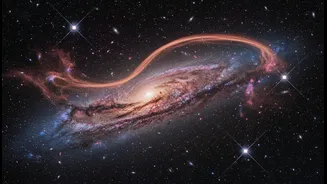
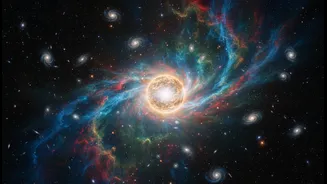
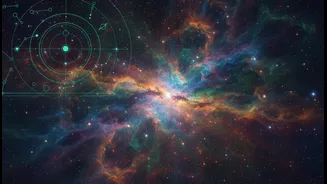
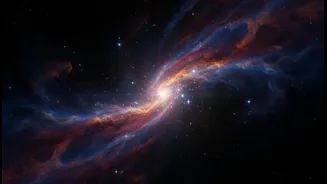
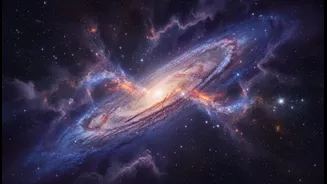
To mark the fourth anniversary of its first public images, NASA has released a spectacular new view of Centaurus A, a galaxy 11 million light-years away. The image, captured with Webb's unparalleled infrared sensitivity, cuts through obscuring dust to
reveal a chaotic and beautiful scene: the aftermath of a galactic collision from two billion years ago. At its heart, a supermassive black hole actively feeds on surrounding material, blasting out jets of energy that shape the galaxy around it. This new release isn't just a pretty picture; it showcases Webb's ability to perform 'galactic archaeology,' allowing scientists to study individual stars to reconstruct a timeline of the galaxy's violent history. It’s a powerful reminder of what this observatory was built for: to see the universe in ways we never could before.
A Gamble Worth Billions
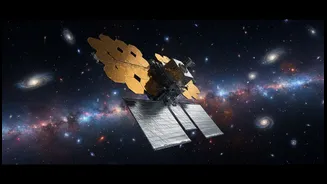
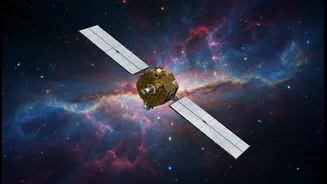
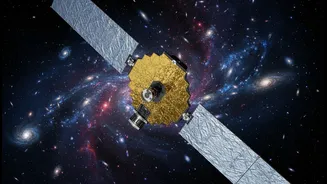
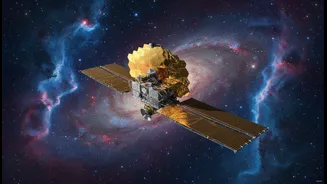
The stunning images we see today almost never happened. The James Webb Space Telescope (JWST) was one of the most audacious gambles in the history of science. Originally estimated to cost around $1 billion, the final price tag for development swelled to nearly $10 billion. The project faced years of delays and technical hurdles, so much so that it was nearly cancelled by lawmakers in 2011. The engineering challenge was immense. Its 6.5-meter primary mirror was too large for any existing rocket, requiring a complex, foldable design of 18 hexagonal segments. The entire observatory, including a tennis-court-sized sunshield, had to unfurl itself perfectly while a million miles from Earth, with over 300 potential single points of failure and no possibility of a repair mission like Hubble had. It was an all-or-nothing bet on precision engineering.
The Scientific Gold Rush
The gamble paid off spectacularly. Since beginning operations, Webb has exceeded even optimistic predictions, ushering in a golden age of astronomy. The telescope is a discovery machine, fundamentally changing our understanding of the cosmos. It has peered back to the dawn of time, identifying galaxies from the very early universe and finding they are more complex than models predicted. Webb has analyzed the atmospheres of distant exoplanets, searching for the chemical building blocks of life. It has provided breathtaking new views of objects in our own solar system and captured the lifecycle of stars in unprecedented detail. The sheer volume of data has been transformative, leading to a flood of scientific papers that are rewriting textbooks and solving long-standing cosmic mysteries.
The Ultimate Reader Takeaway
So why does a $10 billion telescope a million miles away matter to us? The answer goes beyond the scientific data. Webb represents a fundamental aspect of human curiosity—our shared desire to understand our origins and our place in the universe. Its success is a testament to international collaboration, involving NASA and the European and Canadian space agencies, and the ingenuity of thousands of engineers and scientists. For India, a nation with its own ambitious space program, Webb serves as a powerful source of inspiration. It demonstrates what is possible when we invest in science and technology, encouraging a new generation to pursue careers in STEM fields. The discoveries made by Webb are not owned by one country; they are a gift to all of humanity, expanding our collective knowledge and offering a profound new perspective on the cosmos we all inhabit.