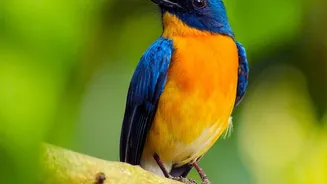








As seasons change, our cities become temporary homes for weary winged travellers. But their survival often depends on an unsung hero: the native tree. These urban green spaces are more than just parks; they are vital pit stops in an epic journey.
An Urban Lifeline for Weary Travellers
Every
year, millions of birds travel thousands of kilometres along ancient flyways, escaping harsh winters and seeking food. Many of these routes pass directly over India's rapidly expanding cities. While urbanisation, with its shrinking wetlands and concrete sprawl, poses a significant threat to these birds, patches of green within the city can act as crucial lifelines. For a bird that has just crossed the Himalayas, a small urban forest or even a cluster of street trees can mean the difference between life and death, offering a place to rest and refuel before continuing its journey. These urban green spaces function as 'pit stops', allowing birds to recover from exhaustion and find sustenance.
The Critical Link: Native Trees and Insects
Not all trees are created equal in the eyes of a hungry bird. The key to supporting migratory birds lies in planting native trees. Native plants and local wildlife have co-evolved over millennia, creating an intricate food web. Native trees like Neem, Peepal, and Jamun host a vast number of native insect species, particularly caterpillars. These insects are the primary food source for many migratory birds, providing the high-protein meals necessary to fuel their long flights. Research has shown that a single brood of chicks can require thousands of caterpillars to grow. In contrast, non-native or exotic ornamental trees, like Ginkgo, may look beautiful but support vastly fewer insect species, effectively creating a food desert for birds.
More Than Just a Meal
Beyond providing a well-stocked pantry, native trees offer other essential services. Their dense canopies provide shelter from predators and harsh weather, giving birds a safe place to roost and rest. For species returning to the same areas year after year, familiar groves of trees can also serve as navigational landmarks in an otherwise confusing urban landscape. Furthermore, the fruits and seeds from native trees like the Banyan or Indian fig offer high-fat, energy-rich food that is perfectly suited to the birds' dietary needs during migration, a benefit that many non-native berries do not provide.
India’s Avian-Friendly Flora
Many trees native to India are biodiversity hotspots. The Banyan (Ficus benghalensis) and Peepal (Ficus religiosa) are considered 'keystone' species, supporting dozens of bird species with their figs. The Jamun (Syzygium cumini) becomes a festival for barbets, bulbuls, and mynas in the summer. Even the humble Neem (Azadirachta indica) provides not only fruit but also a habitat for insects, making it a valuable resource. Other beneficial trees include the Indian Coral Tree (Erythrina variegata), Mango (Mangifera indica), and Mulberry (Morus alba), all of which attract a variety of bird species looking for nectar, fruit, or insects.
The Challenges of Urban Greening
While the solution seems simple—plant more native trees—the reality is complex. Urban environments are harsh places for trees to grow, with challenges like pollution, limited soil space due to concrete and utilities, and the 'urban heat island' effect. Furthermore, urban planners and private developers have often favoured fast-growing, low-maintenance exotic species over natives, which can sometimes be perceived as messy or harder to source from nurseries. Overcoming these hurdles requires a shift in public perception and policy, recognising urban forests not just as aesthetic amenities but as critical green infrastructure. Initiatives like the CITIIS program and the development of biodiversity parks in cities like Delhi, Surat, and Pune are promising steps in this direction.