


In the world of yoga, some of the most profound poses are the simplest. Apanasana, often called the Knees-to-Chest pose, is a perfect example—a gentle, restorative posture that offers significant benefits for the body and mind.
Understanding Apanasana
Apanasana translates from
Sanskrit to the 'Pose of Downward-Moving Energy'. 'Apana' refers to a specific life force energy, or vayu, that governs the downward and outward flow of energy in the body. This energy is responsible for elimination, helping the body release toxins and waste. The pose itself is a simple, supine posture where you lie on your back and gently hug your knees toward your chest. It is often included at the beginning of a practice to gently awaken the body or at the end to cool down and release tension accumulated during the session.
A Step-by-Step Guide
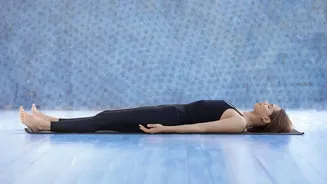
Performing Apanasana is straightforward, making it accessible even for absolute beginners. Start by lying comfortably on your back with your legs extended. Keep your neck long and your shoulders relaxed on the mat. On an exhalation, slowly bend your knees and draw them in towards your chest. You can wrap your hands around your shins or clasp the backs of your thighs, whichever is more comfortable. Avoid lifting your head or straining your neck; the goal is to keep the entire spine, from the tailbone to the neck, resting on the floor. Hold the pose for anywhere from 30 seconds to a few minutes, breathing deeply and evenly. To release, gently lower your feet back to the floor on an exhale.
The Power of the Gentle Hold
The true magic of Apanasana lies not in forcing or pulling, but in the 'gentle hold' mentioned in its practice. This isn't about yanking your knees as close as possible. Instead, it’s a soft, nurturing embrace. As you hold the pose, focus on your breath. With each inhalation, you might feel your belly press against your thighs; with each exhalation, you can gently deepen the hug, allowing your lower back to release further into the floor. This subtle, breath-led movement creates a gentle compression on the abdomen, which massages the internal organs like the intestines. This action stimulates digestion and can help relieve issues like bloating and gas, which is why the pose is also commonly known as the 'Wind-Relieving Pose'.
Physical and Mental Benefits
The physical benefits of Apanasana are numerous. Primarily, it offers a fantastic release for the lower back, decompressing the lumbar spine and easing tightness from prolonged sitting or standing. This makes it particularly beneficial for individuals experiencing mild lower back pain. The pose also gently stretches the hips and glutes, enhancing mobility. On a mental and emotional level, the posture is deeply calming. Its fetal_like shape can create a sense of safety and comfort, activating the parasympathetic nervous system, which is our 'rest and digest' response. This helps to slow the heart rate, reduce stress and anxiety, and prepare the mind for relaxation or sleep.
Modifications and Considerations
While Apanasana is a very safe pose, it’s always important to listen to your body. If you have a recent or chronic knee, hip, or spinal injury, you should approach this pose with caution. For those with sensitive knees or larger bellies, holding the back of the thighs instead of the shins can provide more space and comfort. A great modification is to practice with one leg at a time (Ardha Apanasana), which can be gentler on the lower back and hips. Pregnant women, especially after the first trimester, should avoid the traditional pose and can instead practice variations that create space for the belly, such as taking the knees wide apart. As with any exercise, if you feel any sharp pain, it is best to gently release any pose.