

A Planet Ruled by Shadows
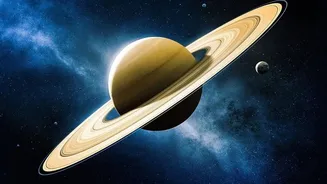
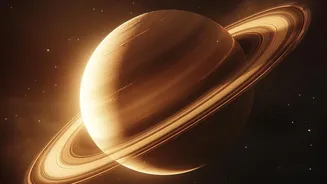
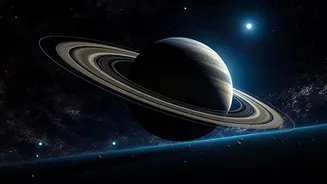
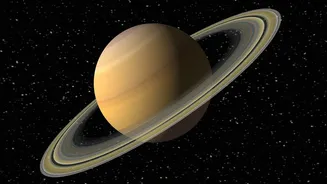
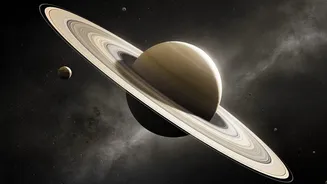
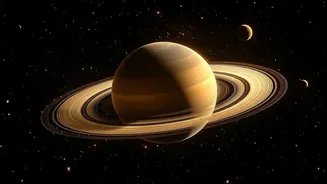
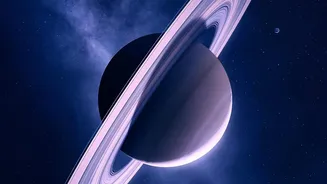
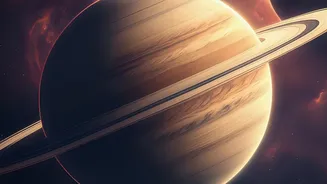
When we think of shadows, we imagine a simple absence of light. On Saturn, the reality is far more complex and consequential. The planet experiences two kinds of powerful shadowing effects from its rings. The most obvious is a literal shadow that blocks
sunlight, casting vast regions of the planet into a prolonged, chilly twilight. As the planet orbits the Sun, the angle of this shadow shifts, causing entire hemispheres to cool down or warm up. But there is another, more subtle effect known as “ring rain.” Scientists have discovered that charged water particles from the inner rings continuously rain down into Saturn's upper atmosphere. This influx of particles changes the chemistry and temperature of the ionosphere, creating what are effectively thermal and chemical shadows that are detectable in infrared light.
A Very Long Change of Seasons
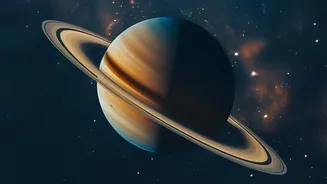
Like Earth, Saturn has seasons, but they operate on a much grander scale. With an orbit that takes over 29 Earth years to complete, each of Saturn’s seasons lasts for more than seven years. This slow, deliberate cycle is governed by the planet’s axial tilt. Scientists are currently paying close attention because Saturn is approaching a major seasonal milestone: the autumnal equinox in its northern hemisphere, expected in May 2025. During an equinox, the rings are tilted edge-on to the Sun, dramatically altering how their shadows fall across the planet. This period of transition offers a unique window into the machinery of its atmosphere, and long-term monitoring is crucial to understanding the full process.
Hubble and Webb's Combined Vision
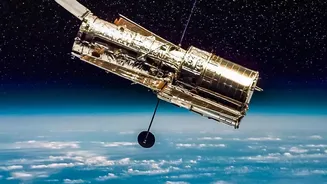
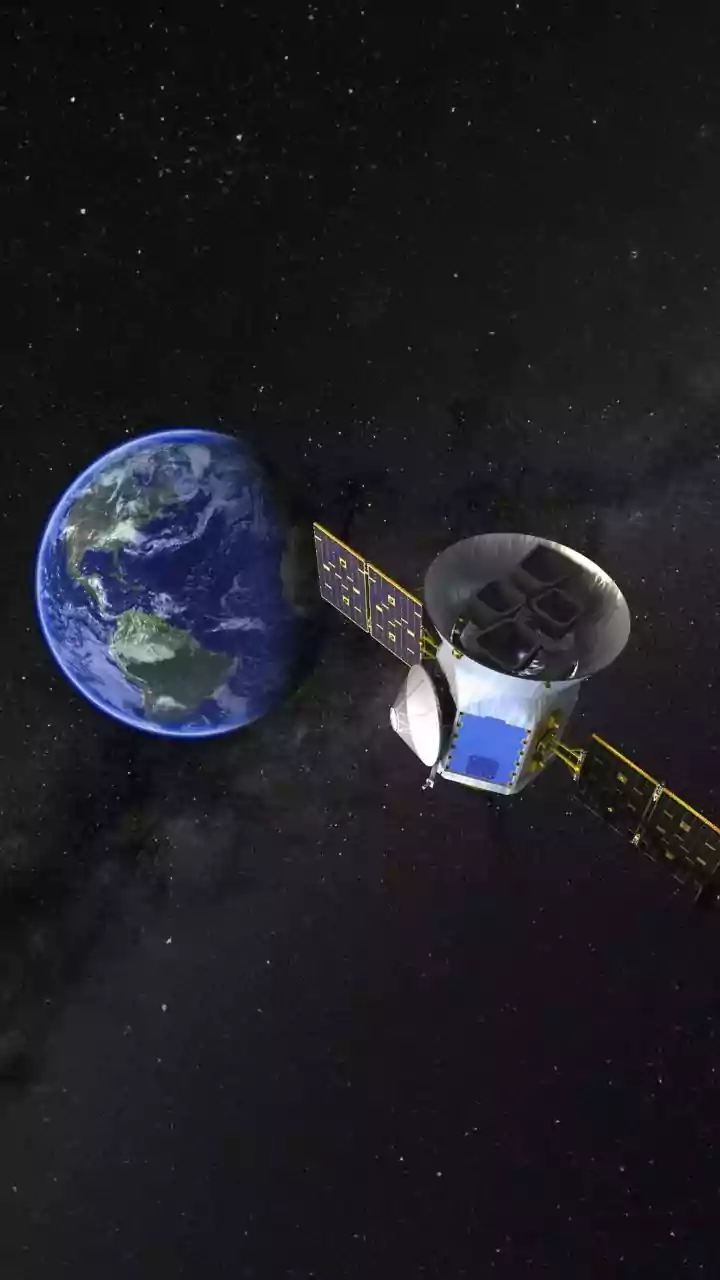
For years, the Hubble Space Telescope's Outer Planet Atmospheres Legacy (OPAL) program has acted as a planetary watchdog, capturing annual snapshots of the gas giants. This has created an invaluable long-term record of Saturn's atmospheric changes. Recently, these efforts were enhanced by the powerful infrared eyes of the James Webb Space Telescope. In late 2024, the two observatories teamed up to capture a more complete picture. While Hubble tracked changes in visible light, Webb peered deep into the atmosphere in infrared, revealing temperature variations at different altitudes. These combined observations show the northern hemisphere warming as it emerges from the long winter shadow of the rings, providing direct evidence of the rings’ influence on seasonal temperature swings.
Signs of an Atmospheric Awakening
The changing shadows and temperatures are not the only signs of Saturn's seasonal shift. Another mysterious phenomenon, known as “ring spokes,” has also reappeared. These are transient, ghostly features that stretch across the rings, rotating along with them. First observed by the Voyager spacecraft in the 1980s, these spokes seem to appear and disappear seasonally, reaching peak activity around the equinox. Scientists believe they are caused by the interaction of the planet's magnetic field with the solar wind, which electrostatically levitates tiny dust and ice particles above the main rings. The return of the spokes, captured by Hubble, is another clear indicator that the entire Saturnian system is in a state of seasonal flux.
A Laboratory for Distant Worlds
Studying Saturn’s climate isn’t just about understanding one planet. Gas giants are common throughout the galaxy, but Saturn offers a unique natural laboratory right in our own solar system. Its ring system provides an unparalleled opportunity to observe how external factors—like variable sunlight and shadowing—can drive atmospheric dynamics on a massive scale. The lessons learned from watching Saturn’s seasons change help scientists build better models for the climates of Jupiter, Uranus, and Neptune. More importantly, this knowledge is essential for interpreting observations of the thousands of exoplanets discovered orbiting other stars, many of which are gas giants with their own complex and turbulent weather systems.