



The Challenge of Invisible Rocks
Planetary defense sounds like science fiction, but it's a very real discipline dedicated to tracking Near-Earth Objects (NEOs) that could pose a threat to our world. While many asteroids are bright and reflect sunlight, making them relatively easy to spot
with powerful telescopes, a significant portion are what scientists call "low albedo" objects. Composed of carbon-rich materials, these asteroids are as dark as charcoal and reflect very little visible light. This makes them incredibly difficult to detect with traditional optical telescopes, as they barely stand out against the dark background of space. Spotting a large, dark asteroid can be like trying to see a small, non-reflective rock from millions of kilometers away.
Seeing with Heat, Not Light
The primary trick up astronomers' sleeves is to stop looking for reflected light and start looking for heat. Even the darkest asteroids absorb energy from the sun and radiate it back into space as thermal energy, or infrared light. While invisible to the human eye, this heat signature can be detected by specialized infrared telescopes. An object that is large but dark in visible light can appear just as bright in infrared as an object that is small but highly reflective. By using infrared detectors, astronomers can spot these dark wanderers because their warmth makes them glow against the cold backdrop of space, solving the problem of their low reflectivity. This method is especially effective for missions specifically designed to hunt for potentially hazardous objects.
Space-Based Sentinels on Patrol
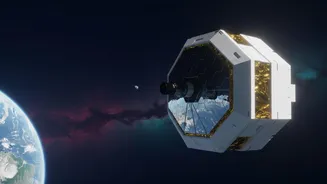
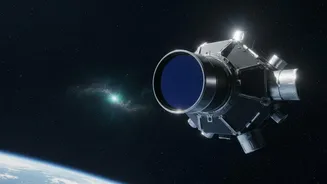
To get the clearest view, you have to get above Earth's atmosphere, which can distort or block infrared light. NASA's NEOWISE mission was a workhorse in this field, using its infrared capabilities to find and characterize thousands of near-Earth asteroids, including many dark ones, before being decommissioned in 2024. Building on its success, NASA is developing the NEO Surveyor, a next-generation space telescope set to launch no earlier than 2027. It is being purpose-built to use sensitive infrared detectors to find the asteroids that ground-based optical telescopes often miss, including those hiding in the glare of the sun. By parking itself at a stable point between the Earth and the Sun, NEO Surveyor will continuously scan the skies, providing a crucial early warning for any potential threats.
The Ground Game: A Network of Watchers
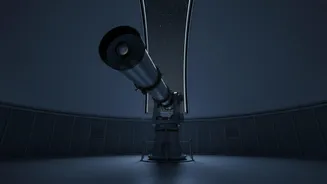
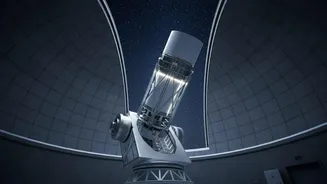
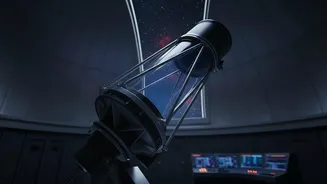
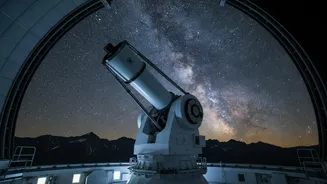
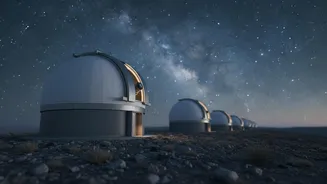
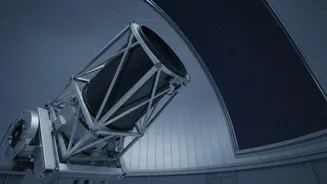
The hunt isn't just happening in space. A global network of ground-based observatories plays a critical role. The key technique on the ground is to take multiple images of the same patch of sky minutes apart. While stars and galaxies remain fixed, a moving asteroid will appear in a slightly different position in each frame. Powerful software then analyzes these images to flag these moving dots. Observatories like the Catalina Sky Survey and Pan-STARRS are dedicated to this task. Soon, they will be joined by the Vera C. Rubin Observatory in Chile, a true game-changer. With its enormous camera and rapid survey speed, Rubin is expected to discover millions of new asteroids, drastically increasing our catalog of known objects and our ability to track them. In early testing alone, it has already identified thousands of previously unknown asteroids.
Radar and Clever Algorithms
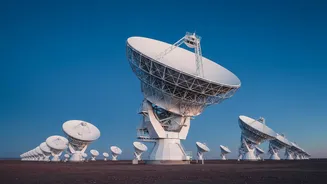
Once a potential object is identified, other tools come into play. Powerful radar systems, like those at the Arecibo Observatory in Puerto Rico and Goldstone in California, can bounce microwave signals off an asteroid. The returning echo can provide incredibly detailed information, helping scientists determine an asteroid's exact size, shape, rotation, and trajectory far more accurately than optical observations alone. All of this detection work—from space telescopes, ground surveys, and radar—generates an immense amount of data. This is where sophisticated algorithms become essential. Automated systems sift through billions of potential detections every night, distinguishing real moving objects from background noise and flagging them for human astronomers to verify, turning a monumental task into a manageable one.