


The Ultimate Power Challenge
Establishing a foothold on the Moon's South Pole is a top priority for space agencies globally, largely due to the presence of water ice in permanently shadowed craters. This ice could provide drinking water, breathable air, and even rocket fuel. But
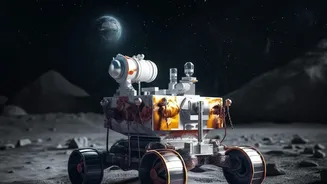
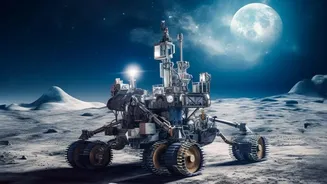
this location presents a monumental engineering problem. During the long lunar night, which lasts for about 14 Earth days, temperatures can plummet to as low as minus 200 degrees Celsius. Standard lithium-ion batteries, like those in our phones and cars, use liquid electrolytes that would freeze solid and become useless in such extreme cold. To keep rovers, scientific instruments, and habitats powered, NASA needs an energy source that can withstand this punishing environment.
A 'Solid' Solution to a Freezing Problem
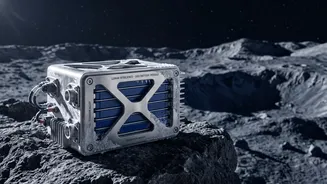
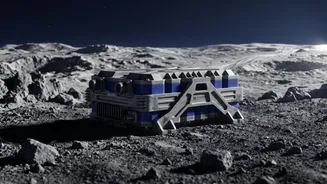
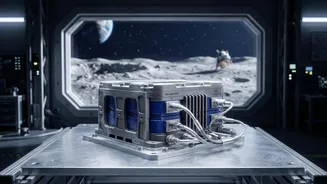
The answer, currently being tested by NASA, lies in solid-state batteries. Under a project named SPEARS (Solid Power for Extreme Environment Adaptability and Resilience in Space), researchers at NASA's Glenn, Langley, and Ames centers are developing batteries that replace the vulnerable liquid electrolyte with a solid ceramic or polymer material. This fundamental change offers several advantages. Firstly, it eliminates the risk of freezing, boiling in the vacuum of space, or leaking flammable liquid. These solid-state cells are being designed to not just survive the cold but to operate reliably across the Moon's wild temperature swings, which can go from scorching highs of 100 degrees Celsius in the day to the previously mentioned deep freeze at night.
Passing the Extreme Test
Recent tests have yielded promising results. In thermal vacuum chambers that simulate lunar conditions, prototype coin-sized cells have demonstrated they can operate in temperatures ranging from 80 degrees Celsius down to minus 80 degrees Celsius. Even more impressively, the batteries survived exposure to a staggering minus 170 degrees Celsius without sustaining physical damage. While they cannot produce power at such a low temperature, they remain intact. This means that instead of needing a large, power-hungry system to keep them constantly warm, they would only require a small heater to bring them up to operational temperature after a deep freeze. This could drastically reduce the weight and complexity of future lunar hardware, saving costs and allowing for longer missions.
Powering the Artemis Generation
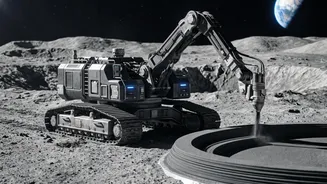
This technology is a critical enabler for NASA's Artemis program, which aims to establish a long-term human presence on the Moon. These durable batteries could power everything from an astronaut's emergency kit to rovers exploring the darkest craters. For missions to be sustainable, equipment must last longer than a single lunar day. The ability to reliably power down during the frigid night and restart when the Sun returns is a game-changer. It allows for extended scientific study and paves the way for the infrastructure needed for a permanent base, such as habitats and resource extraction plants. Without this leap in power technology, long-duration stays at the resource-rich South Pole would remain out of reach.
A Global Push for the Pole
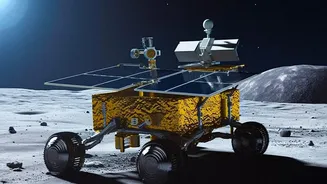
NASA is not alone in its lunar ambitions. The race to the Moon's South Pole involves multiple nations and private companies, all vying for access to its strategic resources. India's own Chandrayaan programme has made significant strides in lunar exploration, and its experience highlights the immense challenge of operating through the lunar night. The Chandrayaan-3 lander and rover were designed for one lunar daylight period, underscoring the difficulty that all space-faring nations face. The development of technologies like these solid-state batteries is part of a broader global effort to solve the fundamental challenges of living and working on another world. Innovations born from this new space race could also have significant benefits back on Earth, potentially leading to better batteries for electric vehicles and electronics in extreme climates.