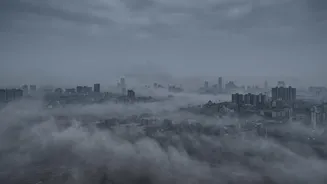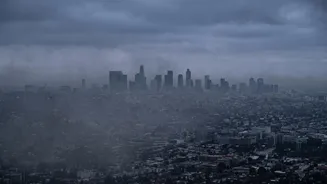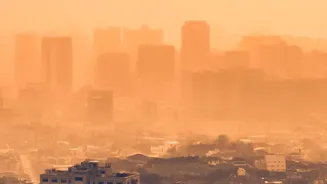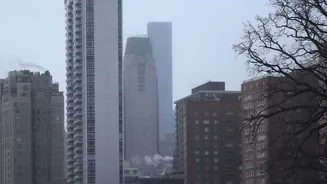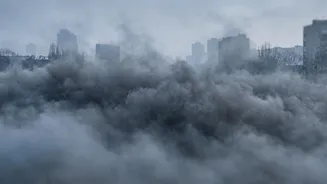



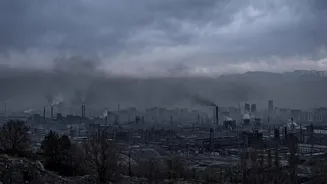
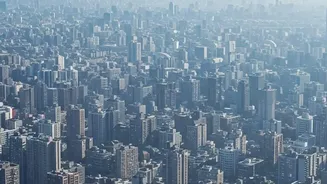
As winter approaches, a familiar grey haze descends upon the Indo-Gangetic Plains. But this is not just morning fog. It's a toxic smog, trapped by a unique and powerful combination of weather and geography that turns the sky into a lid.
How the Atmosphere Normally Cleans Itself
On a typical day,
the sun warms the Earth's surface. This, in turn, heats the layer of air closest to the ground. As this air gets warmer, it becomes lighter and rises, a process called convection. Think of it like a hot air balloon. As the warm air packet rises, it carries pollutants like smoke, dust, and vehicle exhaust upward and away from where we breathe. Higher in the atmosphere, stronger winds disperse these pollutants over a wider area. This constant vertical and horizontal movement is the atmosphere’s natural self-cleaning mechanism, which works efficiently for most of the year.
The Winter Trap: Temperature Inversion
During winter in North India, especially at night and in the early morning, this normal process flips. The ground rapidly loses heat, becoming colder than the air layer several hundred feet above it. This creates a situation known as a temperature inversion, where a layer of warmer air sits on top of a layer of cooler, denser air near the surface. This warm upper layer acts like an atmospheric lid, preventing the cold air below from rising. All the pollutants emitted at ground level are trapped in this shallow, cold layer, unable to disperse vertically. The boundary layer, or the 'container' for pollution, can shrink from over 2,000 meters in summer to just a few hundred meters in winter, concentrating the same amount of emissions in a much smaller volume of air.
The Gangetic Plain: A Geographical Bowl
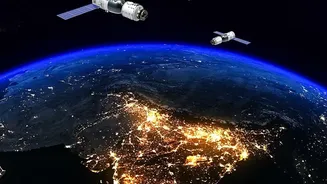
The geography of the Indo-Gangetic Plains (IGP) makes it exceptionally prone to this trapping effect. The entire region is hemmed in by the towering Himalayas to the north and the Vindhya and Satpura ranges to the south. This creates a vast, bowl-like landscape. When cold air descends from the Tibetan Plateau, it settles in this 'bowl'. The mountain barriers prevent winds from flushing the polluted air mass out, leading to stagnation. This unique topography means that once an inversion sets in, it is difficult to break, allowing pollutants to accumulate for days on end.
The Stillness Factor: Calm Winds
The second part of the equation is 'calm air'. While temperature inversion prevents vertical dispersion, the absence of strong winds prevents horizontal dispersion. During the post-monsoon and winter months, the wind speed across the IGP often drops significantly. Without wind, there is no force to push the smog away. This deadly combination of a vertical lid (inversion) and a lack of horizontal movement (calm winds) creates a perfect storm for severe air pollution episodes. Recent studies have noted that rising global temperatures might be contributing to even slower winter wind speeds in the region, potentially making future pollution events worse.
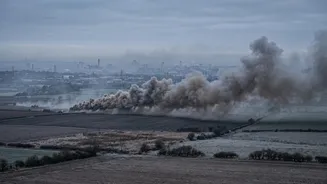
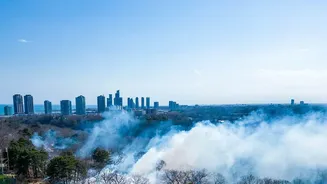
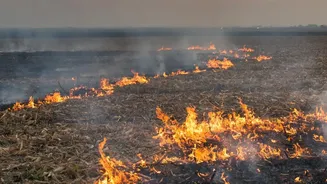
Of course, the weather can only trap what is already there. The smoke itself comes from a multitude of sources. In the poststmonsoon period, large scale stubble burning in Punjab and Haryana releases enormous plumes of particulate matter that drift across the plains. This is added to the year round emissions from vehicle exhaust, heavy industry, construction dust, and smoke from fires used for cooking and heating. These tiny pollutant particles, known as PM2.5, are particularly dangerous as they not only serve as seeds for fog formation but also penetrate deep into the lungs and bloodstream.
The result is a persistent public health emergency. Exposure to this toxic air is linked to severe respiratory and cardiovascular diseases, including asthma, chronic obstructive pulmonary disease (COPD), heart attacks, and strokes. Children and the elderly are particularly vulnerable. Studies have shown that life expectancy in the Indo Gangetic Plain is significantly reduced due to chronic exposure to high levels of air pollution. What many experience as winter 'smog' is, in reality, a predictable environmental crisis fueled by human activity and locked in place by the cold, calm conditions of the season.