


A Messenger From Another Star
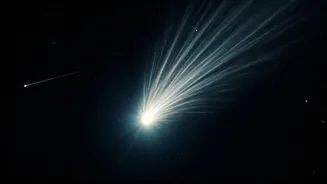
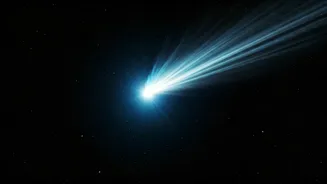
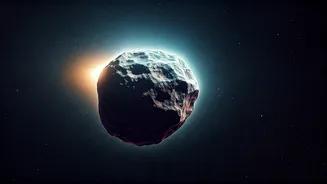
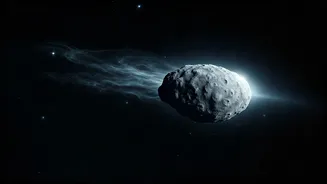
On July 1, 2025, astronomers spotted something remarkable—a faint object moving through our solar system on a path that suggested it was not from around here. Named 3I/ATLAS, it was soon confirmed as the third interstellar object ever detected, a visitor
from the vast expanse between the stars. Unlike the comets we know, which are leftovers from our own solar system's formation, 3I/ATLAS was born in a different, unknown planetary system and was ejected, wandering the galaxy for billions of years before its brief passage through our neighborhood. This provided scientists with an unprecedented opportunity to study a piece of another world up close, and what they found was astonishing. The comet is now on its way back into the void, never to return.
Reading the Chemical Fingerprints
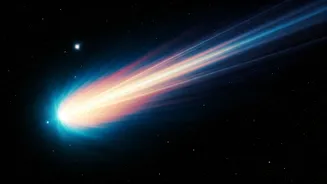
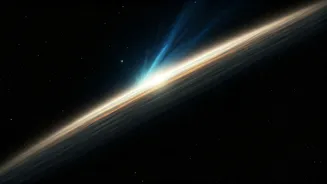
The key to unlocking the comet's secrets lay in its chemical composition. As 3I/ATLAS neared our Sun, the heat caused its ancient ices to vaporize, creating a glowing halo of gas, or coma, that could be analyzed. Using the powerful James Webb Space Telescope (JWST), scientists examined the light from this coma to determine its ingredients. The results, published in recent studies, were startling. The comet contained an exceptionally high ratio of deuterium, a form of heavy hydrogen, compared to any comet from our solar system. This, along with other unusual isotopic signatures, strongly suggests the comet formed in an extremely cold environment, far different from the one that gave birth to our own planets.
Older Than the Sun Itself?
This unique chemical fingerprint allowed researchers to make an incredible estimate: 3I/ATLAS could be between 10 and 12 billion years old. To put that in perspective, our own solar system, including Earth and the Sun, is about 4.5 billion years old. This means the comet may have formed when the Milky Way galaxy was still young, long before our sun even ignited. It’s a genuine relic from the early universe, carrying information about the building blocks of planets in another, much older star system. While some theories must account for other possibilities, the evidence points toward 3I/ATLAS being one of the most ancient objects ever observed in our cosmic backyard.
Not Our First Interstellar Guest
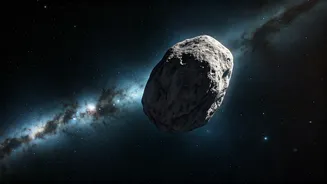
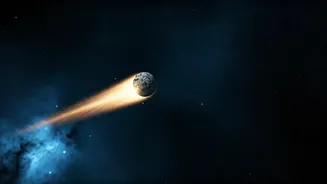
While incredibly rare, 3I/ATLAS is not the first alien object we've encountered. In 2017, the strangely shaped object 'Oumuamua zipped through our system, followed by the more traditionally comet-like 2I/Borisov in 2019. Each visit has been a critical learning experience. With 'Oumuamua, scientists were caught by surprise and had little time to observe. With 2I/Borisov, they were better prepared. The arrival of 3I/ATLAS allowed for the most comprehensive study of an interstellar visitor yet, coordinating observations from multiple world-class observatories, including the JWST and the Hubble Space Telescope, to capture as much data as possible. There was even some brief, wild speculation about it being alien technology, but radio telescope scans quickly and thoroughly ruled that out.
Why This Ancient Visitor Matters
Studying objects like 3I/ATLAS is about more than just satisfying curiosity. These comets are physical samples from distant planetary nurseries. By analyzing their composition, we can learn about the chemical diversity of the galaxy and understand how other solar systems might form and evolve. Each interstellar object provides a new data point, helping scientists test their theories about planet formation and determine whether our own solar system is typical or an outlier. The unusual chemistry of 3I/ATLAS suggests that the conditions in its home system were quite different from our own, expanding our understanding of what's possible in the cosmos.