


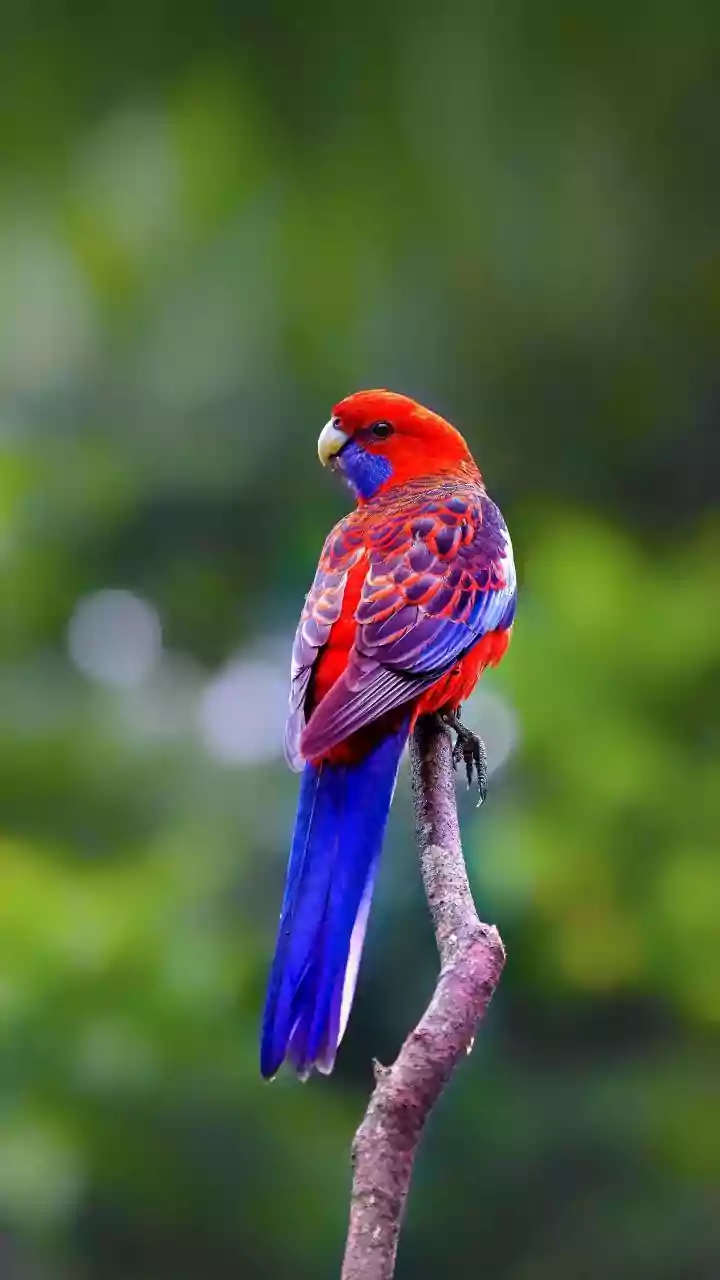



More Than Just Mimicry
When we hear a parrot talk, it’s easy to dismiss it as simple mimicry. But the process is far more complex than a tape recorder playing back sounds. Parrots are among a select group of animals known as 'vocal learners'. This means they learn to produce
new sounds by listening to others, much like human infants learn to speak. Unlike most birds, which have a fixed set of calls they are born with, parrots can continuously learn new sounds throughout their lives. This ability is rooted in their unique brain structure. Scientists have found that parrot brains have specialized regions for vocal learning—a 'song system'—that is structured differently from that of other vocal-learning birds like songbirds and hummingbirds. This system includes a 'core' for controlling vocal learning and an outer 'shell' which is also involved. Species known for their impressive speech imitation, like the African Grey, tend to have larger shell structures.
The Anatomy of a Talking Bird
So how do they physically produce sounds that so closely resemble human speech without lips or vocal cords? The secret lies in a special organ called the syrinx, located at the base of a bird's windpipe. By precisely controlling the flow of air through the syrinx, parrots can create a wide range of vibrations. They then use their tongue and beak to shape these sounds, much like humans use their tongue, teeth, and lips to form consonants and vowels. This remarkable control allows them to replicate not just words, but also the specific frequencies, inflections, and rhythms that make up a human accent. While they may struggle with certain consonants like 'p' and 'b' that require lips, their ability to manipulate sound is sophisticated enough to create highly convincing human-like speech.
Why Adopt an Accent? A Social Strategy
The drive to mimic isn't just a party trick; it's a deeply ingrained social instinct. In the wild, parrots are highly social animals that live in large, dynamic flocks. They use complex calls to identify each other, signal danger, and maintain social bonds. Different flocks can even develop their own regional dialects, similar to human accents. When a parrot lives with humans, it views its human family as its flock. To fit in and strengthen social bonds, the parrot applies its natural instinct to learn the 'dialect' of its new family. This is why a parrot in Mumbai might learn to mimic the local intonation, while a parrot in Kolkata could pick up different speech patterns. They are trying to sound like the most important members of their social group. The sounds that are repeated most often and with the most emotion are the ones they learn fastest.
The Masters of Mimicry
While many parrots can talk, some species are particularly gifted. The African Grey Parrot is widely considered the most proficient mimic, capable of learning hundreds of words and using them in contextually appropriate ways. Studies have shown they can reproduce tonal nuances and inflections with incredible accuracy. The famous African Grey named Alex, studied by Dr. Irene Pepperberg, demonstrated that these birds don't just repeat sounds; they can comprehend and use them purposefully. Other skilled speakers include various species of Amazon parrots, which are known for their loud and clear voices, as well as Budgerigars (parakeets) and cockatoos. However, ability can vary greatly from bird to bird, even within the same species. Just because a parrot can talk doesn't mean it will, and its silence isn't a sign of lesser intelligence or a weaker bond.