




What is CAPSTONE?
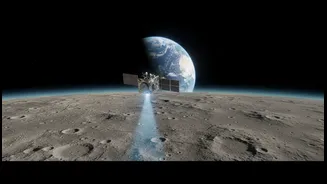
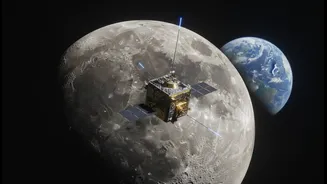
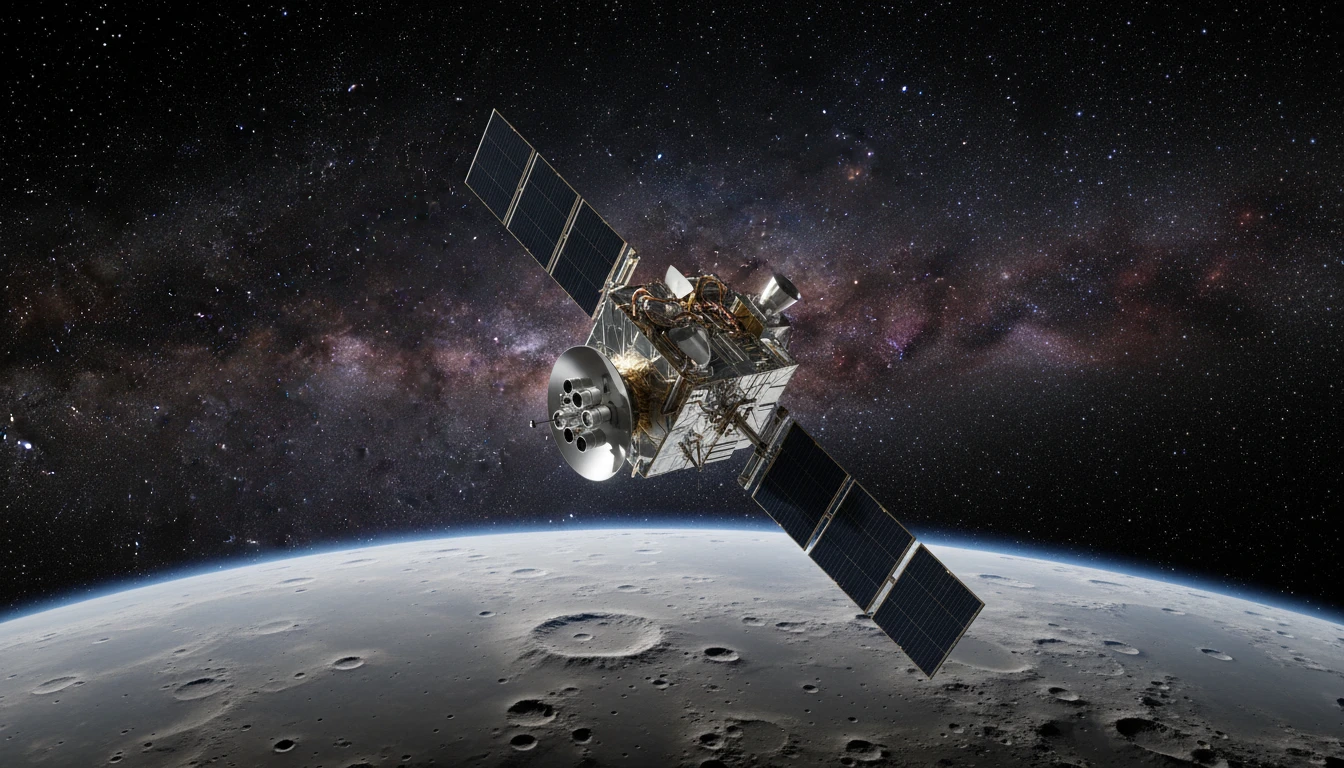
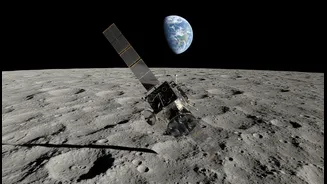
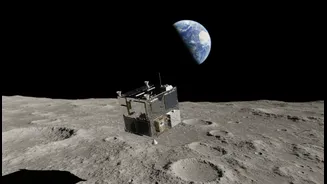
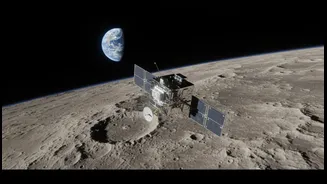
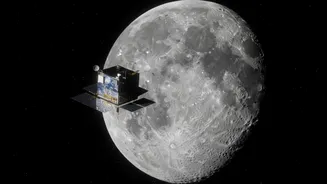
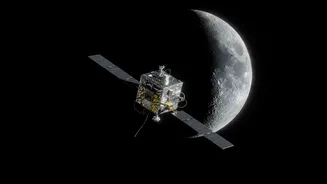
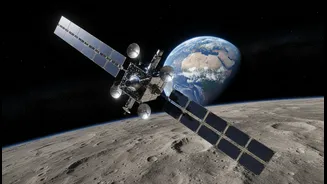
CAPSTONE, short for Cislunar Autonomous Positioning System Technology Operations and Navigation Experiment, is a small satellite, about the size of a microwave oven. Launched in June 2022, it became the first commercial mission to operate at the Moon.
Its primary goal was to act as a trailblazer for NASA's Artemis program, which aims to establish a sustained human presence on and around the Moon. Managed and operated by the company Advanced Space for NASA, the spacecraft was designed to test a unique lunar orbit and revolutionary navigation technologies. After completing its primary and extended mission objectives, NASA concluded its activities on the project in June 2026, but the spacecraft continues to be operated by Advanced Space to test new technologies.
The Challenge of a Lunar GPS
On Earth, we take GPS for granted. A network of satellites allows our phones and cars to know exactly where they are. But around the Moon, no such system exists. Historically, spacecraft have relied on constant communication with giant antennas on Earth, part of the Deep Space Network, to determine their position. This process is slow, resource-intensive, and creates a bottleneck as more missions head to the Moon. For a future with a permanent lunar outpost and regular trips to the surface, spacecraft will need to navigate on their own, quickly and accurately, without constantly phoning home. This is the problem CAPSTONE was sent to solve.
A Groundbreaking Orbit
A key part of CAPSTONE's mission was to be the first spacecraft to fly in a special path called a near rectilinear halo orbit (NRHO). This is not a simple circle around the Moon. Instead, it's a highly elongated, stable orbit that is balanced between the gravity of the Earth and the Moon. This unique orbit requires very little fuel for a spacecraft to maintain its position, making it an ideal staging point for long-term missions. The orbit brings the spacecraft close to one lunar pole before swinging it far out over the other. CAPSTONE has successfully verified that this orbit is as stable and efficient as computer models predicted, paving the way for the future Lunar Gateway, a planned orbiting outpost for astronauts.
Navigating by Talking to a Friend
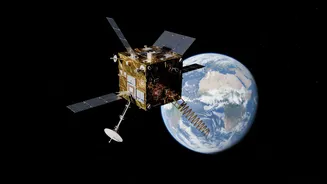
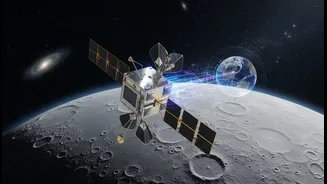
The mission's most significant test involved a technology called the Cislunar Autonomous Positioning System (CAPS). This system is designed to allow spacecraft to determine their own position by communicating with other lunar orbiters, much like two friends using landmarks to figure out where they are. CAPSTONE successfully tested this by sending signals to and from NASA's Lunar Reconnaissance Orbiter (LRO), which has been orbiting the Moon since 2009. By measuring the time it took for the signal to make the round trip, CAPSTONE could calculate its position relative to LRO, proving it can navigate in deep space without relying solely on ground control. It also tested software that used images of the Earth and Moon to determine its location.
Why This Matters for Human Missions
The success of CAPSTONE's tests has direct implications for the future of human spaceflight. For astronauts living and working on the Lunar Gateway or traveling to the Moon's surface, reliable and autonomous navigation is not a luxury—it's a necessity for safety and efficiency. By proving that the NRHO is a viable and stable place to park a space station and that an independent lunar navigation network is possible, CAPSTONE has significantly reduced the risk for the Artemis missions. These technologies will allow for more precise landings, safer rendezvous and docking procedures, and will free up the limited Deep Space Network to handle critical scientific data instead of routine navigation traffic. Essentially, CAPSTONE has served as the crucial dress rehearsal before the main performance.