





The Ultimate Insurance Policy
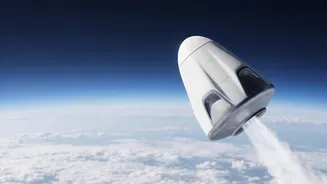
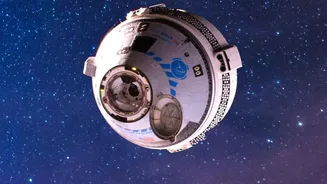
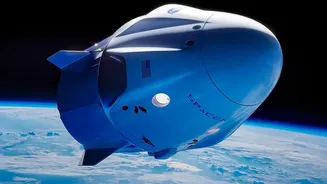
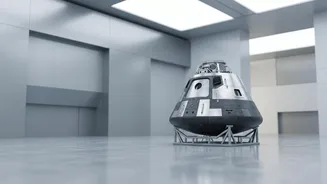
At the heart of ensuring astronaut safety is the Crew Escape System (CES). Think of it as the ultimate ejection seat, but for an entire space capsule. Its sole purpose is to pull the crew module—the pressurised capsule carrying the astronauts—away from
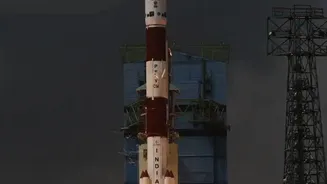
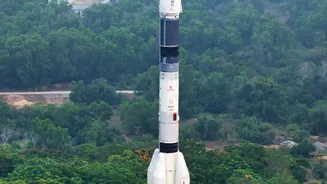
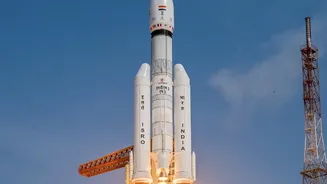
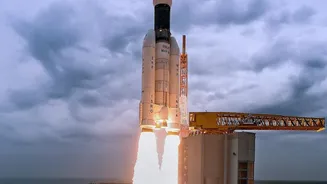
the rocket at lightning speed in case of an emergency on the launch pad or during the ascent. If the powerful LVM3 rocket veers off course or suffers a critical failure, the CES is designed with quick-acting solid motors that would fire and yank the crew to a safe distance, allowing them to parachute back to Earth. This system has to be flawless, as it is the last line of defence for the crew in a worst-case scenario. There are no second chances, which is why ISRO’s testing regimen is so exhaustive and meticulous.
A Ladder of Tests
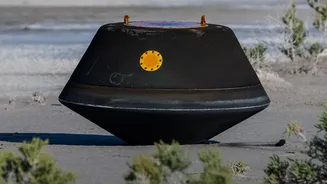
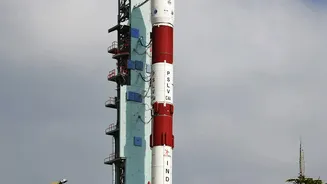
Qualifying the crew module and its escape system isn't a single event but a series of carefully planned tests, each building on the last. In July 2018, ISRO successfully conducted a Pad Abort Test (PAT), which simulated an emergency on the launch pad. In this test, the system proved it could lift the capsule away from a stationary launch site, reach a safe altitude, and deploy parachutes for a soft landing. More recently, in October 2023, ISRO achieved a major milestone with the Test Vehicle Abort Mission-1 (TV-D1). This was a more complex in-flight abort test. A specially designed test rocket carried the crew module to an altitude of about 17 km, travelling at Mach 1.2 (faster than the speed of sound), where an abort was deliberately triggered. The CES successfully separated the module, which then descended via parachutes and was recovered from the Bay of Bengal by the Indian Navy. This test validated the system's performance during the most aerodynamically stressful phase of launch.
Beyond the Escape Hatch
While the abort system is crucial, crew safety extends to every phase of the mission, right up to the splashdown. ISRO has also recently completed a trio of other critical qualification tests. One was for the Crew Module Up-righting System (CMUS), which uses gas-inflated floats to ensure the capsule returns to an upright position after landing in the ocean, a vital feature for the crew's stability and recovery. Another test validated the umbilical disconnect system, which ensures the crew module separates cleanly from the service module before re-entry into Earth's atmosphere. The third test confirmed the capsule's structural strength to withstand the force of the apex cover being jettisoned to deploy the main parachutes. Each of these successful tests confirms that the individual components of the mission are robust and reliable.
The Road to Orbit
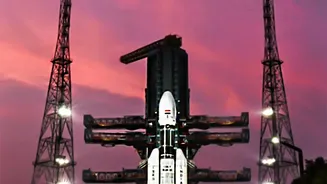
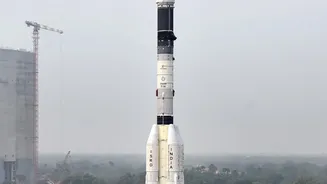
These safety demonstrations are part of a larger, methodical plan. The Gaganyaan programme envisages launching a crew of three into a 400 km orbit for a three-day mission. Before that happens, ISRO plans several more uncrewed flights to test and validate every system. The Human Rated Launch Vehicle (HLVM3), a version of the LVM3 rocket modified for astronaut safety, has already undergone extensive ground testing of its propulsion stages. Specialised facilities, including a Gaganyaan Control Centre and an Astronaut Training Facility in Bengaluru, have been established. The designated astronauts have completed generic training in Russia and are now undergoing mission-specific training in India. With preparations for the next major test vehicle mission, TV-D2, in an advanced stage, ISRO is systematically ticking off the boxes required to make India the fourth nation to independently send humans into space.