

The Final Flourish of the Perseids
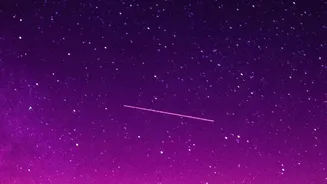
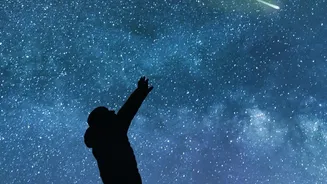
The famous Perseid meteor shower, which peaked around August 12-13, is still active until the end of the month. While the peak has passed, you still have a chance to catch stray 'shooting stars' in the late hours of the night. These fast, bright meteors
are debris left behind by Comet Swift-Tuttle. For your best chance, find a location away from city lights, let your eyes adjust to the darkness for about 20-30 minutes, and look towards the northeastern sky. The shower officially continues until early September, so late August offers a final opportunity to witness this celestial fireworks display.
Saturn Shines Bright
The ringed planet, Saturn, is a standout jewel in the August night sky. It appears as a steady, golden-hued point of light that doesn’t twinkle like stars do. Throughout the month, Saturn is visible for most of the night, rising in the east in the evening. This is all a prelude to its 'opposition' on October 4, 2026, when it will be at its biggest and brightest for the year. On the nights of August 30th and 31st, the Moon will pass near Saturn, making the planet incredibly easy to spot for beginners.
The Dazzling Summer Triangle
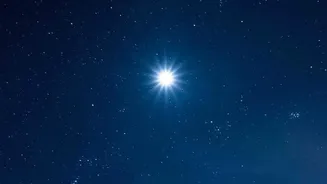
High overhead in the evening sky is one of the most recognisable star patterns of the season: the Summer Triangle. This large asterism isn't a constellation itself but is formed by three brilliant stars from three different constellations. These are Vega in the constellation Lyra, Deneb in Cygnus, and Altair in Aquila. Vega is the fifth brightest star in the entire sky, making it easy to locate. The Summer Triangle is so bright that its stars can be seen even from light-polluted urban areas, serving as a perfect starting point for navigating the summer sky.
A Glimpse of the Milky Way's Heart
August is one of the best times to view the core of our own galaxy, the Milky Way. To find it, look towards the southern sky for the constellation Sagittarius, which often looks more like a teapot than an archer. The Milky Way’s bright, dense center appears as a luminous, cloud-like band rising from the 'spout' of the teapot. This breathtaking sight is only visible from a truly dark location, far from the glow of city lights. Places like Hanle in Ladakh, Spiti Valley, or the Rann of Kutch offer ideal conditions for this awe-inspiring view.
A Parade of Planets Before Dawn
For the early risers, the pre-dawn sky has offered a rare spectacle this month with a six-planet alignment. Around August 12, Mercury, Jupiter, Mars, Saturn, Uranus, and Neptune stretched across the sky. While the peak alignment has passed, Mars and Saturn remain easily visible to the naked eye in the hours before sunrise. Look for Mars's reddish hue and Saturn's steady golden light. Jupiter will be very low on the eastern horizon just before sunrise, presenting a challenge but a rewarding sight for those with a clear view.