






A Signal of Strategic Intent
An accelerated launch tempo is a clear indicator of a maturing space program. For India, aiming for seven launches in a single fiscal year demonstrates a shift from sporadic, high-profile missions to a continuous, factory-like production and launch cycle.
This high cadence signals to the world that India's space capabilities are not just for flagship science projects but are becoming a reliable, operational, and core component of its strategic infrastructure. ISRO Chairman V Narayanan confirmed this ambitious target, noting that two satellites are already complete and several more are in the final stages of integration, allowing for a flexible and sustained launch manifest. This ability to launch frequently is critical for building resilient satellite constellations for communications, Earth observation, and national security, reducing reliance on foreign launch providers.
The Marquee Missions on the Horizon
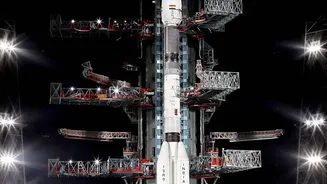
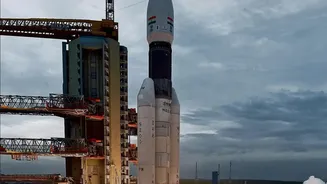
This packed calendar isn't just about quantity; it's defined by the strategic quality of its missions. A central pillar is the Gaganyaan program, India's ambitious human spaceflight mission. The schedule includes the first uncrewed orbital test flight, a crucial step to validate the systems that will eventually carry Indian astronauts into orbit. Success here is non-negotiable, testing everything from the human-rated LVM3 rocket to the crew module's re-entry and recovery. Beyond Gaganyaan, other key missions include the NASA-ISRO Synthetic Aperture Radar (NISAR), a landmark collaboration in Earth observation set to monitor climate change and natural disasters with unprecedented detail. Technology demonstrators like the SPADEX (Space Docking Experiment) are also vital, proving out complex capabilities like in-space docking, which is essential for future projects like the Bharatiya Antariksh Station.
Fueling a Private Space Revolution
Perhaps the most significant impact of ISRO's busy schedule is how it energises India's burgeoning private space industry. Since the sector was opened to private investment in 2020, the number of space startups has soared from one to over 400. A high tempo of ISRO launches creates a virtuous cycle. It generates consistent demand for components, subsystems, and testing services, which private companies increasingly supply. The recent orbital success of Skyroot Aerospace's Vikram-1 rocket, a first for an Indian private company, underscores this new reality. By handling more routine launches, ISRO can free up its resources to focus on deep space exploration and advanced research, while private players fill the gap for commercial satellite launches. This symbiotic relationship is crucial for India's goal of growing its share of the global space economy from $8.4 billion to a projected $44 billion by 2033.
Building an End-to-End Ecosystem
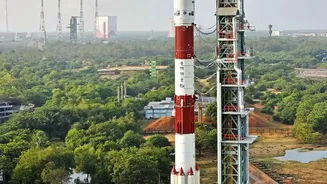
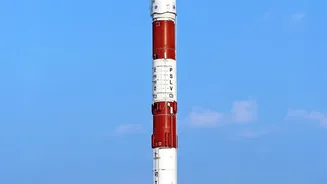
Ultimately, a packed launch calendar is about building a sovereign, end-to-end space ecosystem. It drives the development of critical ground infrastructure, like the new launch complex at Kulasekarapattinam, which will support a higher launch cadence, especially for smaller vehicles. Each mission, from a commercial PSLV flight to a complex Gaganyaan test, creates jobs, develops highly skilled human resources, and pushes Indian industry to meet global standards. The experience gained from executing these missions in quick succession builds institutional muscle memory, making the entire system more efficient and resilient. It allows India to not only meet its own strategic needs but also to compete more aggressively in the lucrative global launch market, offering reliable and cost-effective services to international clients.