


A New Era of Threats
The world's leading AI companies are facing a new and alarming challenge that extends beyond algorithms and into the physical world: ensuring the safety of their employees. A growing number of hostile incidents has reportedly prompted both OpenAI and Anthropic
to issue security guidance to their staff. These are not abstract threats. In April 2026, OpenAI CEO Sam Altman's home was targeted in two separate incidents, one of which allegedly involved a Molotov cocktail. Another incident involved a man breaking into Anthropic's headquarters with the stated aim of harming a top executive. This surge in hostility is not limited to executives. Reports detail strangers approaching employees in public spaces, attempting to glean confidential information through casual conversation. These events are part of a broader pattern of public anger and fear directed at the creators of advanced AI, fueled by concerns over job displacement, environmental impact, and the technology's unpredictable potential. Protests have become increasingly common, with activists targeting company offices and data centers around the world.
From Code to Caution
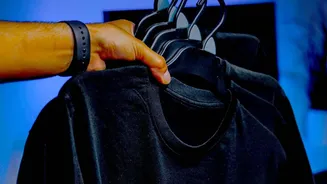
In response to these incidents, both OpenAI and Anthropic have implemented new safety protocols for their employees. The advice is a stark departure from the traditionally open and proud culture of Silicon Valley, where company logos on clothing are often worn as a badge of honor. Employees at both firms have reportedly been told to hide company-branded merchandise and identification badges when in public. The security training goes further, warning staff about the subtle methods spies and other malicious actors might use to extract trade secrets. These tactics can range from eavesdropping in cafes to sophisticated social engineering, including feigned friendship or romantic interest. Staff are also encouraged to use privacy screens on their devices while on public transport and to be meticulous about erasing whiteboards in meeting rooms. These measures reflect a dual threat: physical hostility from a wary public and corporate espionage from competitors or foreign entities trying to gain an edge in the high-stakes AI race.
Why the Backlash Is Growing
The anxiety surrounding AI is not new, but its intensity has reached a fever pitch. Public sentiment has been shaped by widespread discussion about AI's potential to automate millions of jobs, its massive consumption of energy and water for data centers, and dystopian fears of superhuman intelligence. These concerns have manifested in global protests, from Amsterdam to Nova Scotia, where activists are blocking the construction of new data centers. The backlash is also political, with opposition to data centers becoming a key issue in recent elections in several US states. Inside the companies themselves, some employees have voiced their own concerns, arguing that the race for innovation is outpacing the development of critical safety measures. This internal and external pressure has created a difficult environment for AI firms, forcing them to navigate not just technological hurdles but a complex and often hostile public perception.
A Chilling Effect on Innovation?
The need for heightened security raises important questions about the future of AI development. The industry has long thrived on a culture of open research and collaboration, rooted in academic principles of sharing knowledge. However, the current climate of fear and secrecy could stifle that spirit. When employees are afraid to identify themselves or discuss their work, the spontaneous exchange of ideas that drives innovation may suffer. Moreover, the security risks now include not just physical threats but also sophisticated cyberattacks, sometimes using rival AI models. This forces companies to pour resources into defensive measures, potentially diverting focus from core research. The challenge for OpenAI, Anthropic, and their peers is to protect their people and their intellectual property without creating a fortress-like environment that isolates their researchers and slows down progress. The industry is at a crossroads, where protecting its creators has become as critical as the act of creation itself.