






The Shoreline's Existing Crisis
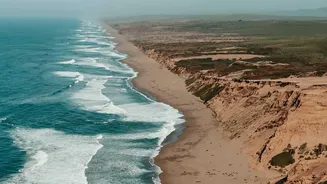
Coastal erosion is not a new problem for India. For decades, the relentless action of waves and currents has been chipping away at the nation's shores. According to the National Centre for Coastal Research (NCCR), about a third of India's roughly 7,500-kilometre
coastline is experiencing some degree of erosion. States like West Bengal, Kerala, Tamil Nadu, and Puducherry are particularly vulnerable, with some reports indicating that over 40% of their coastlines are eroding. This gradual loss of land threatens homes, livelihoods, and critical infrastructure, forcing some communities into managed retreat, as seen in Odisha, where entire villages have been relocated. Until recently, this was seen as a battle against currents and sediment loss, but our understanding is rapidly changing.
The New Climate Connection
The familiar culprit in climate-related coastal discussions is sea-level rise. As oceans warm and expand, and ice sheets melt, higher sea levels allow waves to reach further inland, flooding low-lying areas and accelerating erosion. However, recent scientific focus has expanded to reveal a more complex and troubling picture. Climate change is not just raising the baseline water level; it's changing the very nature of the forces that assault the coast. This new dimension involves an increase in the frequency and intensity of extreme weather events, altered wave patterns, and the degradation of natural coastal defences like mangroves and coral reefs.
More Than Just Rising Water
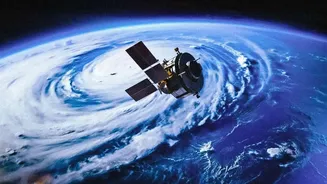
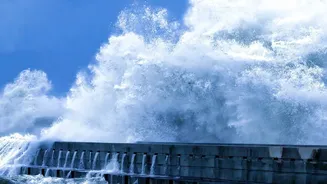
The emerging research highlights that a warming world brings more powerful storms and cyclones. Warmer ocean surfaces provide more energy for these weather systems, leading to stronger winds and heavier rainfall, which create more powerful storm surges. These surges, riding on top of already higher sea levels, can cause catastrophic erosion in a matter of hours, doing the work of years of normal wave action. Furthermore, subtle shifts in long-term climate patterns, like the Pacific Decadal Oscillation, can alter prevailing wave directions. This change can reverse the natural flow of sand along the coast, starving some beaches of sediment while piling it up on others, leading to hotspots of accelerated erosion that defy old patterns.
India's Coasts on the Frontline
These new climate dimensions have profound implications for India. The Bay of Bengal, for instance, is a known hotspot for intense cyclones. An increase in their severity due to climate change puts the densely populated eastern coast at even greater risk. Recent projections warn that coastal districts in Maharashtra and Gujarat will likely see more intense monsoon rainfall, while sea-level rise is expected to accelerate erosion in states like Odisha. The warming and acidifying water also poses a grave threat to India’s coral reefs and mangrove forests, such as the Sundarbans. These ecosystems act as natural, living sea walls, absorbing wave energy and protecting the coast. Their degradation removes a critical line of defence, leaving coastal communities more exposed than ever.
Adapting to a Shifting Reality
Understanding this new climate dimension is forcing a rethink of coastal protection strategies. For years, the default solution has often been to build hard structures like seawalls and groynes. However, these can sometimes worsen erosion in adjacent areas by disrupting natural sand movement. The new reality calls for more integrated and nature-based solutions. Protecting and restoring mangrove forests and coral reefs is now understood not just as an environmental goal, but as a critical piece of climate adaptation infrastructure. Similarly, policymakers must now factor in projections for more intense storms and changing wave dynamics when planning new coastal infrastructure or managing shoreline retreat. The challenge is no longer just holding the line, but adapting to a coastline that is becoming more dynamic and unpredictable under the influence of a changing climate.