





From Throwaway Rockets to Rapid Reuse
To grasp the shift Starship represents, think of commercial air travel. We expect airplanes to fly multiple times a day, not be discarded after a single trip. For over 60 years, rocketry has operated on the latter model. Each launch involved multi-million
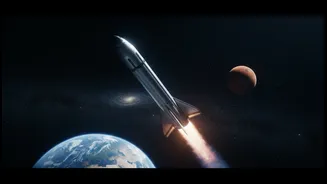
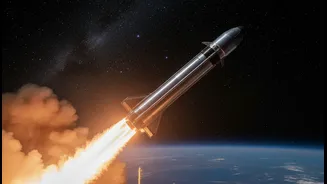
dollar hardware being dumped into the ocean. While SpaceX’s own Falcon 9 rocket made the first stage (the booster) reusable, the upper stage was still lost. Starship is designed to make both its massive Super Heavy booster and the Starship upper stage fully and rapidly reusable. The entire system is built to return to Earth, land, be refueled, and fly again, potentially within hours or days. This isn't just an improvement; it's a fundamental change in the philosophy of space access, moving it from a bespoke, high-cost event to a repeatable, logistics-driven service.
The Two-Part Reusability Puzzle
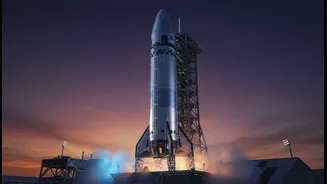
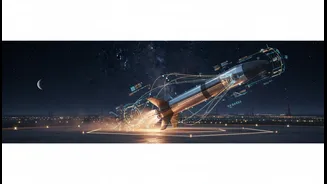
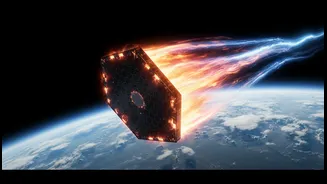
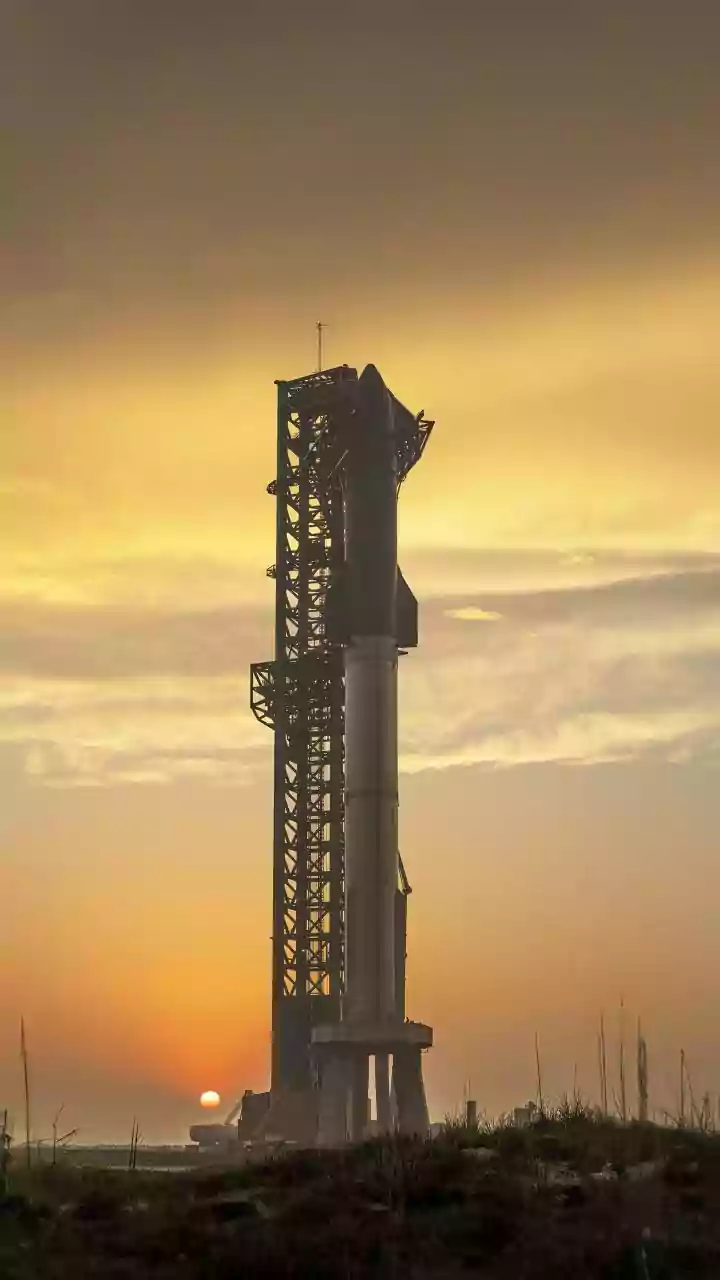
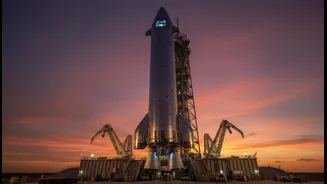
Achieving this vision requires solving two incredibly difficult engineering challenges. The first is recovering the Super Heavy booster. After propelling the Starship spacecraft on its way, the 72-metre-tall booster returns to the launch site. Here, the launch tower itself, nicknamed 'Mechazilla', is designed to catch the descending booster with a pair of massive mechanical arms. This eliminates the need for heavy landing legs on the booster and streamlines the process of placing it back on the pad for its next flight. The second, and arguably harder, part is returning the Starship spacecraft. After deploying its payload, the ship must survive a fiery reentry through Earth's atmosphere, using its steel body and a sophisticated heat shield, before performing a powered landing. Early tests saw significant damage during reentry, but recent flights have shown dramatic improvements, with minimal damage to the vehicle, a crucial step towards rapid reuse.
The Dramatic Drop in Delivery Costs
The true modification to space delivery mechanics is economic. A rocket's price is dominated by the hardware, not the fuel. By reusing the entire vehicle, the primary costs per launch drop to propellant and operational overhead. While a single NASA Space Launch System (SLS) mission, which is fully expendable, can cost over $2 billion, SpaceX founder Elon Musk projects Starship launches could eventually cost as little as $2 to $3 million. This translates to a staggering reduction in the cost-per-kilogram to orbit. The Space Shuttle cost roughly $25,000 per kilogram. The partially reusable Falcon 9 brought that down to under $3,000 per kilogram. A fully reusable Starship aims to slash that figure to around $100 per kilogram, or even less, a 100-fold decrease from just a few years ago.
New Payloads, New Possibilities
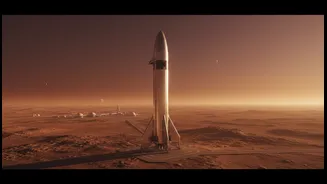
This radical cost reduction, combined with Starship's enormous payload capacity of over 100 metric tons, changes what can be sent to space. Recent test flights have begun practicing payload deployment, carrying simulators and even next-generation Starlink satellites to validate the process. One Starship could deploy as many satellites as several Falcon 9 rockets, dramatically accelerating the buildout of mega-constellations. But it goes further. Starship's payload bay is large enough to carry massive space telescopes, modules for new space stations, or equipment for a lunar base. The system also enables in-orbit refueling, where a tanker variant of Starship refills another in orbit, allowing for the transport of immense cargo loads to the Moon and Mars. This capability is critical for NASA's Artemis program, which will use a version of Starship to land astronauts on the Moon.
What the 'Latest' Trials Really Mean
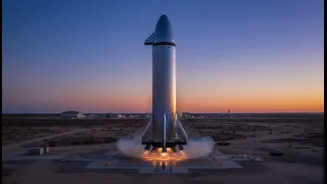
Recent test flights, including the scrubbed Flight 13 attempt in mid-July 2026, are part of a rapid, iterative development process. Each launch, whether a complete success or ending in a 'rapid unscheduled disassembly', provides crucial data. Engineers learn from engine relight failures, reentry heating, and booster landing maneuvers to make hardware and software upgrades for the next attempt, sometimes just weeks later. For instance, after a booster had issues with engine relights on one flight, modifications were made to improve reliability for the next. The focus is not on a single perfect launch, but on steadily mastering the complex dance of ascent, separation, reentry, and landing for both stages. These trials demonstrate that the path to full reusability is a gritty process of engineering, testing, and refining.