

The Five-Minute Mistake
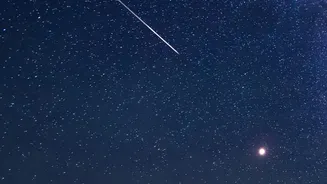
It’s a common story. You hear about a meteor shower, grab a blanket, and head into the backyard. You stare up into the inky blackness for five, maybe ten minutes. You see a satellite or two, but no spectacular streaks of light. Disappointed, you conclude
the shower is a bust and head back inside. The problem isn't the meteor shower; it’s that you didn't give your eyes a fighting chance. Judging the night sky after only a few minutes is like taking a single bite of a complex dish and declaring it bland. The full experience requires time to develop, and for stargazing, that development happens inside your eyes.
The Science of Seeing in the Dark
Your eyes have two types of photoreceptor cells: cones and rods. Cones handle daytime vision, processing colour and fine detail. Rods, on the other hand, are the superstars of night vision. They are over 100 million strong and are incredibly sensitive to low light, but they don't see in colour. When you step into the dark, your pupils dilate quickly, but the real work is done by a chemical in your rods called rhodopsin, or 'visual purple'. This chemical, which allows your rods to detect faint light, is instantly broken down by bright light. In the dark, your body needs time to rebuild its supply. This process is called dark adaptation, and it doesn't happen in a flash. While you'll notice an improvement in the first few minutes, achieving full dark adaptation, where your eyes are at their most sensitive, takes between 20 and 40 minutes.
How to Give Your Eyes the Advantage
To truly prepare for a meteor shower, you need to commit to darkness. This means arriving at your viewing spot at least 30 minutes before you hope to see the main event. During this time, you must avoid all sources of white light. That means no checking your phone, no looking at car headlights, and no turning on a regular flashlight. Even a few seconds of bright, white light can reset the dark adaptation process, forcing your eyes to start over. If you absolutely need light to navigate or check a star chart, use a dim red flashlight. Rhodopsin is much less sensitive to red wavelengths of light, which is why astronomers use red lights to preserve their precious night vision.
Setting the Stage for Success
Beyond adapting your eyes, a few other preparations can make or break your experience. First, escape light pollution. The farther you can get from city and suburban lights, the more you will see. A dark, open field or a remote park is ideal. Next, get comfortable. Meteor watching involves a lot of looking up, which can strain your neck. A reclining lawn chair or a thick blanket on the ground is essential. Dress in warm layers, as even summer nights can become chilly in the early morning hours, which are often the best time for viewing. Finally, be patient not just with your eyes, but with the sky. Meteor showers have peaks and lulls; they don't perform on a fixed schedule. Meteors often appear in spurts, so settling in for at least an hour is your best bet.
Judging the Show Fairly
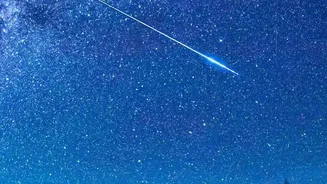
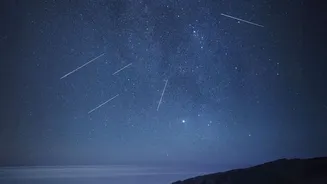
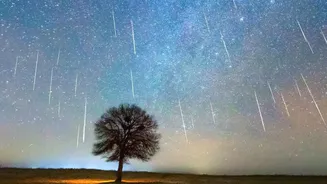
Once your eyes are fully adapted and you're comfortably situated, you can fairly judge the show. Don't stare intently at one spot, as this can tire your eyes. Instead, relax your gaze and look at a wide patch of sky about halfway up from the horizon. Looking slightly away from the shower's radiant (the point where meteors appear to originate) can help you see longer, more dramatic streaks. You'll likely notice faint meteors you would have missed 30 minutes earlier. The sky that seemed empty will reveal a subtle, dynamic beauty. Remember, photos of meteor showers are often long-exposure composites showing an hour's worth of activity in a single frame. A realistic rate for a good shower might be one or two meteors per minute, which is still a thrilling sight.