


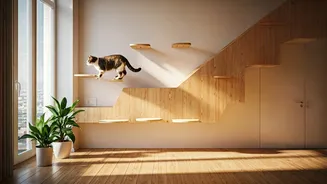



Why Cats Think Vertically
To understand the appeal of a wall bridge, you first have to think like a cat. In the wild, their ancestors climbed trees to survey their territory, spot prey, and escape predators. This instinct is hardwired into your domestic feline. A high perch provides
a sense of security and authority. From a safe vantage point, your cat can observe the household's comings and goings without feeling vulnerable. For shy cats, it's a safe retreat; for confident ones, it’s a throne. Denying a cat the ability to climb is like telling a human they can only ever sit down. It ignores a fundamental part of their physical and psychological makeup.
Enter the Cat Superhighway
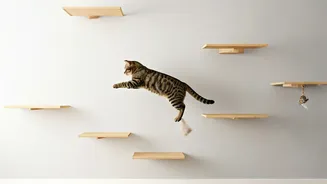
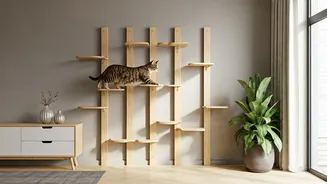
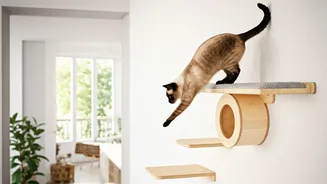
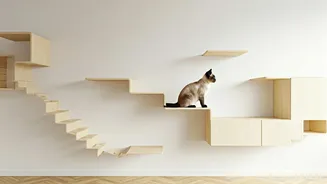
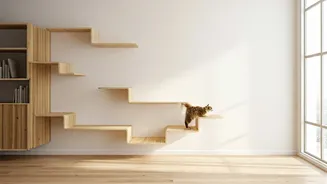
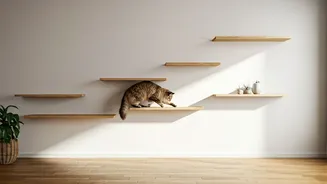
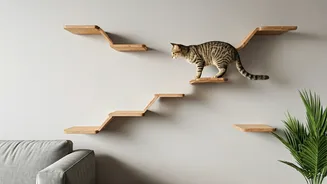
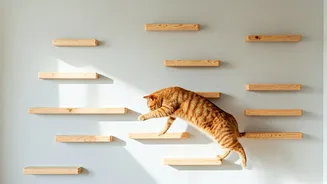
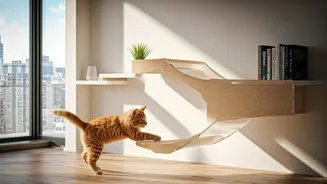
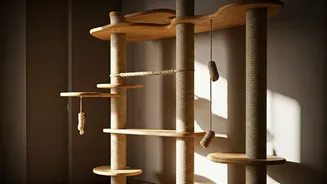
A 'cat superhighway' is an interconnected series of shelves, perches, and bridges that allows your cat to navigate a room without touching the floor. Floating wall bridges are the star component of this concept. These are typically narrow, suspended walkways made from wood slats, rope, or solid beams, securely mounted between two points on a wall. They connect shelves, cat trees, or window perches, creating an exciting and challenging route. It’s not just about a single shelf; it's about creating a network. This network transforms your walls into an interactive 3D landscape, turning dead space into a dynamic environment that caters directly to your cat's natural desire to explore, leap, and balance.
Benefits Beyond Fun
Installing wall furniture is more than just an aesthetic choice; it’s a health investment. The physical benefits are obvious: climbing and leaping provide excellent exercise, helping to maintain a healthy weight and keep joints supple, especially for less active indoor cats. But the mental benefits are even more profound. Environmental enrichment combats boredom, which is a leading cause of stress-related behaviours like over-grooming, destructive scratching, or aggression. In multi-cat households, vertical space is a peacemaker. It expands the available territory, reducing competition for prime spots and allowing cats to establish their own space, which can significantly decrease tension and conflict.
Planning Your Vertical Wonderland
Before you start drilling, take a moment to plan. Watch your cat. Where do they already like to hang out? A route that leads to a favourite sunny spot or a window with a view of birds will be an instant hit. Think about flow. A good superhighway has multiple entry and exit points, so your cat doesn't feel trapped. Consider the spacing between elements. The distance should be challenging but achievable for your cat’s age and athletic ability. Start with a simple shelf or two and see how they respond. You can always add more complex elements like bridges later. Sketch out a plan on paper, marking the locations of wall studs for secure mounting.
DIY vs. Store-Bought
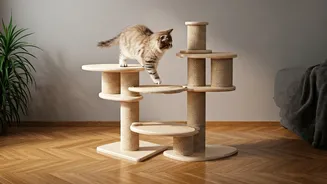
The market for cat wall furniture has exploded, offering everything from sleek, minimalist shelves to elaborate rope-and-wood jungle gyms. Pre-made kits offer convenience and tested designs, often coming with all the necessary hardware and instructions. They can be a great option if you're not confident in your DIY skills. However, if you're handy, building your own can be a rewarding and cost-effective project. You can use sturdy shelving brackets and planks of wood covered in carpet or sisal for grip. For bridges, a simple rope bridge can be made with two parallel ropes and small wood slats. Whichever path you choose, prioritise materials that are strong, durable, and non-toxic.
Safety Is Paramount
An unsafe bridge is worse than no bridge at all. Your top priority must be secure installation. Always anchor shelves and bridges into wall studs. Drywall anchors alone are not sufficient to support the weight of a leaping cat. Read the weight specifications for any product you buy and respect them. Ensure all surfaces provide good traction; smooth, lacquered wood can be slippery. Cover surfaces with a non-slip material like a thin carpet, sisal rope, or cork. Once installed, test the stability of every component yourself by pulling down on it firmly. Regularly check for any loosening of screws or wobbling parts to ensure the highway remains a safe place for adventure.