



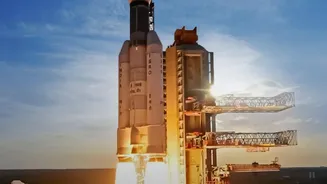
A Policy Shift Opens the Skies
The transformation of India's space sector began in earnest with key policy reforms, culminating in the Indian Space Policy 2023. This landmark policy framework was designed to open the entire space value chain to private participation. Historically,
private firms were largely vendors to the Indian Space Research Organisation (ISRO). The new policy redefines their role, allowing them to independently design, build, and operate everything from launch vehicles to satellite constellations. To facilitate this shift, the government established the Indian National Space Promotion and Authorisation Centre (IN-SPACe) in 2020. IN-SPACe acts as a single-window agency, responsible for authorising, promoting, and supervising the activities of non-governmental entities (NGEs). It provides a predictable regulatory environment and facilitates access to ISRO's extensive infrastructure and technical expertise, effectively lowering the barrier to entry for a new generation of space entrepreneurs. This has allowed ISRO to refocus its energies on advanced research, scientific missions, and human spaceflight, while private industry drives the commercial and operational aspects.
The Rocket Builders: Skyroot and Agnikul
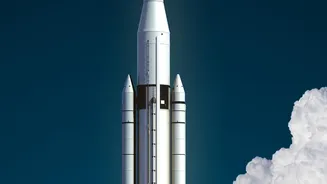
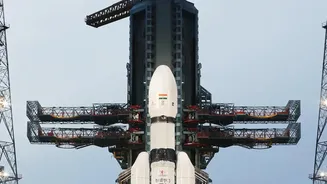
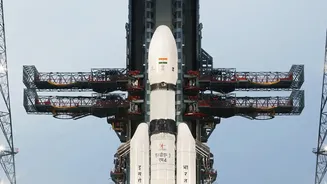
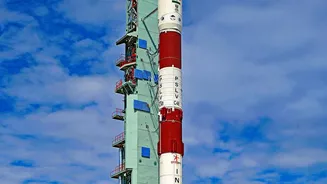
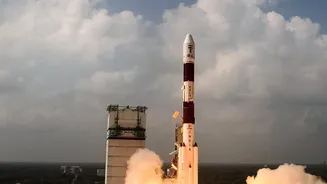
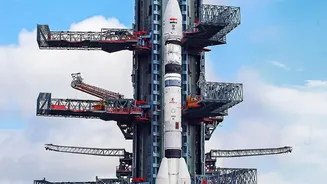
At the forefront of this private-sector surge are launch vehicle startups. Hyderabad-based Skyroot Aerospace made history in November 2022 with Vikram-S, India's first privately built rocket to reach space. The company achieved an even greater milestone on July 18, 2026, when its Vikram-1 rocket became the first privately developed Indian vehicle to successfully reach orbit on its maiden attempt. This achievement made India only the third nation, after the US and China, to demonstrate private orbital launch capability. Not far behind is Chennai-based Agnikul Cosmos, which has pioneered the use of 3D printing to create single-piece, semi-cryogenic rocket engines. After a successful sub-orbital test flight in May 2024, the company is targeting its first orbital launch by the end of 2026 and has announced ambitious plans for reusable rocket technology. These companies are not just launching rockets; they are building a domestic, cost-effective launch capability that is attracting global customers.
Eyes in the Sky: Pixxel and Dhruva Space
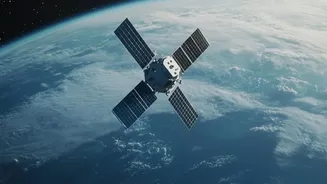
Beyond launch vehicles, private firms are making significant strides in satellite manufacturing and services. Pixxel is building a constellation of the world's highest-resolution hyperspectral imaging satellites. Unlike standard cameras, hyperspectral imagers capture data across hundreds of light bands, revealing details invisible to the human eye. This technology has powerful applications in agriculture, environmental monitoring, and urban planning. With its 'Firefly' constellation already deploying satellites, Pixxel aims to provide a health monitor for the planet. Another key player is Dhruva Space, one of India's older private space firms, founded in 2012. The Hyderabad-based company provides full-stack satellite solutions, from design and manufacturing to launch deployment and ground station services. Dhruva Space has already launched several satellites, including its Thybolt mission, and supports both domestic and international clients, showcasing the end-to-end capabilities emerging from India's private sector.
Building a Complete Ecosystem
The expansion extends beyond rockets and satellites to create a comprehensive space ecosystem. Companies are now active across the entire value chain. Bellatrix Aerospace is developing green satellite propulsion systems, while Digantara is focusing on space situational awareness to track orbital debris, a growing concern as more satellites are launched. Ananth Technologies has become a major partner for ISRO, contributing to launch vehicles and satellite development, including a state-of-the-art satellite integration facility. This diversification is crucial, creating capabilities in everything from ground station services to data analytics. The growth is fueled by significant investment, with liberalised Foreign Direct Investment (FDI) policies now permitting up to 74% FDI in satellite manufacturing and 49% in launch vehicles through the automatic route. This influx of capital and expertise is rapidly maturing the industry.