





A Month-Long Showcase for Saturn
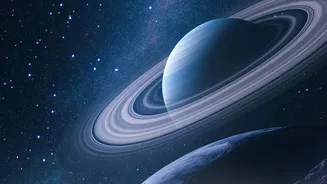
October 2026 is a fantastic month for viewing Saturn. The planet reached 'opposition' on October 4, an event where Earth passes directly between Saturn and the Sun. This alignment makes Saturn appear at its biggest and brightest for the year, shining
like a steady, pale-yellow star in the sky. While the opposition date has passed, the planet remains exceptionally bright and visible all evening throughout the month, making it an easy target for skywatchers. It rises in the east around sunset and travels across the sky through the night.
When the Moon Meets Saturn
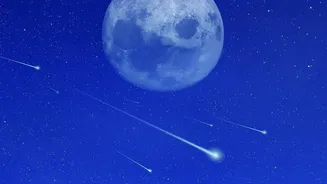
The main event for those wanting to see these two celestial bodies together will happen on the nights of October 24 and 25. During this period, the waxing gibbous Moon will have a 'conjunction' with Saturn, meaning they will appear very close to one another in our sky. As darkness falls, look up, and you will spot Saturn as a distinct, unblinking point of light situated near the bright Moon. This close approach provides a wonderful photo opportunity and an easy way to identify the famous ringed planet without any special equipment.
How to Find the Pair
Finding Saturn is simpler than you might think. After sunset, look towards the eastern sky. The planet will be visible in the constellation Cetus, located below the large asterism known as the Great Square of Pegasus. Saturn distinguishes itself from stars because its light doesn't twinkle as much, appearing instead as a constant, creamy-white glow. On October 24, the bright Moon will act as your guide, making Saturn impossible to miss. If you have a smartphone, a stargazing app like Stellarium or SkyView can point you in the exact direction.
What to Expect with Your Eyes, Binoculars, and a Telescope
To the naked eye, Saturn will look like a very bright star. It's impressive on its own, but the real magic happens with a little magnification. A good pair of binoculars can enhance the view and may even reveal Saturn's largest moon, Titan, as a tiny speck of light nearby. However, to see Saturn’s iconic rings, you will need a telescope. Even a small backyard telescope with at least 25-35x magnification should be enough to resolve the rings, which are slowly tilting back towards us after being nearly edge-on in 2025. Don't expect a view like the Hubble telescope, but seeing the rings for yourself is an unforgettable experience.
Tips for the Best Viewing Experience
You don't need to escape the city to enjoy the show, as both the Moon and Saturn are bright enough to cut through some light pollution. However, for a better view, find a spot with as little direct light as possible, like a park, a rooftop, or a balcony that isn't facing streetlights. Turn off any nearby lights and give your eyes about 20-30 minutes to fully adapt to the darkness; this will help you see more detail. Patience is key. Finally, check your local weather forecast for a clear night, as clouds are the only thing that can spoil the view.